It's the weekend again, so let's talk about something I find interesting.Let me add something from last night. When I mentioned organizing shareholders to file lawsuits for compensation, many readers left messages asking why there had been no progress on their applications for Zhonggong Education and CITIC Guoan, which they had signed up for many years ago. I consulted a lawyer, and it's true that many years have passed. The CITIC Guoan case has been pending for five years, with the case stuck in the courtroom and showing no progress. The same goes for Zhonggong Education; urging them is useless.This is the current state of affairs for Chinese stock market investors seeking to protect their rights: cumbersome procedures, lengthy processes, and numerous difficulties. Courts have many concerns when making rulings, and large enterprises are often major taxpayers and employers in their localities, making them particularly challenging. Yesterday, a reader commented that asking Doubao to draft a complaint and organize the materials would be enough to claim compensation, which is indeed an oversimplification.The largest and most satisfying compensation for shareholders in the history of A-shares was the Kangmei Pharmaceutical case, which paid out a total of 2.46 billion yuan. However, that was a model project to protect small and medium-sized shareholders, driven by the will of the highest level from top to bottom, and it is not the norm.Normally, if you claim 1 million, the court will determine the liability limit and award you 250,000 to 300,000. If the listed company disagrees, it will sue again and win again, but the enforcement will be delayed. Finally, it will negotiate and demand a settlement of 150,000 to 200,000, otherwise it will continue to drag on.In terms of protecting the rights and interests of small and medium-sized shareholders, the A-share market is far inferior to the US stock market. You can ask an AI to find out how big the gap is.…A few days ago, I was idly organizing a Hong Kong stock trading account that I had abandoned since 2025. I looked through the transaction records before it was abandoned. The last two large transactions were the sale of Meizhong Jiahe and Tongyuankang Pharmaceutical-b, totaling several million.
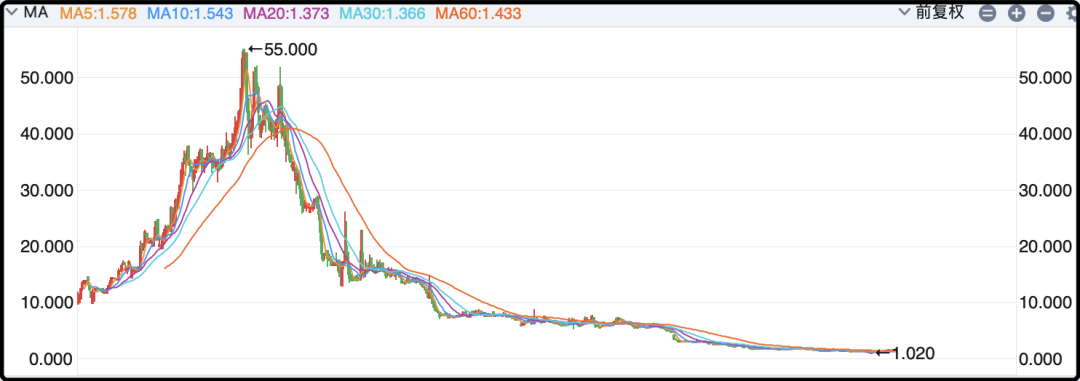
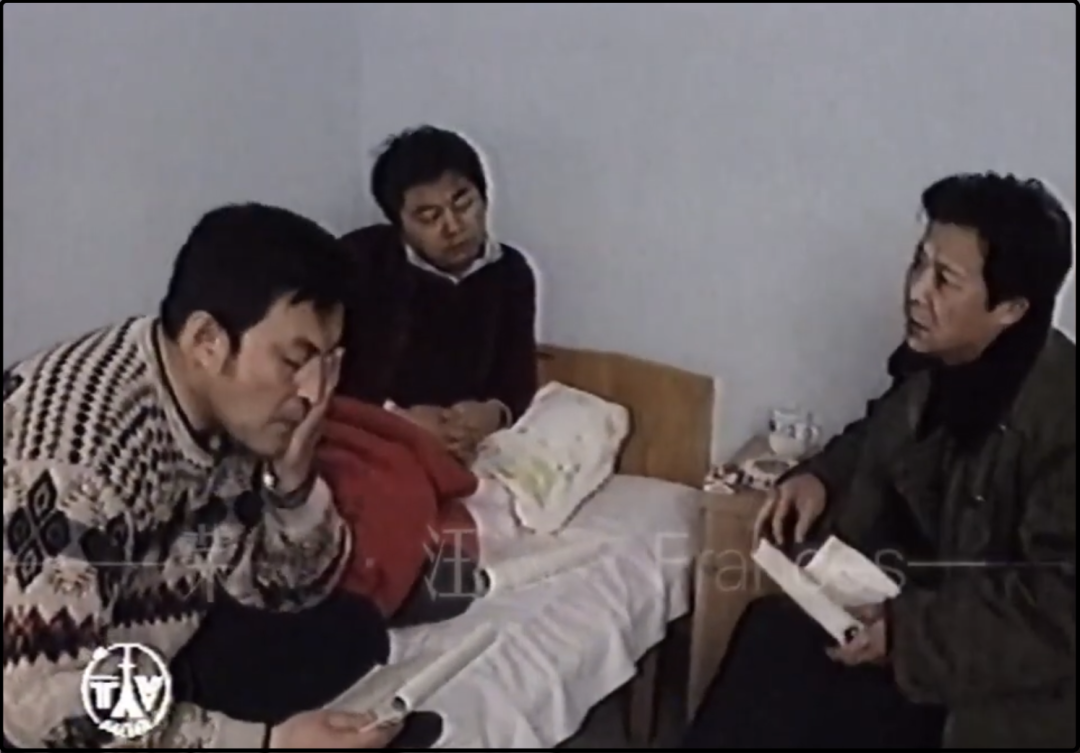
Meizhong Jiahe was sold at over 40, and Tongyuankang Pharmaceutical was also sold at over 40. Do you know what the current prices of these two stocks are?Today, Meizhong Jiahe closed at HK$1.60, and Tongyuan Kang Pharmaceutical at HK$10.21. There were no dividends or ex-rights adjustments; they just plummeted. Isn't that shocking? If you hadn't sold back then, you would have lost everything.This account was opened with HKD 2 million when Hong Kong stocks were at their peak, but it suffered through several years of bear market devastation, losing hundreds of thousands at its worst. With no other option, I tried to recover my losses by investing in highly volatile stocks. Fortunately, in the second half of 2024, I seized several opportunities and successfully exited at the top. Finally, I recovered my losses to HKD 2.8 million.Why did I stop? Because something happened in 2025 that was practically tailor-made for accounts like mine—I was incredibly unlucky. In short, after taking such a huge risk, barely managing to salvage a few small profits from a treacherous pit of fire, I had to recalculate the risk-reward ratio.Luck can't last forever. If I fail to time the market top again, my investment will be wiped out. It's like risking everything for a pittance, only to end up making meager profits. The risk-reward ratio is low, so I'll just withdraw my money and quit. However, I have some long-term value investment positions in another account. I'll see how things go; I'll invest when the price reaches a suitable level.…These past few days, while scrolling through short videos, I somehow came across behind-the-scenes footage of the 1994 version of "Romance of the Three Kingdoms." Seeing those young, spirited actors, I was momentarily stunned, feeling as if I had traveled back 35 years.The original "Three Kingdoms" was not just a simple TV series; it was a nationally-led cultural project. In those impoverished times (1991), no commercial company would have dared to invest 170 million yuan to produce an 80-episode TV series. The entire cast underwent intensive training, and it took three years to complete all filming. This meticulous work ethic is something that cannot be replicated in today's entertainment industry.I checked the salaries of the cast and crew back then. The main actors, Liu Bei, Guan Yu, Zhang Fei, Zhuge Liang, Cao Cao, and Sun Quan, earned 225 yuan per episode. They filmed for three years and only earned a little over 10,000 yuan in total. Unlike some movies today with their marketing, where the budget is 300 million yuan and the actors only get half of it. Actors in that era really had a tough time; everyone was talking about dedication.Even after becoming famous after the TV series aired, he didn't earn much money. Li Jingfei, who played Zhang Fei, was impoverished in his later years. His wife and daughter divorced him and lived far away overseas. He suffered three strokes and was unable to take care of himself. He could not make ends meet with his 4,000 yuan retirement pension. It was Lu Shuming, who played Guan Yu, who took him to a nursing home and covered all the expenses so that he could survive.As a result, Lu Shuming suddenly passed away from a heart attack in 2022. Li Jingfei was so grief-stricken upon learning this that he also passed away just over 20 days later, much like the fates of the characters they played. The sworn brotherhood in 1994 was acting, but the brotherhood that lasted for 30 years was real, which made me deeply saddened.Now that I'm older, I've become nostalgic. Whenever I come across anything from 1990-2000, it's like a speed bump; I won't leave until I've finished watching it. The algorithm seems to cater to my tastes, constantly pushing some old stuff from my past to my head. For example, yesterday I heard the ending theme song of "Zhengda Variety Show," and my eyes inexplicably welled up with tears.Hearing this song reminds me of those wonderful weekends from my childhood. After watching Zhengda Variety Show, I would watch Zhengda Theater, and this song, "Dedication of Love," would play in between. The melody is so beautiful.
I'd like to add two little-known facts about this song:1. In the original lyrics, "amour" is the French word for love, and "rak" is the Thai word for love. Charoen Pokphand Group is a Thai company. Also, the line "love is a heart" was actually a mistake by the TV station back then. The correct lyric is "aisuru," which sounds like a heart and is the Japanese word "愛する," also meaning love. If you consider the context, you'll see that I'm correct.2. At 1 minute and 36 seconds, the chubby boy stroking the pigeon is Hu Ge when he was a child.That's all for now. Have a great weekend, everyone.