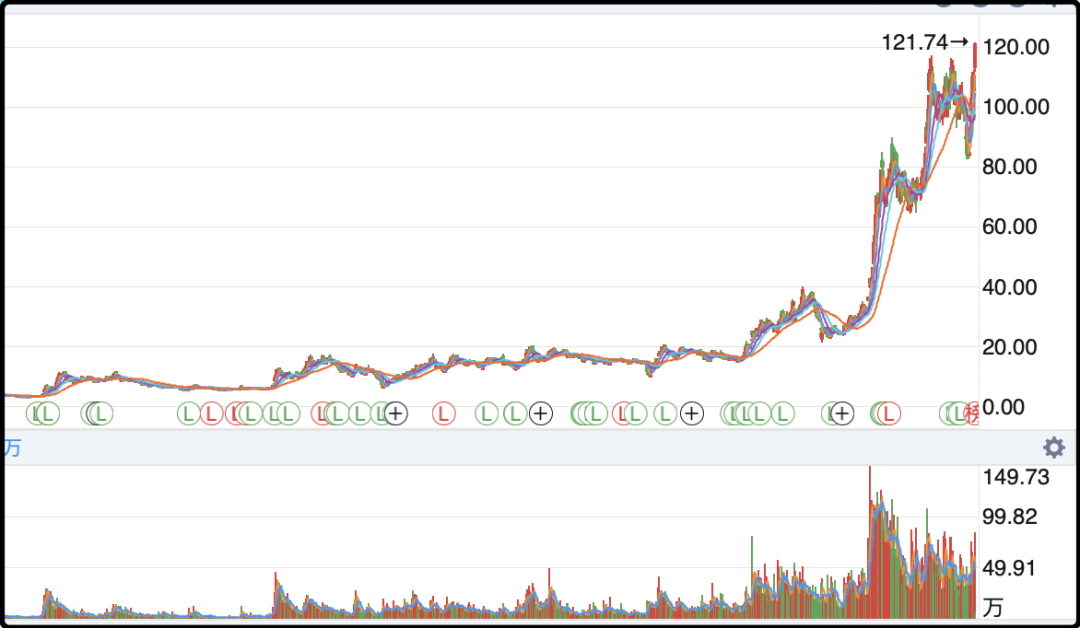
First, let me add something from last night. During my comments section, many people mentioned that "Hero K" (a company name) had crashed. I was actually referring to Invec, nicknamed "Hero K" because of its exceptionally high stock price. The company's main business is server liquid cooling, and it rode the wave of AI, with its stock price increasing tenfold in two years, currently boasting a market capitalization of approximately 120 billion.
Last night, the company released its financial results: revenue increased by 26%, but non-GAAP profit plummeted by 87%, reaching only 5.39 million yuan in the first quarter. This caused an uproar on various stock forums and communities. Some sarcastically remarked that the company's first-quarter earnings were less than what the "teachers" who traded this stock made in a single day.
After reviewing the financial report analysis, I found that the core issue is the intense competition within the industry. Domestic competitors (Jialitu, Shenling Environment, and Gaolan Shares) are all lowering prices to grab market share, offering prices 10-20% lower than Invic. In order to maintain market share, Invic has no choice but to follow suit and lower prices, resulting in a nearly 5% drop in gross profit margin compared to the previous period.
In addition, the high financial costs of building factories and expanding overseas, the depreciation of the US dollar, and the fact that some accounts receivable could not be collected, resulting in a provision of 30 million for bad debts, all contributed to the collapse of the company's performance.
A quarterly profit of just over 5 million yuan supports a dream of a market capitalization of 120 billion yuan. Therefore, investing in A-shares can easily lead to the timid starving and the bold surviving. I haven't participated in this kind of stock; it's not even on my watchlist. However, I respect the A-share market ecosystem and objective facts. You bear the risks yourself.
The situation in Iran today is not optimistic. The US negotiating team led by Vance has arrived in Islamabad, but the Iranian delegation has not yet departed as of the time of writing. The reason given is that the US military attacked and seized the merchant ship (Tuska) that attempted to cross the border yesterday. Iran believes that the US blockade is a form of coercion and refuses to participate in negotiations under such coercion.
The ceasefire agreement expires on April 22 (Washington time), which translates to 8:00 AM on Thursday, April 23 in Beijing time. There are still 36 hours left. I don't know which direction the situation will develop, and I'm too lazy to guess. I'm already tired of the repetitive plot, and I've noticed that the capital market is also gradually becoming desensitized to this war.
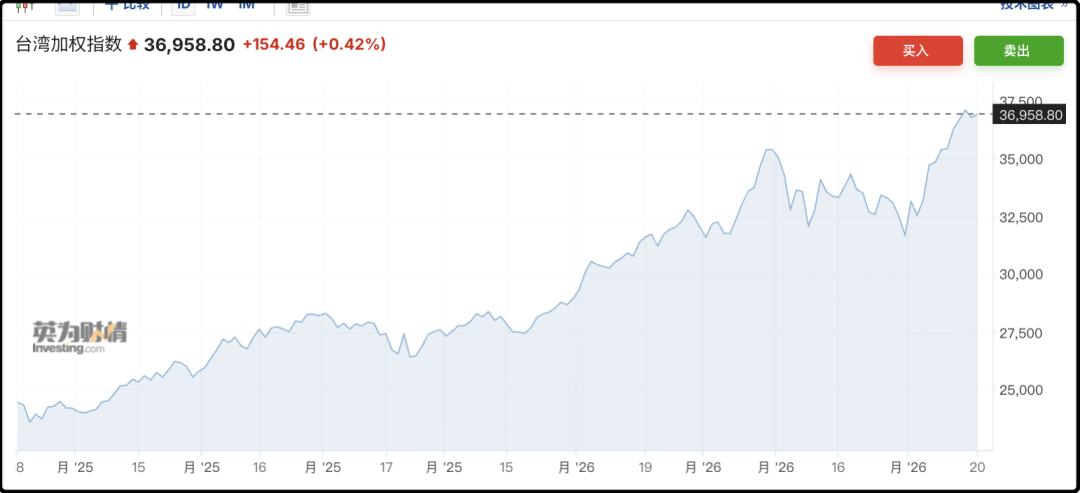
Even with the situation remaining uncertain, the South Korean KOSPI and the Nikkei both rose significantly today, hitting new all-time highs. These two countries are widely recognized as being most affected by the Hormuz Sea route. Furthermore, the Taiwan Weighted Index recovered from its recent slump last week and has been consistently hitting new record highs. Therefore, war is no longer the obstacle; the real issue is how to stimulate the inherent confidence of the capital markets.
As I'd like to add, the Taiwan stock market has risen nearly 300% over the past 10 years, with only minor pullbacks, and its momentum rivals that of the US stock market. However, there haven't been any particularly good investment tools available in mainland China. Our QD funds primarily invest in Hong Kong stocks, with very little involvement in Taiwan stocks. I'm not sure if there's any behind-the-scenes guidance behind this, and it's difficult to explain from a purely profit-driven perspective.
There are two Taiwan stock ETFs in the Hong Kong stock market, but their liquidity is very poor, with daily trading volume of less than 1 million, so I can't say for sure.
Returning to the A-share market, with the global economic recovery providing a boost, there is a high possibility that the A-share market will continue to rise and reach new highs. Even if the Shanghai Composite Index cannot achieve this, the STAR Market and CSI 500 indices can (the ChiNext Index has already reached a new high).
The main theme of this round of global market trends is the technological revolution driven by AI. All of humanity's resources are tilting towards the AI industry chain. Unless a major industrial crisis occurs in the future, this trend will not change in the short term. The resulting siphon effect will be a long and arduous process for those funds that stick to traditional industries.
1. Iran announced the resumption of domestic flights on the 22nd, which was interpreted by the market as a signal of easing tensions, since flights had been suspended for nearly 50 days. Now that they are open, it is assumed that the probability of the airport and related airspace being attacked is low. Only domestic routes in Iran are open for the time being, while international routes remain closed. Moreover, routes to eastern Iran are given priority, as they are far from the Israeli attack zone.
2. Muyuan Foods reported a net loss of 1.215 billion yuan in the first quarter, with revenue falling by 17%, mainly due to the decline in pork prices. Muyuan Foods has been hedging in the futures market for several years, but this hedging is not comprehensive; its annual production capacity of over 70 million pigs only covers a small portion, so losses are inevitable. The performance of pig farming companies in the first quarter was generally poor. The good news is that pork prices have begun to rebound slightly in recent days.
In March and April, the automotive industry launched a new round of price cuts. The reason was that car sales were sluggish in the first quarter, with an overall decline of 17%, including a 24% decline in new energy vehicles. The industry's profit margin fell to only 2.9%. Even so, the industry still had to exchange price for volume, with the average price of new energy vehicles reduced by 38,000 yuan (a price reduction of 13.7%).
Our current annual automobile production is approximately 50 million vehicles, with domestic sales estimated at around 30-32 million vehicles per year. In addition, annual exports amount to about 10 million vehicles, resulting in a surplus of 8-10 million vehicles. However, this is only a static estimate. In the next few years, domestic production capacity will surge (due to production starting in previous years), domestic market demand will continue to decline, and exports will face tariff protection. These three factors combined could lead to a significant increase in the surplus.
Competition in the automotive industry will be fierce in the next few years; it may be the next pork or solar power industry.
4. Tim Cook stepped down as CEO of Apple today, after leading the tech company for the past 15 years. Many still fondly remember Steve Jobs' innovative spirit, believing Cook has been resting on his laurels for over a decade. However, I think the public has underestimated Cook's operational capabilities. During his tenure, Apple's net profit increased 3.5 times annually, and the company's market capitalization increased 10.5 times, truly transforming Apple into a tech behemoth.
Nearly half of my money in the US stock market came from Apple. The experience is excellent; once you buy in, you don't have to think. It rises and withstands market fluctuations. In my opinion, it's the best company in the world.
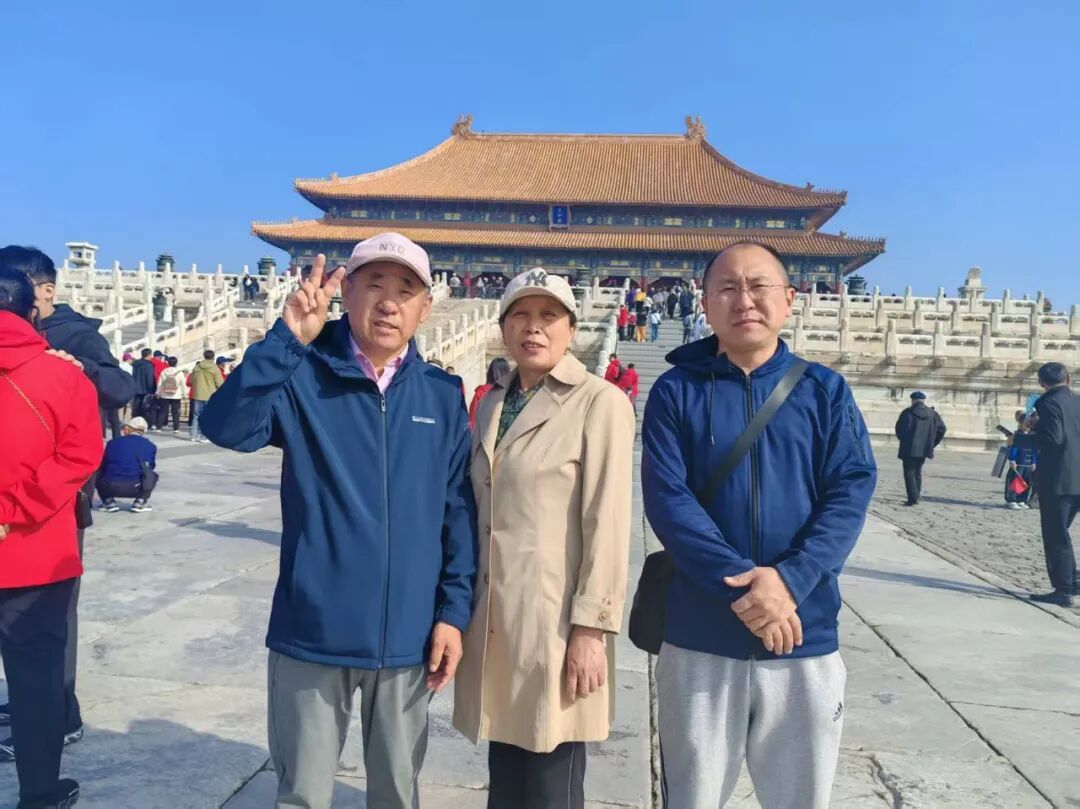
That's all for tonight. Finally, here's another example of readers traveling with their parents:
"Thank you to Cat and his friends for organizing this event. It allowed my parents to experience the historical sites and hutong culture of the capital. For those who have been before, it might not be a big deal, but for my mother, who has never been to the Forbidden City or Prince Gong's Mansion, this was a dream come true. Thank you again from the bottom of my heart."  "
"
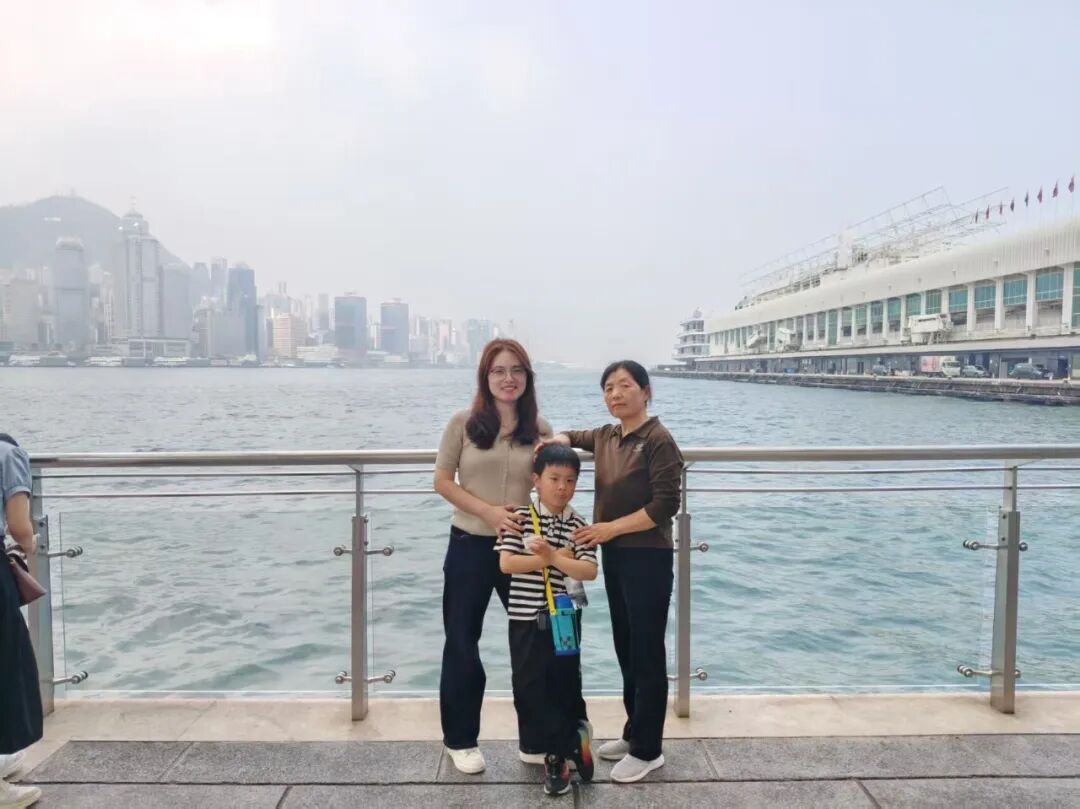
"I booked a sleeper train ticket for Friday night, departing in the evening and arriving the next morning, but I couldn't sleep a wink all night, and I felt completely out of it on Saturday. On Sunday, I took the high-speed train from Shenzhen North to West Kowloon, asking for directions along the way until I reached Victoria Harbour, and then went to the Avenue of Stars to see the celebrity handprints. After that, I took the ferry to Central. At noon, DeepSeek recommended a beef noodle shop, but after a lot of effort, I got there only to find it was closed on Sundays! So annoying 😡. Most Hong Kong people were nice, but when I took the bus up Victoria Peak, the driver was very rude because he thought I wouldn't pay. But the view from the Peak was truly breathtaking; Hong Kong is incredibly expensive, with skyscrapers everywhere. I walked 30,000 steps that day. In the evening, I asked my mom how it went, and she said, 'Hong Kong is too expensive. Wait until you make a lot of money before taking me out.' I said, 'Okay, next time I'll take you to Southeast Asia, it's cheaper there.'"  "This was my first time taking my mom on a long trip, and I lacked experience, so there were some minor regrets. But regrets are what make us want to do next time. Thanks again, Cat Brother!"
Original Article: View Chinese Version