The Strait of Hormuz was briefly reopened to traffic yesterday, but Iran announced today that it has been closed again. The reason is that they accused the United States of breaking its promise and continuing to enforce a maritime blockade at the strait's exit, which would mean that all Iranian ships and ships trading with Iran would be intercepted by the US military.
Trump previously stated that no ships associated with Iran would be allowed to leave the country unless a final agreement was reached, with the aim of disrupting Iran's oil revenues and weakening its ability to continue resisting.
The plot has taken another twist, but today is Saturday, so oil prices don't trade. Only blockchain trading continues, so if you're using it as a reference, it has roughly wiped out half of Friday night's gains.
I also did some research and found that Iran said yesterday that the Strait of Hormuz is "completely open," but this does not mean free passage in the sense we understand it. Ships in the Persian Gulf must apply to the Islamic Revolutionary Guard Corps to leave the strait. Although it is not publicly stated that there is a fee, it is almost universally accepted internationally that fees are charged in tiers.
Last night, Iran suddenly announced the opening of the Strait of Hormuz in response to the 10-day temporary ceasefire reached between Israel and Lebanon. This was a token gesture, not a complete relinquishment of control over the Strait of Hormuz. Therefore, the situation doesn't seem to have made any fundamental progress compared to Friday morning, nor has it worsened.
With on-chain casino betting currently in place, when will traffic in the Strait of Hormuz return to normal?
The probability before April 31st is 29%, before May 31st is 69%, and before June 31st is 84%, all based on prices from real-time transactions.
Last night's market reaction was a bit too much; Brent crude fell from 99 to as low as 86. Once the market calms down in the next few days, it's estimated to rebound to around 95 on Monday. Last night I even fantasized about a potential half-limit up for the A-shares market, well, I've already given that bullish expectation back to the bulls, let's remain friends.  In the past two days, many readers have commented on the 4% profit decline of Moutai in 2025. This is the first time since its listing in 2001 that Moutai has experienced an annual net profit decline. Even during the darkest period of 2013-2014, when plasticizers and the crackdown on extravagant spending by government officials were rampant, Moutai's annual profit did not decline (+1.4%). This has caused some retail investors who had previously remained inactive in the liquor stock market to become restless again.
I thought I was lying on the floor 18 stories underground, but then a crack suddenly appeared in the floor next to me. Looking through the crack, I saw that there were several more floors below. The defenses had been breached.
I just took a close look at Moutai's annual report. Its core product, Feitian Moutai, generated 146.5 billion yuan in revenue, a slight increase of 0.39%, with a gross profit margin of 93.5%. This is Moutai's core business, and it's holding up well. The reason for the decline in performance is the poor performance of its series of wines, namely 1935, Prince Moutai, and Lai Mao, whose revenue decreased by 10% and whose gross profit margin also dropped by 3.7%.
Here, we need to explain the distribution mechanism that Moutai had been implementing for many years. The ex-factory price of Feitian Moutai was over 900 yuan, while it sold for around 2,500 yuan on the secondary market, with a premium of 1,500 yuan per bottle. This seemingly easy profit was not without its challenges. Distributors had to bundle and sell other less popular series of liquors with Feitian Moutai.
For example, four or five years ago I saw an ad on Douyin from Moutai Group recruiting distributors. I called them and they said they would give me 15% of Feitian Moutai and 85% of the series of wines. I thought it was unreliable and refused. But those bastards have been calling me every month to ask if I have changed my mind. They have been doing this ever since.
Previously, the high premium of Feitian Moutai made this allocation mechanism work. Now, with the plummeting premium, the series of Moutai wines are not selling, prices are inverted, and distributors no longer want them. Therefore, Moutai recently implemented reforms, allowing distributors to only act as agents, paying a 5% agency service fee. This can alleviate the problem of channel overstocking to some extent, but it is only a temporary solution.
The fundamental issue remains the impact of the alcohol ban, the sluggish real estate market, and the reduction in government and business settings. Furthermore, with falling prices, the demand for stockpiling alcohol as an investment has also decreased. So, has this cycle of baijiu (Chinese liquor) bottomed out? I've read the latest research reports, and the conclusion is that high-end baijiu priced above 800 yuan has reached a safe range, with prices and inventory stabilizing. Mid-range baijiu priced between 300 and 800 yuan faces intense competition, and the destocking cycle is not yet over. Demand for baijiu priced below 300 yuan is still declining, and it hasn't bottomed out yet.
As for Moutai's stock price, the possibility of it falling below 1000 is very small. Its current dividend yield is already 3.67%, and if the stock price drops by 30%, the static dividend yield would be 5%. Unless there is a precipitous collapse in its operations, a large amount of bargain-hunting funds will not allow you to pick up such a bargain. It's quite difficult for it to reach 1000-1200, but anything is possible above 1200.
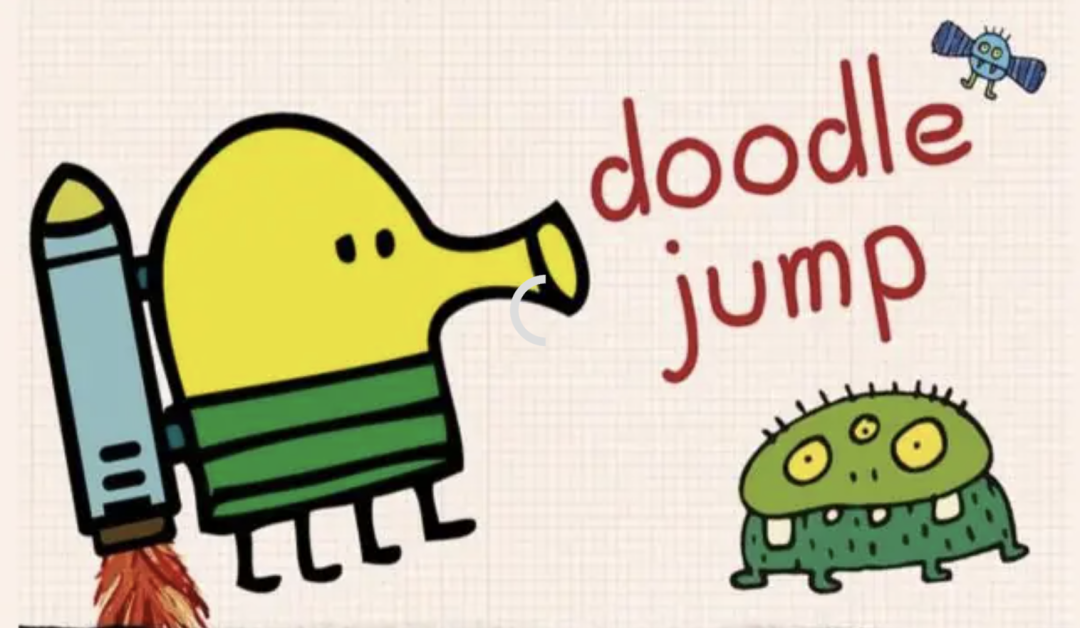
This afternoon, I suddenly had a whim and re-downloaded a game I played years ago when smartphones first came out, called Doodle Jump. You might not recognize the name, but if I post a screenshot, many of you will probably have played it.
Developed in 2009, the game involves a little yellow-skinned character constantly jumping upwards, dodging obstacles and monsters. If you miss a step, you fall and die. The gameplay isn't complicated, but it has a unique feature: it utilizes the accelerometer on smartphones at the time. To make the character jump to the left, you simply tilt the phone to the left; no buttons are needed.
Looking at it from 2026, you might not think it's anything special, but in 2009, the experience was novel, and as a result, the game swept the globe, accumulating over 500 million downloads.
I did some research today and found that the game was developed by two Croatian brothers in six weeks. The two brothers probably earned $60-80 million from this game and became financially independent a long time ago.
However, after their success, they did not expand or leverage their resources. The core of the company remained just the two of them, with a maximum of 2-3 part-time and outsourced employees, maintaining a very small micro-team. So after their initial success, they did not continue to work hard to release a sequel, and for many years they lived off their past achievements until 2020 when they released Doodle Jump 2, which was not very popular, and then they completely gave up.
I quite like their attitude towards life. If they make a fortune by sheer luck, that's enough. Life won't always be about good luck. Don't let the money you make by luck be lost through hard work.
That's all for now, have a great weekend.
In the past two days, many readers have commented on the 4% profit decline of Moutai in 2025. This is the first time since its listing in 2001 that Moutai has experienced an annual net profit decline. Even during the darkest period of 2013-2014, when plasticizers and the crackdown on extravagant spending by government officials were rampant, Moutai's annual profit did not decline (+1.4%). This has caused some retail investors who had previously remained inactive in the liquor stock market to become restless again.
I thought I was lying on the floor 18 stories underground, but then a crack suddenly appeared in the floor next to me. Looking through the crack, I saw that there were several more floors below. The defenses had been breached.
I just took a close look at Moutai's annual report. Its core product, Feitian Moutai, generated 146.5 billion yuan in revenue, a slight increase of 0.39%, with a gross profit margin of 93.5%. This is Moutai's core business, and it's holding up well. The reason for the decline in performance is the poor performance of its series of wines, namely 1935, Prince Moutai, and Lai Mao, whose revenue decreased by 10% and whose gross profit margin also dropped by 3.7%.
Here, we need to explain the distribution mechanism that Moutai had been implementing for many years. The ex-factory price of Feitian Moutai was over 900 yuan, while it sold for around 2,500 yuan on the secondary market, with a premium of 1,500 yuan per bottle. This seemingly easy profit was not without its challenges. Distributors had to bundle and sell other less popular series of liquors with Feitian Moutai.
For example, four or five years ago I saw an ad on Douyin from Moutai Group recruiting distributors. I called them and they said they would give me 15% of Feitian Moutai and 85% of the series of wines. I thought it was unreliable and refused. But those bastards have been calling me every month to ask if I have changed my mind. They have been doing this ever since.
Previously, the high premium of Feitian Moutai made this allocation mechanism work. Now, with the plummeting premium, the series of Moutai wines are not selling, prices are inverted, and distributors no longer want them. Therefore, Moutai recently implemented reforms, allowing distributors to only act as agents, paying a 5% agency service fee. This can alleviate the problem of channel overstocking to some extent, but it is only a temporary solution.
The fundamental issue remains the impact of the alcohol ban, the sluggish real estate market, and the reduction in government and business settings. Furthermore, with falling prices, the demand for stockpiling alcohol as an investment has also decreased. So, has this cycle of baijiu (Chinese liquor) bottomed out? I've read the latest research reports, and the conclusion is that high-end baijiu priced above 800 yuan has reached a safe range, with prices and inventory stabilizing. Mid-range baijiu priced between 300 and 800 yuan faces intense competition, and the destocking cycle is not yet over. Demand for baijiu priced below 300 yuan is still declining, and it hasn't bottomed out yet.
As for Moutai's stock price, the possibility of it falling below 1000 is very small. Its current dividend yield is already 3.67%, and if the stock price drops by 30%, the static dividend yield would be 5%. Unless there is a precipitous collapse in its operations, a large amount of bargain-hunting funds will not allow you to pick up such a bargain. It's quite difficult for it to reach 1000-1200, but anything is possible above 1200.
This afternoon, I suddenly had a whim and re-downloaded a game I played years ago when smartphones first came out, called Doodle Jump. You might not recognize the name, but if I post a screenshot, many of you will probably have played it.
Developed in 2009, the game involves a little yellow-skinned character constantly jumping upwards, dodging obstacles and monsters. If you miss a step, you fall and die. The gameplay isn't complicated, but it has a unique feature: it utilizes the accelerometer on smartphones at the time. To make the character jump to the left, you simply tilt the phone to the left; no buttons are needed.
Looking at it from 2026, you might not think it's anything special, but in 2009, the experience was novel, and as a result, the game swept the globe, accumulating over 500 million downloads.
I did some research today and found that the game was developed by two Croatian brothers in six weeks. The two brothers probably earned $60-80 million from this game and became financially independent a long time ago.
However, after their success, they did not expand or leverage their resources. The core of the company remained just the two of them, with a maximum of 2-3 part-time and outsourced employees, maintaining a very small micro-team. So after their initial success, they did not continue to work hard to release a sequel, and for many years they lived off their past achievements until 2020 when they released Doodle Jump 2, which was not very popular, and then they completely gave up.
I quite like their attitude towards life. If they make a fortune by sheer luck, that's enough. Life won't always be about good luck. Don't let the money you make by luck be lost through hard work.
That's all for now, have a great weekend.
Original Article: View Chinese Version