As you've probably seen in the news, after 21 hours of marathon negotiations, the US and Iran delegations failed to reach an agreement due to sharp disagreements on core issues. On the morning of April 12th, the 300-member US delegation departed Pakistan by plane and returned to the United States.
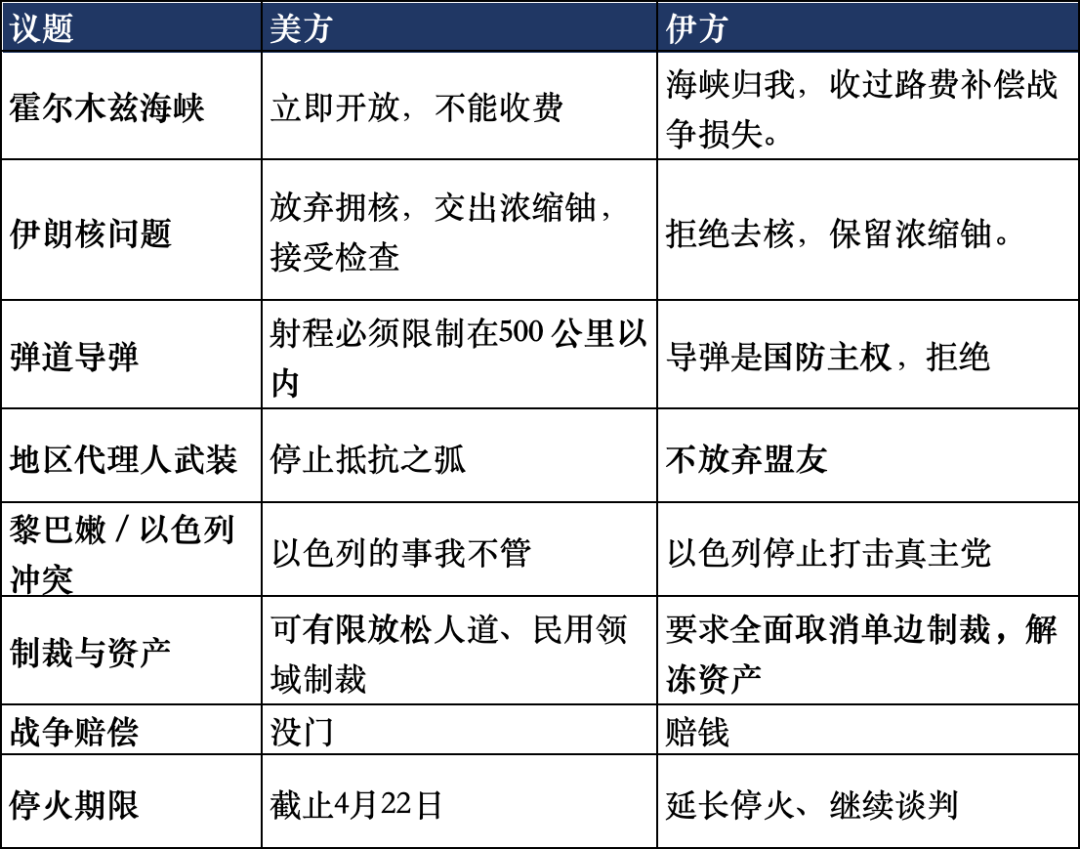
Although they sat down face-to-face at a table yesterday, both sides expressed their positions and found that they could not reach an agreement. The New York Times said that the core differences were three: uranium enrichment, the Strait of Hormuz, and the lifting of sanctions, but in fact, the two sides basically had no consensus.
I don't know how the message from Pakistan was relayed, but I'm starting to suspect someone played the roles of Shen Weijing and Bank Manager Konishi, haha, it was all just a joke before. When Vance realized the negotiations were hopeless, he turned and left. Pakistan tried to persuade him to stay but was refused. Pakistan then suggested a two-week buffer period, which was also rejected. So there was no framework, no memorandum, no statement, no verbal commitment, and no results whatsoever.
The ceasefire agreement is theoretically set to expire on April 22. There may be other developments in the next 10 days, otherwise the fighting will have to resume.
The only sector still trading over the weekend was blockchain. After the news broke, there was a slight dip, erasing the gains from Saturday's positive news and returning it to Friday's levels. This is understandable, given that few believed the negotiations would reach an agreement. There might be a slight shock at Monday's opening, but it certainly won't be a catastrophic piece of bad news.
Many people have a question: why is the United States so willing to side with Israel? Some even mock Israel as America's father.
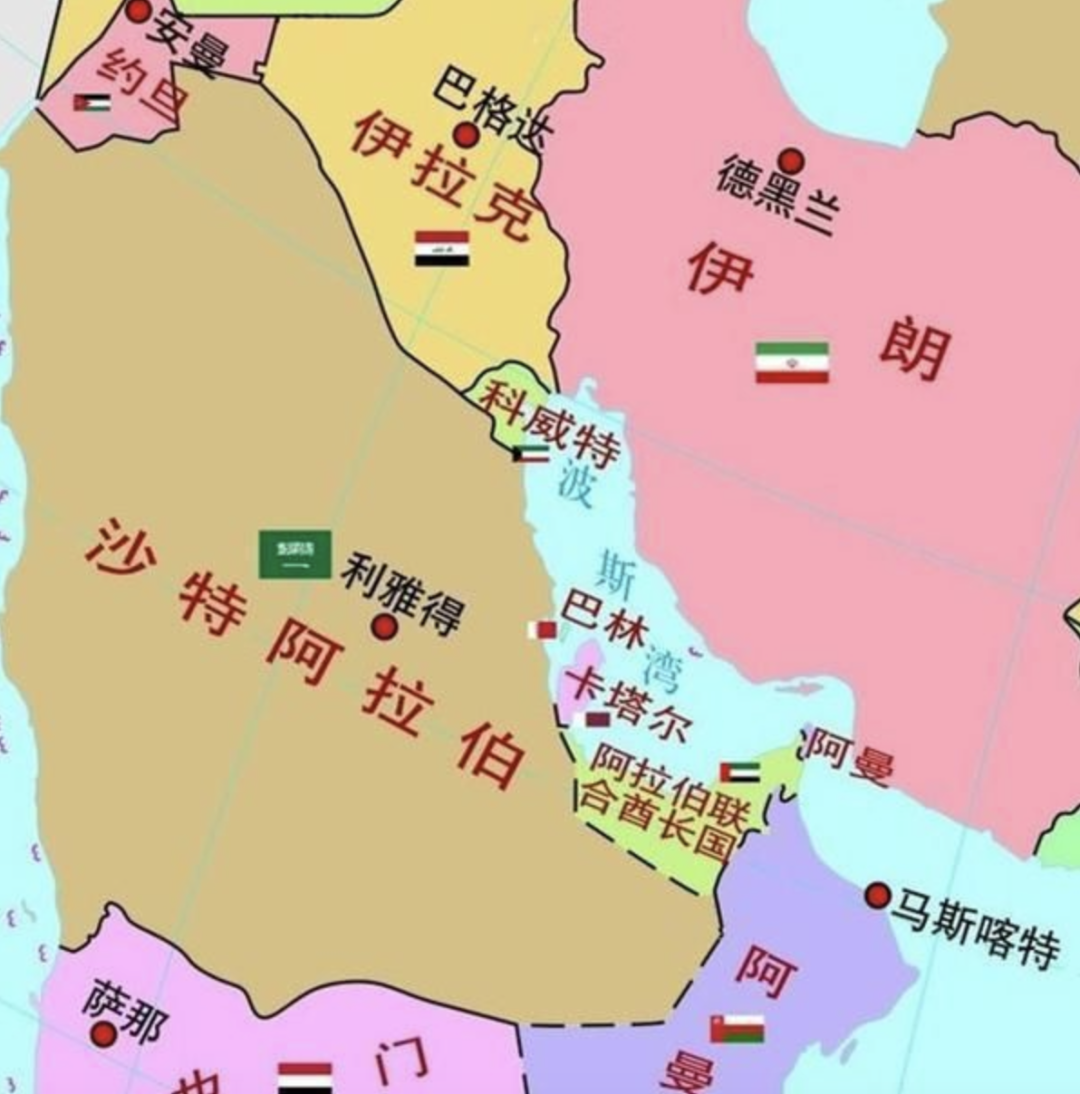
Of course, things are not that simple. First of all, it is important to know that the US military has five core military bases in the Middle East, located in Saudi Arabia, the UAE, Qatar, Bahrain, and Kuwait. All five countries have very poor relations with Iran.
The animosity is certainly not without reason. After Iran overthrew the Pahlavi dynasty, it actively exported revolutions to neighboring countries and supported Shia groups in other places to follow suit and overthrow monarchies. The five countries mentioned above became the main targets because of their large Shia populations.
The most recent large-scale unrest was the anti-monarchy uprising in Bahrain in 2011, in which hundreds of thousands of people took to the streets to protest. It was led by Shiites and paralyzed the government. It seemed that the monarchy was about to fall. Saudi Arabia and the United Arab Emirates urgently sent troops to help suppress the uprising and barely managed to quell it.
Look at the map. These five countries are all in the Persian Gulf, facing their mortal enemy Iran across the sea. The princes live in constant fear, eating and sleeping. They must find a third-party big brother to protect them, and that's how the United States came to the rescue.
The US guarantees their security, they settle oil trade in US dollars, provide bases for the US military, and purchase US arms every year; that's how the deal was made.
So from the US perspective, they probably don't want Iran to be completely eliminated. Maintaining Iran in a state where it poses a threat to the princes but can be easily controlled by them is in the best interest of the US.
Iran's development of nuclear weapons is an attempt to disrupt America's strategic comfort zone, which is intolerable. This is not only about protecting Israel, but also about protecting the dollar's hegemony and America's own interests.
The same logic applies to blocking the Strait of Hormuz. Looking at the map, you can see that the five princely states will be most affected. They pay the United States to protect their homes and property, but now the local gangsters are blocking the entrance to their neighborhood and collecting tolls. If the United States turns a blind eye, it will be much harder for those five princely states to collect protection money in the future.
I wasn't particularly interested in geopolitics before, but this time the situation with Iran has had such a significant and lasting impact on market trends that I've been forced to learn. My analysis above leads to the conclusion that Iran cannot possess nuclear weapons, and the Strait of Hormuz cannot be charged—these are red lines for the United States. Unless the cost exceeds the benefits the US gains in the Middle East, these red lines aren't unchangeable; it just depends on whether Iran has the capability to do so.
1. Two US destroyers transited the Strait of Hormuz. The US claims they were conducting mine-clearing operations in preparation for resuming navigation. Iran's version is that after spotting the US warships, they issued an ultimatum to the Americans negotiating in Islamabad, threatening to open fire if they didn't leave within 30 minutes, which scared the US ships away.
Currently, both sides have conflicting accounts, but it will soon be clear who is lying. I checked Iran's existing arsenal, including its anti-ship missile inventory. If the operation takes place in open waters, the US military is not afraid, but if it takes place in the narrow space of the Strait of Hormuz, the US military will find it difficult to avoid losses.
2. Goldman Sachs' macro team recently predicted that Chinese housing prices will fall by 10-15% in 2026, with the nationwide bottom not expected until 2027 or even later. However, Goldman Sachs' real estate research team believes that Shanghai and Shenzhen will bottom out first by the end of 2026, and will rebound by a cumulative 15% from the bottom by 2028. I actually also think that first-tier cities will be close to bottoming out in the second half of the year, which is why I mentioned at the beginning of the year that I might consider investing in a basic apartment in Beijing in the second half of the year.
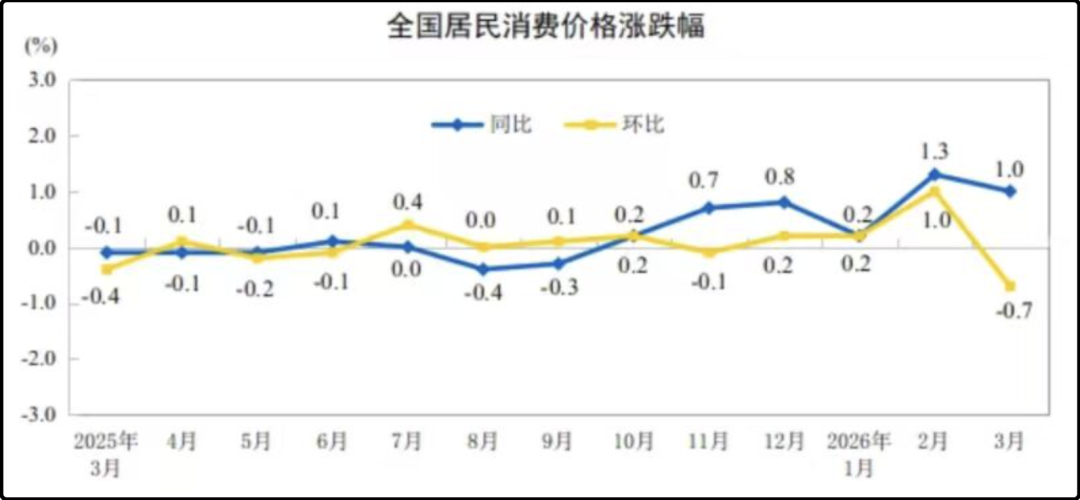
3. The domestic CPI data for March is out. It increased by 1% year-on-year, but decreased by 0.7% month-on-month. This was affected by fluctuations during the Spring Festival. Overall, consumption data has gradually moved away from negative inflation, but it's still some distance from the 2% target. It represents a slight improvement, but not enough. I'm actually more concerned about the March data for tobacco and alcohol, but that's part of retail sales data and won't be released until next Friday.
4. The US CPI data for March is out, showing a year-on-year increase of 3.3%, a significant rise from February's 2.4%, mainly due to the surge in oil prices. Data shows that regular US consumption remained relatively stable, while discretionary spending (retail, clothing, appliances, entertainment) slowed, likely due to the pressure from rising oil prices on this segment of spending. Overall, the outlook is bearish and could lead to a more hawkish stance from the Federal Reserve.
5. News tonight indicates that Trump has instructed the US military to blockade the Strait of Hormuz, prohibiting Iranian ships from passing through and intercepting ships that have paid transit fees to Iran. Therefore, the US government's strategy is to halt all travel, denying Iran the option to choose its route, thus cutting off Iran's financial resources and ultimately increasing the pain of war.
That's all for now. Hopefully, the stock market will be better next week.
Original Article: View Chinese Version