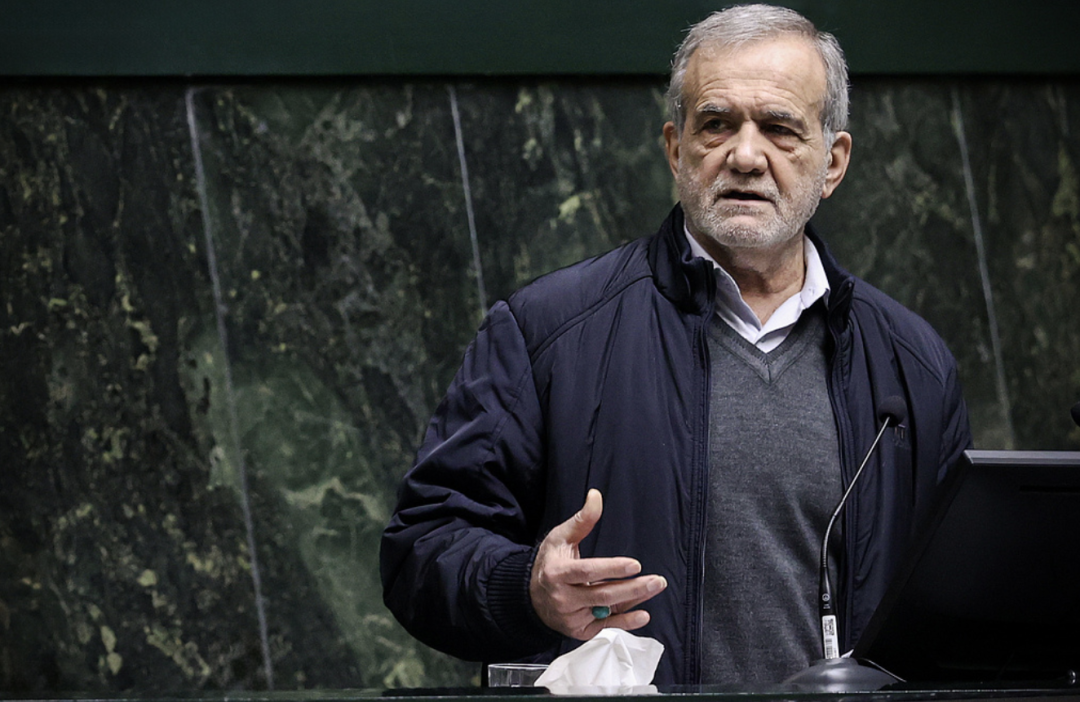
The most important information in the past 24 hours came around 23:45 on Tuesday night (Beijing time) when Iranian President Pezechzian, in a phone call with European Council President António Costa , said that Iran does not intend to escalate the conflict and is willing to end the war, but needs to obtain reliable guarantees from the US and Israel that it will "no longer invade".
Stimulated by this news, the Nasdaq surged 3.8% last night, the S&P 500 rose 2.9%, and global stock markets collectively rallied during the day today, with South Korea up 9%, Nikkei up 5%, Taiwan up 4.5%, and Hang Seng up 2%. In comparison, the A-share market's gains were relatively small.
Pezechzian is Iran's democratically elected president. He took office in 2024 after defeating a hardline candidate with 53.6% of the vote. He represents the moderate/reformist faction in Iran and is not one of Khamenei's "own people," therefore his power is strictly limited. The Iranian president has no military power, no diplomatic power, and no control over nuclear policy; he only acts in the areas of domestic economic and social welfare.
Previously, a series of high-ranking Iranian officials were beheaded, but Pezechyan survived. Many netizens joked that he might be an inside agent. I think this possibility is unlikely, but the US and Israel may have deliberately chosen to "let him go." There is no need to behead a democratically elected president who has no real power, is not a major adversary, and has a moderate political stance. Leaving him alive is a good option for future ceasefire negotiations.
Of course, Pezzichyan's statement was definitely at the behest of Iran's top leadership, but the reliable guarantee they demand of a "no more aggression" from the US and Israel is unlikely to be fulfilled. If, and I mean if, six months later Iran secretly digs up enriched uranium from underground and tries to develop nuclear weapons again, it certainly won't be hidden from Israel. At that point, they'll definitely call on their big brother to continue the attack. If the US wants to take action, who on Earth can stop it…?
I have a terrible idea. In ancient times, to prevent war, the other side would send hostages. Iran could ask the US to appoint a member of Trump's family as a special envoy to Iran for 33 months.  Judging from the current situation, there is a high probability that the war will be ceased within half a month. Oil prices plummeted during the day today, with Brent crude falling from 106 to 98, but rebounded slightly tonight to 101. After all, without a complete ceasefire, the situation remains uncertain.
Israel is still actively bombing Iran, having bombed more than 200 targets in the past day, mainly military industrial facilities, including steel mills and weather stations, which are also military-related targets. They are trying to weaken Iran as much as possible before a formal ceasefire.
Regarding the Strait of Hormuz, Iran has stated that it will open it later, but not to the United States. In reality, the United States' dependence on the Strait of Hormuz is very low, less than 2%, which is negligible. Israel's dependence is even lower, at 0%.
Which countries and regions are highly dependent on the Strait of Hormuz?
Japan's dependence rate is approximately 78%, South Korea's is approximately 68%, India's is approximately 45%, and the European Union's is approximately 20%. In fact, China's dependence rate is also quite high, around 40%, but Iran is a good friend and should not make things difficult for us.
Iran could indeed accept tolls if it were willing to do so, but such money, which violates international law, would damage Iran's international relations in the long run and would cause resentment among some neutral countries. When the US bombs again, there would be even more people secretly plotting against it.
Today, A-shares saw a turnover of 2 trillion yuan, with most indices rising. The median gain of 1.5% is decent, but given the global rebound amid easing tensions in Iran, it's only so-so. It seems unlikely that even with a formal ceasefire in Iran, the market will return to its previous pace anytime soon. The March decline was the largest pullback since the bull market began last April, essentially a bucket of ice water poured over its head, dampening the enthusiasm of the most aggressive investors.
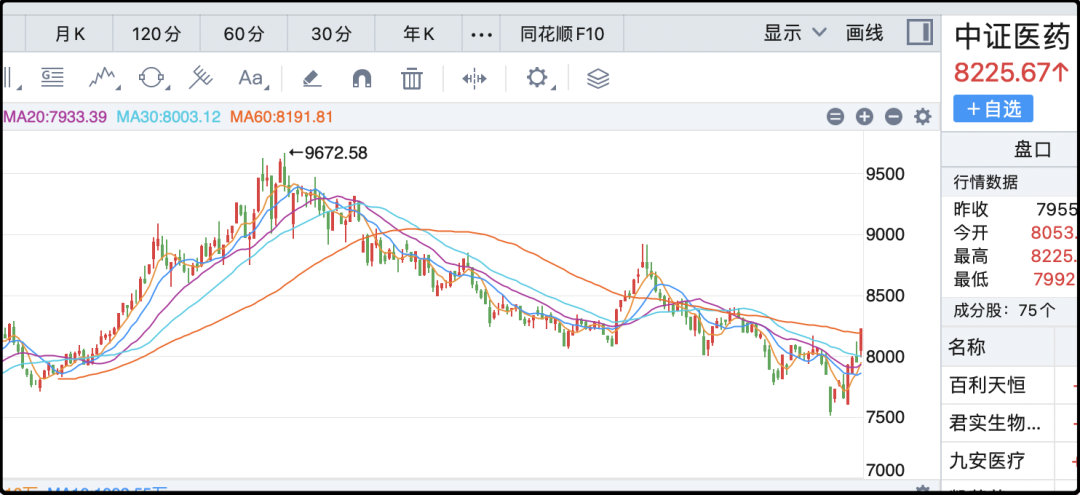
The innovative drug sector surged 4.7% today , mainly due to two major pharmaceutical acquisitions announced yesterday (March 31st) in the US stock market: Eli Lilly acquired Centessa for $7.8 billion, and Biogen acquired Apellis for $5.6 billion. These two acquisitions attracted capital attention to the pharmaceutical sector, consequently boosting the valuations of various pharmaceutical product lines.
The A-share market is moving in tandem, with chemical pharmaceuticals up 4.6%, biopharmaceuticals up 4.7%, and medical services up 5.3%. However, this kind of event-driven market is always unsustainable. Pharmaceutical stocks have been declining for 1-2 months, and then they are boosted by news. This has been the norm for the past few years. If you are eager to rush in, you'd better wait a few more days.
The CSI Pharmaceutical Index has retreated by 20% since it peaked in early September last year.
There was also a rumor circulating in the market today that Laplace, a listed company, had won the bid for the second phase of Tesla's solar power project, with an order size of nearly 10 billion yuan. This rumor immediately caused Laplace's stock price to surge, hitting the 20% daily limit, while the entire solar equipment sector rose by 4%. However, Laplace subsequently responded to the rumor, stating that the listed company had not received any related orders, and the stock price fell back to close at 11%.
I specifically checked the source of the information; it was an exclusive report published by Jiemian News at 10:50 AM. Interestingly, the original post wasn't deleted; it's still there when I checked just now. It's possible that this is indeed true, but it hasn't been finalized yet, so they're just keeping the information as is. I feel like many of the funds rushing into the photovoltaic sector today are thinking the same thing.
1. Trump said he is "seriously considering" withdrawing from NATO. But in reality, this is not something he can decide, nor can he actually do. The process for the US to withdraw from NATO is extremely difficult, requiring a two-thirds majority vote in the Senate; it's not something the president can do with a post or a whim. Trump is angry that some European countries didn't help him in the recent war with Iran, and he's using the issue of withdrawal to manipulate them. The defense sector in European stock markets rose 4% today.
2. As of the latest update, the U.S. military is still increasing its troop presence in the Middle East. The third aircraft carrier, the USS George, is on its way, 3,000 paratroopers from the 82nd Airborne Division have arrived, and 5,000 Marines have arrived, bringing the total number of U.S. troops in the Middle East to 53,000.
There are two possibilities for bringing so many troops: one is that they're faking ceasefire negotiations to launch a surprise attack and seize Harker Island; the other is that they're deploying a large army to provide military deterrence for the ceasefire negotiations. I still believe that ground contact is not cost-effective for the US military and the probability is low, but since it's an investment, we should be prepared for potential risks.
That's all for now. I've been writing for another two months, so as usual, I'm asking for payment. Same rules as before: it's up to you whether you pay me or not, and how much you pay is also up to you, but I suggest 1 yuan is enough. There's something else I need to clarify: the money I give out as year-end bonuses and daily perks mainly comes from the advertising revenue at the bottom of the articles, and has nothing to do with payment for writing. Payment for writing is a recognition of my content by the readers, and I won't share a single penny of that with anyone.
Judging from the current situation, there is a high probability that the war will be ceased within half a month. Oil prices plummeted during the day today, with Brent crude falling from 106 to 98, but rebounded slightly tonight to 101. After all, without a complete ceasefire, the situation remains uncertain.
Israel is still actively bombing Iran, having bombed more than 200 targets in the past day, mainly military industrial facilities, including steel mills and weather stations, which are also military-related targets. They are trying to weaken Iran as much as possible before a formal ceasefire.
Regarding the Strait of Hormuz, Iran has stated that it will open it later, but not to the United States. In reality, the United States' dependence on the Strait of Hormuz is very low, less than 2%, which is negligible. Israel's dependence is even lower, at 0%.
Which countries and regions are highly dependent on the Strait of Hormuz?
Japan's dependence rate is approximately 78%, South Korea's is approximately 68%, India's is approximately 45%, and the European Union's is approximately 20%. In fact, China's dependence rate is also quite high, around 40%, but Iran is a good friend and should not make things difficult for us.
Iran could indeed accept tolls if it were willing to do so, but such money, which violates international law, would damage Iran's international relations in the long run and would cause resentment among some neutral countries. When the US bombs again, there would be even more people secretly plotting against it.
Today, A-shares saw a turnover of 2 trillion yuan, with most indices rising. The median gain of 1.5% is decent, but given the global rebound amid easing tensions in Iran, it's only so-so. It seems unlikely that even with a formal ceasefire in Iran, the market will return to its previous pace anytime soon. The March decline was the largest pullback since the bull market began last April, essentially a bucket of ice water poured over its head, dampening the enthusiasm of the most aggressive investors.
The innovative drug sector surged 4.7% today , mainly due to two major pharmaceutical acquisitions announced yesterday (March 31st) in the US stock market: Eli Lilly acquired Centessa for $7.8 billion, and Biogen acquired Apellis for $5.6 billion. These two acquisitions attracted capital attention to the pharmaceutical sector, consequently boosting the valuations of various pharmaceutical product lines.
The A-share market is moving in tandem, with chemical pharmaceuticals up 4.6%, biopharmaceuticals up 4.7%, and medical services up 5.3%. However, this kind of event-driven market is always unsustainable. Pharmaceutical stocks have been declining for 1-2 months, and then they are boosted by news. This has been the norm for the past few years. If you are eager to rush in, you'd better wait a few more days.
The CSI Pharmaceutical Index has retreated by 20% since it peaked in early September last year.
There was also a rumor circulating in the market today that Laplace, a listed company, had won the bid for the second phase of Tesla's solar power project, with an order size of nearly 10 billion yuan. This rumor immediately caused Laplace's stock price to surge, hitting the 20% daily limit, while the entire solar equipment sector rose by 4%. However, Laplace subsequently responded to the rumor, stating that the listed company had not received any related orders, and the stock price fell back to close at 11%.
I specifically checked the source of the information; it was an exclusive report published by Jiemian News at 10:50 AM. Interestingly, the original post wasn't deleted; it's still there when I checked just now. It's possible that this is indeed true, but it hasn't been finalized yet, so they're just keeping the information as is. I feel like many of the funds rushing into the photovoltaic sector today are thinking the same thing.
1. Trump said he is "seriously considering" withdrawing from NATO. But in reality, this is not something he can decide, nor can he actually do. The process for the US to withdraw from NATO is extremely difficult, requiring a two-thirds majority vote in the Senate; it's not something the president can do with a post or a whim. Trump is angry that some European countries didn't help him in the recent war with Iran, and he's using the issue of withdrawal to manipulate them. The defense sector in European stock markets rose 4% today.
2. As of the latest update, the U.S. military is still increasing its troop presence in the Middle East. The third aircraft carrier, the USS George, is on its way, 3,000 paratroopers from the 82nd Airborne Division have arrived, and 5,000 Marines have arrived, bringing the total number of U.S. troops in the Middle East to 53,000.
There are two possibilities for bringing so many troops: one is that they're faking ceasefire negotiations to launch a surprise attack and seize Harker Island; the other is that they're deploying a large army to provide military deterrence for the ceasefire negotiations. I still believe that ground contact is not cost-effective for the US military and the probability is low, but since it's an investment, we should be prepared for potential risks.
That's all for now. I've been writing for another two months, so as usual, I'm asking for payment. Same rules as before: it's up to you whether you pay me or not, and how much you pay is also up to you, but I suggest 1 yuan is enough. There's something else I need to clarify: the money I give out as year-end bonuses and daily perks mainly comes from the advertising revenue at the bottom of the articles, and has nothing to do with payment for writing. Payment for writing is a recognition of my content by the readers, and I won't share a single penny of that with anyone.
Original Article: View Chinese Version