The situation between the US and Iran did not improve over the weekend and is on the verge of escalating again.
The US and Israel have begun expanding their bombing campaign against Iran, targeting steel mills, military-affiliated science and technology universities, and even water storage systems in local provinces. The limits of the war effort are being lowered considerably. Iran has been without internet access for the past month, with international data connectivity reduced to only 1-3% of pre-war levels. VPNs are also unusable, and Starlink devices are fetching exorbitant prices on the black market. The government is conducting intensive raids, with those arrested facing imprisonment.
Iran is currently experiencing food inflation exceeding 100%, with ordinary citizens spending more than half of their monthly income on food. Furthermore, public services such as healthcare, transportation, communications, utilities, and banking are frequently disrupted and are barely maintained. This is the suffering of civilians during wartime; if the war intensifies further, a severe humanitarian crisis could occur.
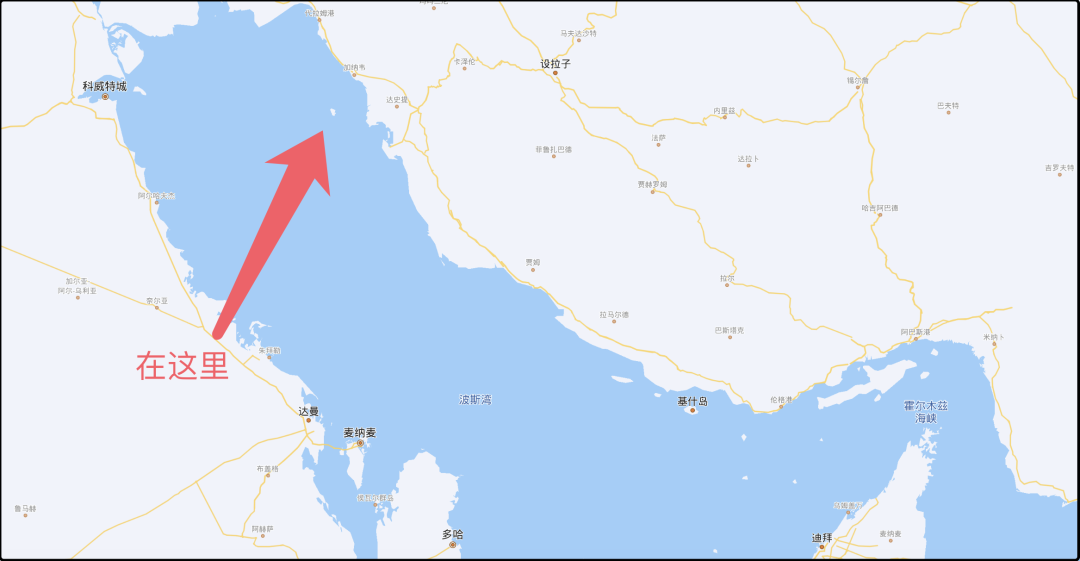
There's not much to discuss between the US and Iran right now. Iran is launching missiles aggressively at Israel and US military bases, while the US is rushing to send troops to reinforce them. The next target is likely to be the capture of Kharg Island. As I mentioned in a previous article, this island is about 0.6 times the size of Macau, has Iran's only deep-water port, and is connected by four underwater oil pipelines. 90% of Iran's oil exports come from the island each year. If it falls, Iran will lose nearly 50% of its fiscal revenue.
Furthermore, if the island is captured, Iran will face a difficult choice. Continuing to transport oil from the seabed would simply be giving it away to the US military, but shutting down the wells would cause irreversible damage over time (several months).
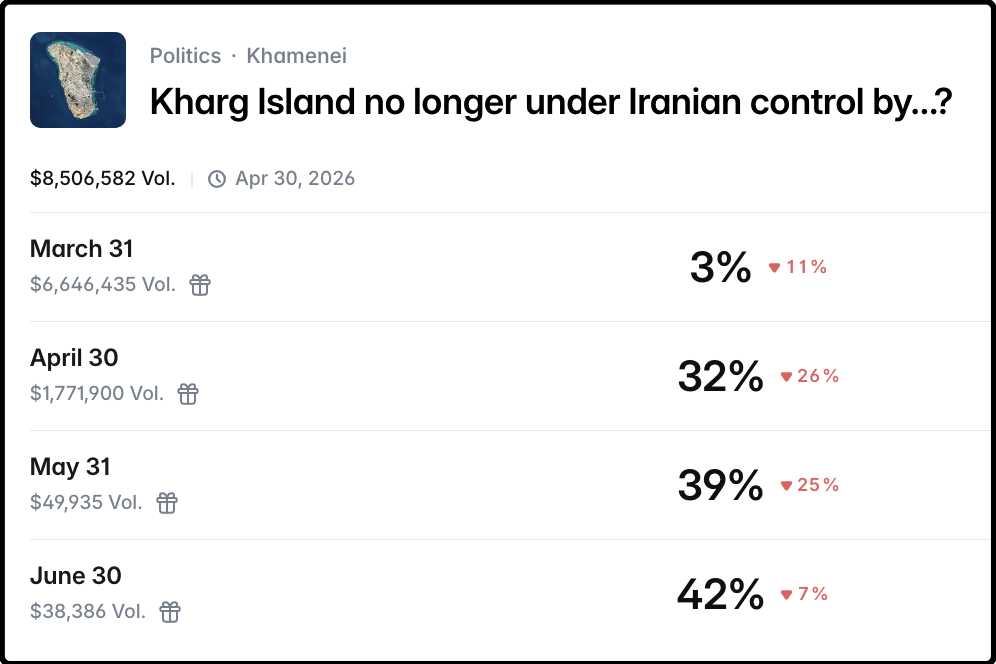
Because it concerns the very foundation of the nation, Iran has stationed thousands of Islamic Revolutionary Guard Corps troops on the island, dug bunkers, and laid landmines, preparing for a possible US invasion. Online gambling platforms have offered odds on the likelihood of a successful US takeover, estimating a 40% chance – a rather pessimistic view. Speculation suggests the US would suffer 500-1000 casualties, a level of political pressure the Trump administration would find difficult to withstand.
 The Strait of Hormuz is now closed again. I checked and found that 15-17 Chinese merchant ships passed through the strait in the past month, while more than 100 Chinese merchant ships are stuck in the Persian Gulf. Although Iran announced that friendly countries (including China) are allowed safe passage, in practice it's a "drip-feed" system of special permission, with each ship having a very difficult time getting through. After March 27th, it was completely locked down, and no one can get through.
It seems that Iran's statement about allowing flights is merely a political gesture to gain international support; they don't actually want to release anyone. Right now, they just want to drive oil prices crazy as quickly as possible and put pressure on inflation in the US.
This is a special kind of war. The goal is not entirely about killing; the point of contention between the two sides is to inflict the pain of war on each other. The United States wants to cripple Iran's fiscal revenue and military-industrial capacity, while Iran wants to drive up oil prices to make the American people complain. It's a matter of seeing who can't hold on any longer.
It feels like the conflict could escalate at any time in the next 1-2 weeks, and oil prices might be stimulated to rise back to around $120. This is the biggest uncertainty risk for the A-share market. The verbal negotiations between the two sides through intermediaries a few days ago have failed. Judging from the conditions offered by both sides, it's clear that both the US and Iran believe they have already won.
How can both sides win a war? So the fighting can only continue until one side recognizes reality and compromises.
1. US stocks fell nearly 2% on Friday night, with the S&P 500 having retreated 8.7% from its all-time high. The current pullback is at the monthly level, but not enough; a yearly pullback would likely require a drop of over 20%. I sold some of my positions in the second half of last year, hoping to recover them this year. If the situation in Iran continues to escalate, a -20% drop seems possible.
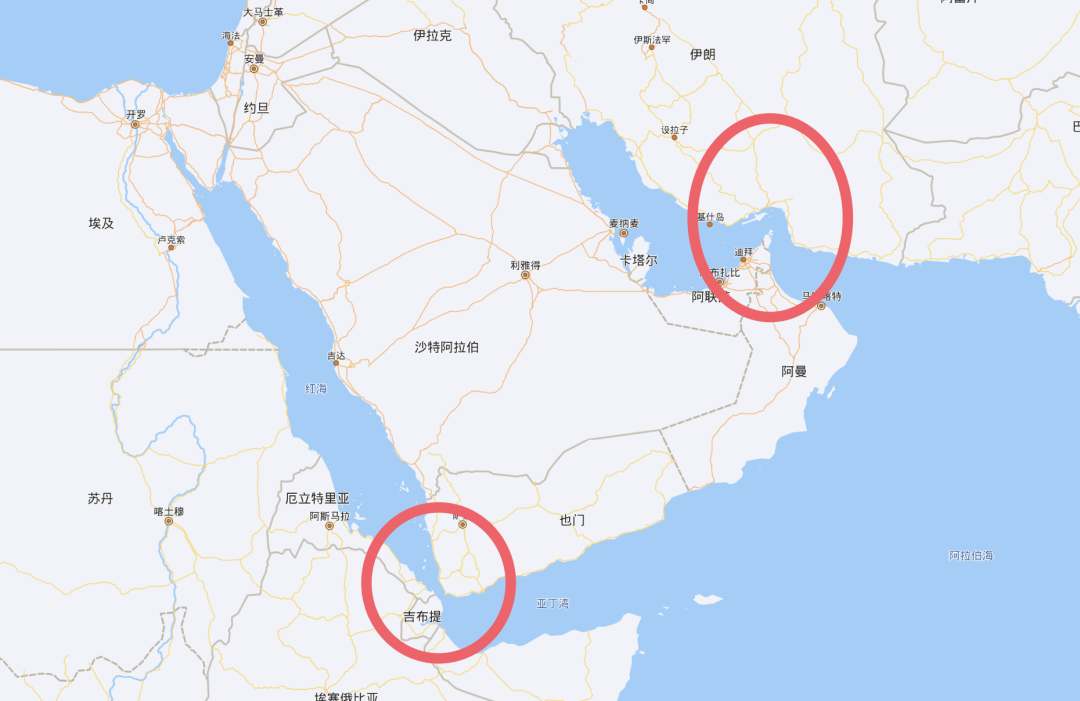
2. The Houthi rebels launched missiles at Israel, formally declaring war. They do not border Israel, separated by Saudi Arabia over 1600 kilometers. Their involvement at this time is primarily for political support of Iran; after all, they are brothers in the Crescent of Resistance, and the hundreds of millions of dollars in subsidies they receive annually from Iran are not for nothing. Their military threat to Israel is negligible. The Houthis' real trump card is the blockade of the Bab el-Mandeb Strait, a crucial passage for passage through the Red Sea and the Suez Canal.
The two brothers were also born in a very convenient location, one on the left and one on the right, blocking the two straits of the Arabian Peninsula. This allows them to easily intercept and rob travelers, disrupting global trade. Coupled with inexpensive drones, they are virtually impossible to defend against, making them no less formidable than nuclear weapons in terms of strategic deterrence.
3. Haier Smart Home plans to repurchase 3-6 billion yuan worth of A-shares due to a sharp drop in its fourth-quarter performance and recent stock price decline, requiring some funds to support its share price. This reflects the different attitudes of Chinese and American listed companies towards share buybacks. US companies buy back shares as long as they make a profit, regardless of market conditions or price. A-share companies, on the other hand, do not buy back shares when the market is performing well; they only release funds to appease the market when prices have plummeted.
4. Iran's missile strikes targeted Emirates Global Aluminium (EGA), the Middle East's largest aluminum producer. Although EGA's shareholders are the UAE and Dubai's sovereign wealth fund, it was also targeted due to its business dealings with the United States. EGA accounts for 4% of global aluminum production, which could potentially impact aluminum prices. Let's see what happens tomorrow morning.
5. This weekend I heard several pieces of news about a well-known real estate company. They've started liquidating past business, with executives being asked to return money, and local branch managers being investigated for any irregularities in previous accounts. If it were a private company, you could just mess things up, but now that state-owned assets have suffered such a huge loss, it's like the sky has fallen and no one can escape responsibility.
6. The Central Bank of Türkiye sold $8 billion worth of gold.
The Strait of Hormuz is now closed again. I checked and found that 15-17 Chinese merchant ships passed through the strait in the past month, while more than 100 Chinese merchant ships are stuck in the Persian Gulf. Although Iran announced that friendly countries (including China) are allowed safe passage, in practice it's a "drip-feed" system of special permission, with each ship having a very difficult time getting through. After March 27th, it was completely locked down, and no one can get through.
It seems that Iran's statement about allowing flights is merely a political gesture to gain international support; they don't actually want to release anyone. Right now, they just want to drive oil prices crazy as quickly as possible and put pressure on inflation in the US.
This is a special kind of war. The goal is not entirely about killing; the point of contention between the two sides is to inflict the pain of war on each other. The United States wants to cripple Iran's fiscal revenue and military-industrial capacity, while Iran wants to drive up oil prices to make the American people complain. It's a matter of seeing who can't hold on any longer.
It feels like the conflict could escalate at any time in the next 1-2 weeks, and oil prices might be stimulated to rise back to around $120. This is the biggest uncertainty risk for the A-share market. The verbal negotiations between the two sides through intermediaries a few days ago have failed. Judging from the conditions offered by both sides, it's clear that both the US and Iran believe they have already won.
How can both sides win a war? So the fighting can only continue until one side recognizes reality and compromises.
1. US stocks fell nearly 2% on Friday night, with the S&P 500 having retreated 8.7% from its all-time high. The current pullback is at the monthly level, but not enough; a yearly pullback would likely require a drop of over 20%. I sold some of my positions in the second half of last year, hoping to recover them this year. If the situation in Iran continues to escalate, a -20% drop seems possible.
2. The Houthi rebels launched missiles at Israel, formally declaring war. They do not border Israel, separated by Saudi Arabia over 1600 kilometers. Their involvement at this time is primarily for political support of Iran; after all, they are brothers in the Crescent of Resistance, and the hundreds of millions of dollars in subsidies they receive annually from Iran are not for nothing. Their military threat to Israel is negligible. The Houthis' real trump card is the blockade of the Bab el-Mandeb Strait, a crucial passage for passage through the Red Sea and the Suez Canal.
The two brothers were also born in a very convenient location, one on the left and one on the right, blocking the two straits of the Arabian Peninsula. This allows them to easily intercept and rob travelers, disrupting global trade. Coupled with inexpensive drones, they are virtually impossible to defend against, making them no less formidable than nuclear weapons in terms of strategic deterrence.
3. Haier Smart Home plans to repurchase 3-6 billion yuan worth of A-shares due to a sharp drop in its fourth-quarter performance and recent stock price decline, requiring some funds to support its share price. This reflects the different attitudes of Chinese and American listed companies towards share buybacks. US companies buy back shares as long as they make a profit, regardless of market conditions or price. A-share companies, on the other hand, do not buy back shares when the market is performing well; they only release funds to appease the market when prices have plummeted.
4. Iran's missile strikes targeted Emirates Global Aluminium (EGA), the Middle East's largest aluminum producer. Although EGA's shareholders are the UAE and Dubai's sovereign wealth fund, it was also targeted due to its business dealings with the United States. EGA accounts for 4% of global aluminum production, which could potentially impact aluminum prices. Let's see what happens tomorrow morning.
5. This weekend I heard several pieces of news about a well-known real estate company. They've started liquidating past business, with executives being asked to return money, and local branch managers being investigated for any irregularities in previous accounts. If it were a private company, you could just mess things up, but now that state-owned assets have suffered such a huge loss, it's like the sky has fallen and no one can escape responsibility.
6. The Central Bank of Türkiye sold $8 billion worth of gold.
Original Article: View Chinese Version