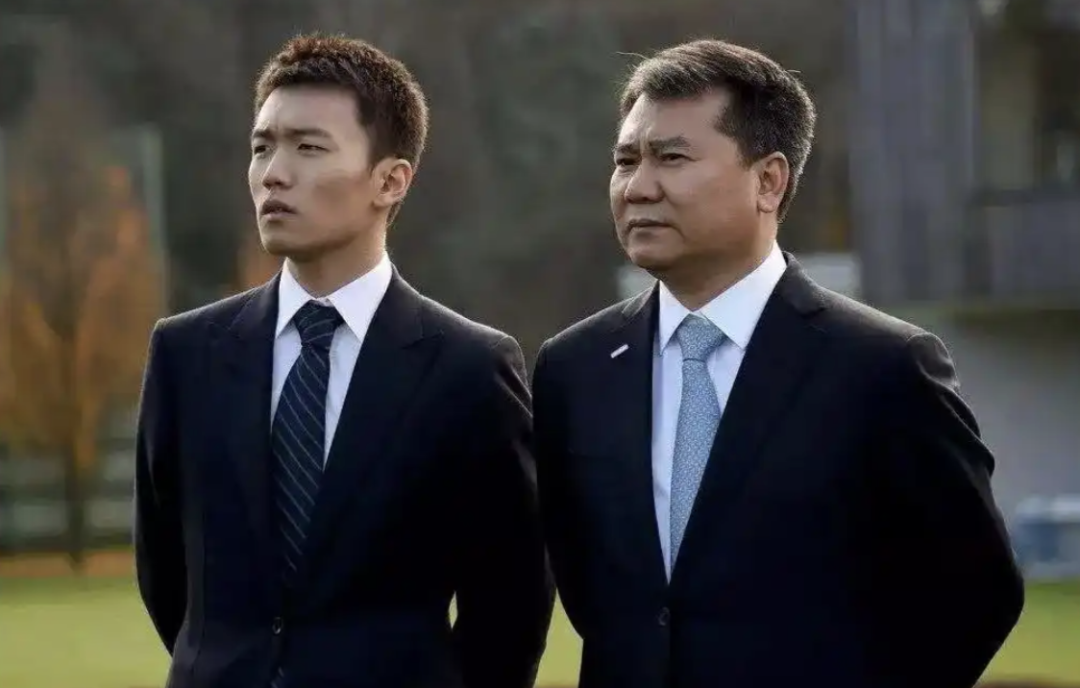
In the past few days, I've mentioned several times that I ask AI 30-50 questions every day to improve the efficiency of information gathering and learning. Many people feel they don't have that many questions, and some even ask what kind of questions I ask. Let me give you a concrete example. For instance, a few days ago, a reader asked me about Zhang Jindong's personal assets being wiped out to offset Suning's 238.7 billion yuan debt, and asked for my opinion on this matter.
My first question is, who does this 238.7 billion yuan owe?
AI answers: 50% owed to banks, through asset-backed loans; 33% owed to institutions and insurance companies, mainly corporate bonds; 17% owed to upstream and downstream suppliers, primarily small and micro enterprises. Okay, now we know who the creditors are.
The second question is: how did this loss of 238.7 billion yuan occur?
Suning's offline business was crushed, its online transformation failed, and its main business lost 80 billion yuan; its external expansion investments failed year after year (Carrefour China, PPTV, Tiantian Express, Wanda Commercial, Inter Milan, Evergrande, etc.), resulting in a total loss of 80 billion yuan; and over the years, its financial costs and asset impairment have exceeded 70 billion yuan.
The third question concerns the compensation plan.
A total of 47.7 billion yuan has been compensated, which translates to a repayment rate of slightly over 20% based on the total debt of 238.7 billion yuan. Small creditors with debts under 100,000 yuan have received full repayment, while the tiered system for debts over 100,000 yuan is complex but generally falls within the 20-30% range.
The fourth question concerns Zhang Jindong's situation.
Of the 47.7 billion yuan in compensation, 8 billion yuan was borrowed from AMC as an emergency measure, and the remaining 40 billion yuan was raised by selling Suning's assets and all of Zhang Jindong's personal assets. Legally, Zhang Jindong's domestic assets are now zero, leaving only a 68-square-meter old house. Some might ask if he might have a secret vault for safety, but under the legal framework, there are certainly none left. As for the speculation that he might have a few million yuan in cash hidden in some unknown box, such speculation cannot be disproven. However, with so many creditors watching him from within China, it's impossible for him to continue living a lavish lifestyle.
The fifth question was whether he had transferred his assets to his son.
Zhang Kangyang's situation is not much better than his father's. He borrowed billions of dollars from foreign banks when he invested in Inter Milan, and now he is also heavily in debt and being chased by offshore institutions.
The sixth question was why the father and son had ended up in such a miserable state.
Because Suning signed personal guarantees for all its financing back then, the company's debts were also personal debts with unlimited liability. This is the reality for private enterprises; the boss can't get loans without signing personal guarantees. Although Zhang Jindong's assets were liquidated, at least he is still free, which is much better than Xu Jiayin, whose future is uncertain.
I've written about many stories of top billionaires experiencing dramatic rises and falls due to leverage. What's special about Zhang Jindong and his son is that his son is exceptionally well-educated, graduating from the Wharton School of the University of Pennsylvania, the world's number one business school. After graduation, he worked at both Morgan Stanley and JPMorgan Chase, but the projects he led after returning to take over the family business ended in dismal failure.
Given his educational background, shouldn't he be advising his father to buy Teslas, Nvidia, Microsoft, Google, or other meta-algorithms…?
The above is the process by which I encountered something interesting, used AI to inquire about related information, and finally expanded to achieve the result I wanted. After writing it, I sent it to Gemini, Doubao, and Grok. They said the general framework was correct, and only offered some suggestions for modification on a few wordings.
It's not just about writing the nightly report; I also ask about all sorts of topics, such as game tips, celebrity gossip, astronomical knowledge, historical anecdotes, industry development, financial instruments, and blockchain updates. On average, I ask about these topics 30 to 50 times a day.
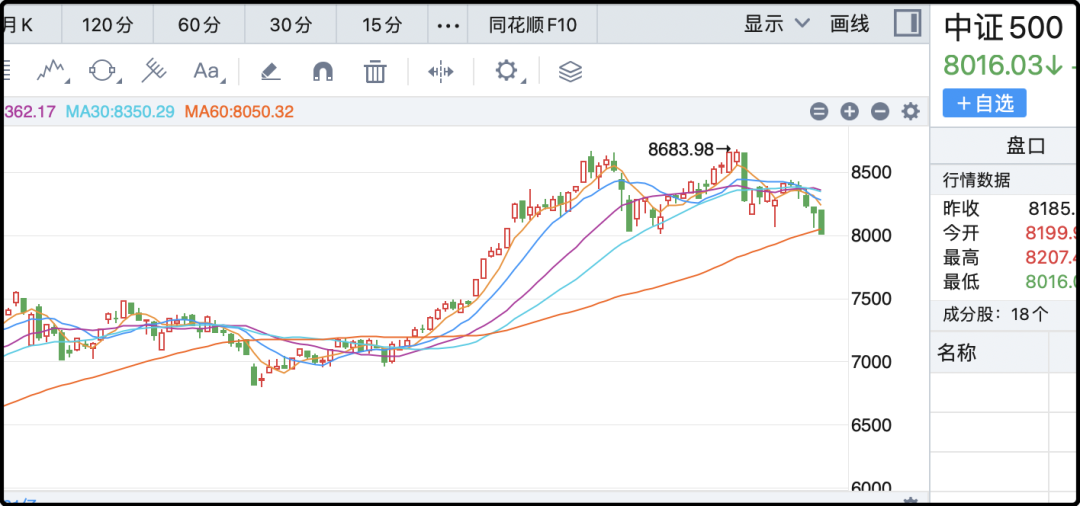
By maintaining curiosity and being good at asking questions, I can use AI to efficiently expand my information circle and cognitive boundaries. Although I am over 40 years old, I am still learning every day, so I always feel that I am in a pretty good state. Use it or lose it, right? Maybe I am even smarter than I was at 20.  The situation in A-shares today is not good. Trading volume was sluggish at only 2.21 trillion yuan, with a median decline of 1.89%. The gains made yesterday were all wiped out, and the CSI 500 index was pushed back down to the 8,000-point mark, with the risk of breaking down further.
The direct cause appears to be external risk pressure: Iran's attack on UAE oil fields and ports led to a 5% increase in international oil prices, rising global inflation expectations, and market concerns that central banks would implement "precautionary interest rate hikes" to tighten global liquidity, which is naturally a negative factor for the stock market.
Specifically regarding the A-share market, today's decline was mainly driven by a collective plunge in the technology sector, with communications, optical modules, components, and semiconductors all among the top 10 biggest losers. Some say it's due to the realization of negative news from Nvidia's GTC conference, while others say it's due to funds retreating to avoid risks; both explanations have some merit.
Today, the few sectors that rose were all in the "air raid shelter sector," including banking, insurance, securities, real estate, and steel. This kind of single-day style shift has occasionally occurred before, but it has never been sustainable. There is no need to over-interpret this time; let's observe for a few more days.
Last year, I reduced my IC holdings by 1/3 at 7000-7770, with an average selling cost of around 7400, which is 7% lower than today's closing price. So don't ask me if I will buy the dip. I have never even considered the CSI 3000 points. I'll talk about it when it falls back into the bear market range in a few years.
Many readers have asked whether the Shanghai Composite Index will fall below 4,000 points. If you ask Pan Gongsheng or Wu Qing, neither of them would dare to say, let alone me. All you can do is adjust your position to ensure that you can cope if it falls.
1. Israel claims that its nighttime attack on the 16th and 17th killed Iran's "de facto leader," Larijani, whose publicly known position is Secretary of Iran's Supreme National Security Council. However, Iran has denied this, releasing a handwritten eulogy by Larijani to the fallen naval personnel; he himself did not appear in the image. It's currently unclear who is lying, but the survival status of a key figure like Larijani is unlikely to be concealed for more than three days.
Netanyahu, who was also rumored to be dead, posted a video in a coffee shop, specifically showing his hands to the camera, because someone had previously said that he had six fingers in an AI video.
2. Ant Group acquired a 50.55% stake in Bright Smart Securities for HK$2.8 billion, gaining control and aiming to obtain a full brokerage license in Hong Kong, thus opening up offshore financial access. There are market rumors that this is for future stablecoin business, but I haven't seen Bright Smart Securities holding a stablecoin license.
That's all for now, launch!
The situation in A-shares today is not good. Trading volume was sluggish at only 2.21 trillion yuan, with a median decline of 1.89%. The gains made yesterday were all wiped out, and the CSI 500 index was pushed back down to the 8,000-point mark, with the risk of breaking down further.
The direct cause appears to be external risk pressure: Iran's attack on UAE oil fields and ports led to a 5% increase in international oil prices, rising global inflation expectations, and market concerns that central banks would implement "precautionary interest rate hikes" to tighten global liquidity, which is naturally a negative factor for the stock market.
Specifically regarding the A-share market, today's decline was mainly driven by a collective plunge in the technology sector, with communications, optical modules, components, and semiconductors all among the top 10 biggest losers. Some say it's due to the realization of negative news from Nvidia's GTC conference, while others say it's due to funds retreating to avoid risks; both explanations have some merit.
Today, the few sectors that rose were all in the "air raid shelter sector," including banking, insurance, securities, real estate, and steel. This kind of single-day style shift has occasionally occurred before, but it has never been sustainable. There is no need to over-interpret this time; let's observe for a few more days.
Last year, I reduced my IC holdings by 1/3 at 7000-7770, with an average selling cost of around 7400, which is 7% lower than today's closing price. So don't ask me if I will buy the dip. I have never even considered the CSI 3000 points. I'll talk about it when it falls back into the bear market range in a few years.
Many readers have asked whether the Shanghai Composite Index will fall below 4,000 points. If you ask Pan Gongsheng or Wu Qing, neither of them would dare to say, let alone me. All you can do is adjust your position to ensure that you can cope if it falls.
1. Israel claims that its nighttime attack on the 16th and 17th killed Iran's "de facto leader," Larijani, whose publicly known position is Secretary of Iran's Supreme National Security Council. However, Iran has denied this, releasing a handwritten eulogy by Larijani to the fallen naval personnel; he himself did not appear in the image. It's currently unclear who is lying, but the survival status of a key figure like Larijani is unlikely to be concealed for more than three days.
Netanyahu, who was also rumored to be dead, posted a video in a coffee shop, specifically showing his hands to the camera, because someone had previously said that he had six fingers in an AI video.
2. Ant Group acquired a 50.55% stake in Bright Smart Securities for HK$2.8 billion, gaining control and aiming to obtain a full brokerage license in Hong Kong, thus opening up offshore financial access. There are market rumors that this is for future stablecoin business, but I haven't seen Bright Smart Securities holding a stablecoin license.
That's all for now, launch!
Original Article: View Chinese Version