The A-share market continued to fall today, but the decline has narrowed significantly, with a median drop of 0.75%, which is much better than the previous two days. Investors have generally accepted this reality calmly. The most dramatic drop today came from the neighboring South Korean stock market, which… a staggering 12.06%! When I first saw the number, I thought the software was malfunctioning; I had to check several times to confirm it was real.
This is the largest single-day drop in South Korean history, -12%, which is really severe, especially considering that it just fell by -8% yesterday. In the past two days, it has fallen by a total of 20%. Even warring countries have not experienced such a severe drop. The South Koreans are really something else.
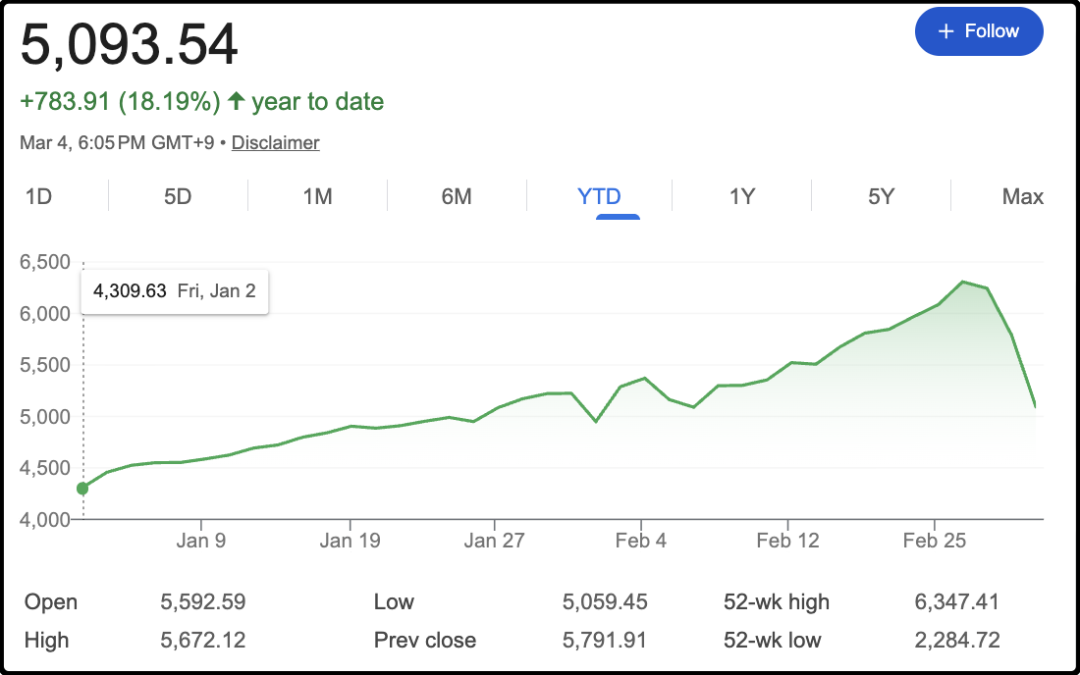
There is some logic to the sharp drop: South Korea is the world's fourth-largest importer of crude oil, with 70% coming from the Middle East. If an oil crisis escalates, it will be a severe blow to South Korea. However, the real factor causing the collapse in the past two days is the excessive gains in the first two months of this year. The KOSPI index rose from 4100 to 6300, leading the global stock market in terms of growth.
At the beginning of the year, there was a surge in memory chip prices, with funds frantically chasing Samsung and SK Hynix. The South Korean stock market, which wasn't very large to begin with, was suddenly boosted. Even without the Iran crisis, it couldn't have continued its meteoric rise indefinitely. This time, the market corrected due to the Iranian crisis, and even after the drop, it still stands at 5093 points, representing a year-to-date increase of over 20%, still leading the global market.
 For stock investors, it doesn't matter if they make the money they should or lose the money they should. The worst thing is to buy and sell frequently when prices are rising, failing to hold onto their shares and missing out on the profits they should have made, and then buying more shares to hold on to losses when prices are falling, only to wipe out all their profits in one fell swoop.
If what I'm saying hits the nail on the head, this is a classic trading habit problem. If you can't change it, you'll keep making small profits and losing big money, eventually bleeding money out of the stock market. There are a few solutions: one is to invest in index ETFs, and another is to switch to dollar-cost averaging (DCA). Both can overcome weaknesses in human nature.
The situation in Iran has seen some progress in the past 24 hours.
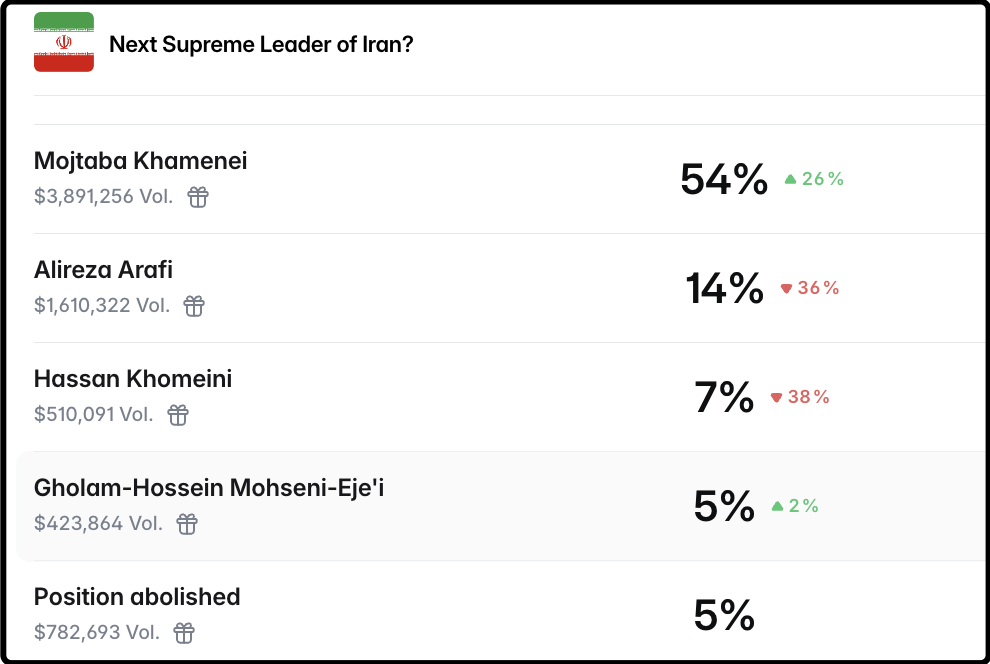
Firstly, they may internally favor choosing Khamenei's son as the successor leader. The on-chain odds have already soared to over 50%. I don't know much about this person, but since he is succeeding his father, he is probably a hardliner who will continue to fight against the US and Israel after taking office.
Iran has launched over 1,500 missiles in recent days, primarily targeting Israeli and US military bases, but also some public facilities in neighboring Gulf countries. Previously, some experts analyzed that Iran's missile stockpile might be depleted within 1-2 weeks, but with the rapid destruction of Iran's missile launch facilities by the US and Israel, the missiles currently in reserve may never have the opportunity to be used again.
In about 3-4 days, Iran will lose its air defense and long-range strike capabilities. At that time, the US and Israel will increase their bombing efforts, but bombing alone is unlikely to be enough to achieve a strategic victory, and Trump is certainly unwilling to send ground troops. At that time, the US and Israeli air forces will launch attacks on several targets every day, while Iran retreats to a defensive posture, launching short-range missiles, drones, and unmanned boats to attack ships and blockade the Strait of Hormuz, resulting in a stalemate. This is the most likely scenario.
Currently, the probability of a ceasefire before March 31st is only 38% in the relevant on-chain pools, 56% before April 30th, and 67% before May 31st. These are all real-time data and are for reference only.
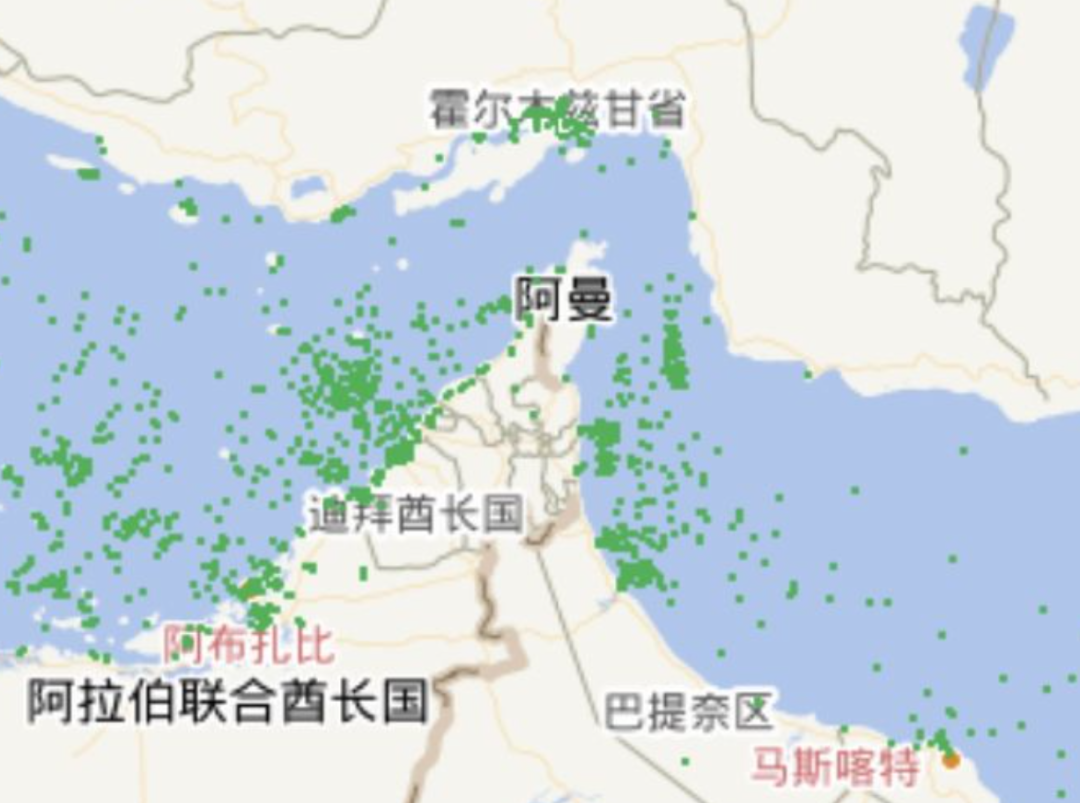
Currently, some people on overseas communities have observed through AIS data that the vast majority of ships are stranded on both sides of the Strait of Hormuz, with only a very small number of Chinese, Iranian, and Russian vessels still navigating. I'll share a website with you ( www.hifleet.com ) where you can see the real-time location of ships worldwide.
Today, the oil, natural gas, shipping, and coal sectors also saw a pullback. After two days of strong momentum, they finally couldn't hold on any longer. However, the oil theme may not necessarily die out at this point. Currently, the probability of a ceasefire in Iran within a month is low, so we should be prepared for oil prices to remain above $80.
PetroChina opened at +4% today, then plummeted to -9% in an instant, but funds quickly entered the market to buy on the dip, ultimately closing up 0.68% and forming a very long lower shadow. As long as Iran continues its resistance, there is still a basis for speculation in the oil market.
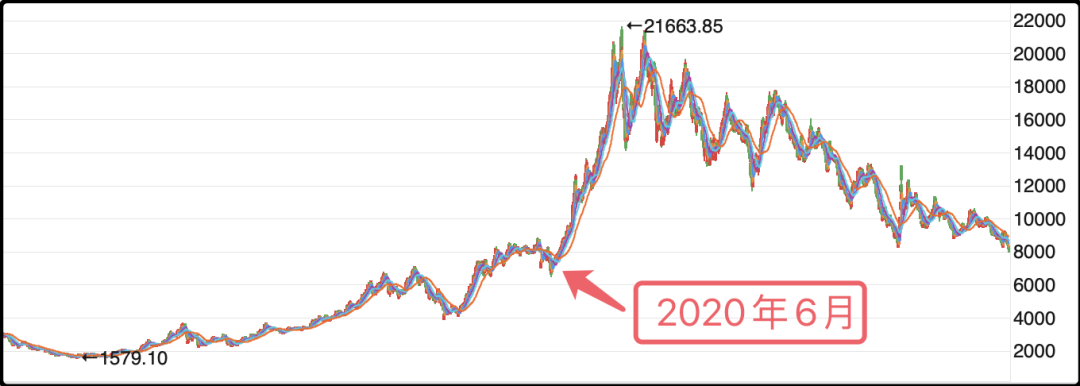
Today, the market also saw a sharp correction in the old-fashioned sectors, with the financial sector's brief rally of the past few days wiping out all gains and losses. But the worst hit was liquor stocks, which plunged 2.7%, hitting a new low since June 2020. A six-year cycle has come full circle, and it's back to square one, erasing the entire bull market of that year.
I don't have any short-term trading plans at the moment; I won't trade even if the market moves 10% up or down. Yesterday, when I said I lost a lot of money, I was just trying to comfort you all. I really did lose that much money, I'm not lying. But actually, I don't care at all. I just glanced at the closing bell and let it go. Two years ago, when the CSI was over 4000 points, I felt bad even if it dropped 100 points. Now that the CSI is over 8000 points, who's afraid of this little fluctuation?
Ultimately, if you make the money you're supposed to make when the market is rising, you won't be afraid of volatility and pullbacks.
1. South Korea has launched a 100 trillion won plan to stabilize its stock market. This decisive intervention has effectively rescued the market. I calculated that 100 trillion won is roughly equivalent to 470 billion RMB. The total market capitalization of the South Korean stock market is approximately 20 trillion RMB, roughly one-fifth of the A-share market. Therefore, this rescue fund is not insignificant, equivalent to 2.4% of the total market capitalization. In comparison, this rescue effort is roughly three times the amount of government and military intervention in the A-share market in 2024.
2. The New York Times reported that Iranian agents secretly contacted the CIA to discuss ceasefire terms. Even if this is true, it doesn't mean Iran wants to negotiate now. No country is monolithic; there are always those who advocate war and those who advocate peace. Currently, both sides are fiercely exchanging war resources, and a balance has not yet been reached. My judgment is that negotiations are unlikely in the short term.
3. A hot topic in the AI community today is the resignation of several core members of Alibaba's "Thousand Questions" program. Based on current information, it seems Alibaba poached talent from Google, made some internal functional adjustments, and the original team was stripped of power, leading to conflicts and their departure. This is my guess based on the information gathered; the individuals directly involved certainly wouldn't say this publicly.
4. BYD will release its second-generation blade battery and flash charging technology. This is the disruptive technology we talked about a few days ago. BYD's stock price has performed quite strongly in the past few days, and we can clearly feel the inflow of large funds.
5. Spain is facing being blacklisted by Trump for refusing to provide military facilities to the US. The UK was initially reluctant, but after Iran attacked one of their military bases, they changed their stance and joined the US in the attack. Another rather comical incident occurred when Trump, in an interview, said they actually had a preferred Iranian successor, but he was accidentally killed in the first round of bombings, and even the alternate candidate was killed. Now, the third candidate is still alive, but Trump says he doesn't actually know him anymore.
That's all for now, launch.
For stock investors, it doesn't matter if they make the money they should or lose the money they should. The worst thing is to buy and sell frequently when prices are rising, failing to hold onto their shares and missing out on the profits they should have made, and then buying more shares to hold on to losses when prices are falling, only to wipe out all their profits in one fell swoop.
If what I'm saying hits the nail on the head, this is a classic trading habit problem. If you can't change it, you'll keep making small profits and losing big money, eventually bleeding money out of the stock market. There are a few solutions: one is to invest in index ETFs, and another is to switch to dollar-cost averaging (DCA). Both can overcome weaknesses in human nature.
The situation in Iran has seen some progress in the past 24 hours.
Firstly, they may internally favor choosing Khamenei's son as the successor leader. The on-chain odds have already soared to over 50%. I don't know much about this person, but since he is succeeding his father, he is probably a hardliner who will continue to fight against the US and Israel after taking office.
Iran has launched over 1,500 missiles in recent days, primarily targeting Israeli and US military bases, but also some public facilities in neighboring Gulf countries. Previously, some experts analyzed that Iran's missile stockpile might be depleted within 1-2 weeks, but with the rapid destruction of Iran's missile launch facilities by the US and Israel, the missiles currently in reserve may never have the opportunity to be used again.
In about 3-4 days, Iran will lose its air defense and long-range strike capabilities. At that time, the US and Israel will increase their bombing efforts, but bombing alone is unlikely to be enough to achieve a strategic victory, and Trump is certainly unwilling to send ground troops. At that time, the US and Israeli air forces will launch attacks on several targets every day, while Iran retreats to a defensive posture, launching short-range missiles, drones, and unmanned boats to attack ships and blockade the Strait of Hormuz, resulting in a stalemate. This is the most likely scenario.
Currently, the probability of a ceasefire before March 31st is only 38% in the relevant on-chain pools, 56% before April 30th, and 67% before May 31st. These are all real-time data and are for reference only.
Currently, some people on overseas communities have observed through AIS data that the vast majority of ships are stranded on both sides of the Strait of Hormuz, with only a very small number of Chinese, Iranian, and Russian vessels still navigating. I'll share a website with you ( www.hifleet.com ) where you can see the real-time location of ships worldwide.
Today, the oil, natural gas, shipping, and coal sectors also saw a pullback. After two days of strong momentum, they finally couldn't hold on any longer. However, the oil theme may not necessarily die out at this point. Currently, the probability of a ceasefire in Iran within a month is low, so we should be prepared for oil prices to remain above $80.
PetroChina opened at +4% today, then plummeted to -9% in an instant, but funds quickly entered the market to buy on the dip, ultimately closing up 0.68% and forming a very long lower shadow. As long as Iran continues its resistance, there is still a basis for speculation in the oil market.
Today, the market also saw a sharp correction in the old-fashioned sectors, with the financial sector's brief rally of the past few days wiping out all gains and losses. But the worst hit was liquor stocks, which plunged 2.7%, hitting a new low since June 2020. A six-year cycle has come full circle, and it's back to square one, erasing the entire bull market of that year.
I don't have any short-term trading plans at the moment; I won't trade even if the market moves 10% up or down. Yesterday, when I said I lost a lot of money, I was just trying to comfort you all. I really did lose that much money, I'm not lying. But actually, I don't care at all. I just glanced at the closing bell and let it go. Two years ago, when the CSI was over 4000 points, I felt bad even if it dropped 100 points. Now that the CSI is over 8000 points, who's afraid of this little fluctuation?
Ultimately, if you make the money you're supposed to make when the market is rising, you won't be afraid of volatility and pullbacks.
1. South Korea has launched a 100 trillion won plan to stabilize its stock market. This decisive intervention has effectively rescued the market. I calculated that 100 trillion won is roughly equivalent to 470 billion RMB. The total market capitalization of the South Korean stock market is approximately 20 trillion RMB, roughly one-fifth of the A-share market. Therefore, this rescue fund is not insignificant, equivalent to 2.4% of the total market capitalization. In comparison, this rescue effort is roughly three times the amount of government and military intervention in the A-share market in 2024.
2. The New York Times reported that Iranian agents secretly contacted the CIA to discuss ceasefire terms. Even if this is true, it doesn't mean Iran wants to negotiate now. No country is monolithic; there are always those who advocate war and those who advocate peace. Currently, both sides are fiercely exchanging war resources, and a balance has not yet been reached. My judgment is that negotiations are unlikely in the short term.
3. A hot topic in the AI community today is the resignation of several core members of Alibaba's "Thousand Questions" program. Based on current information, it seems Alibaba poached talent from Google, made some internal functional adjustments, and the original team was stripped of power, leading to conflicts and their departure. This is my guess based on the information gathered; the individuals directly involved certainly wouldn't say this publicly.
4. BYD will release its second-generation blade battery and flash charging technology. This is the disruptive technology we talked about a few days ago. BYD's stock price has performed quite strongly in the past few days, and we can clearly feel the inflow of large funds.
5. Spain is facing being blacklisted by Trump for refusing to provide military facilities to the US. The UK was initially reluctant, but after Iran attacked one of their military bases, they changed their stance and joined the US in the attack. Another rather comical incident occurred when Trump, in an interview, said they actually had a preferred Iranian successor, but he was accidentally killed in the first round of bombings, and even the alternate candidate was killed. Now, the third candidate is still alive, but Trump says he doesn't actually know him anymore.
That's all for now, launch.
Original Article: View Chinese Version