Last night I wrote about how drones dominated the positional warfare on the Russian-Ukrainian battlefield, and many readers left comments saying that it was because Russia and Ukraine were too weak, and the US military was not afraid of drones.
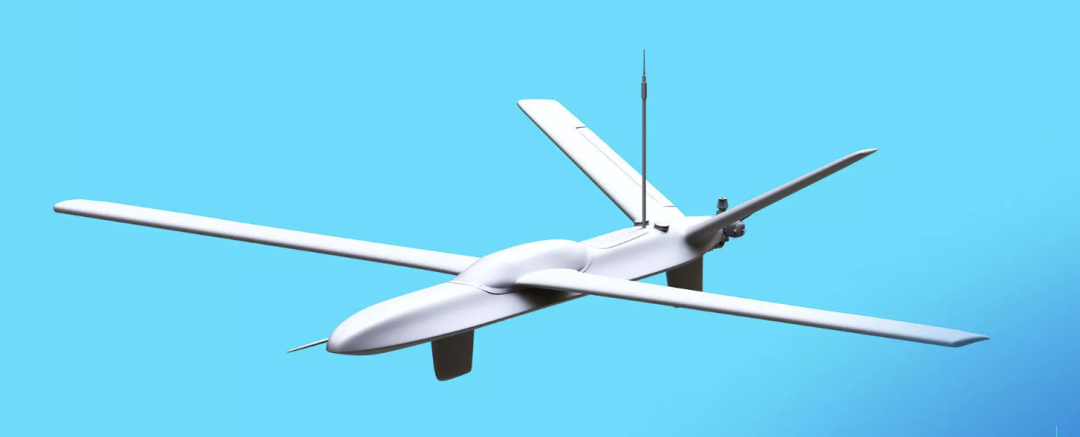
This statement is inaccurate. The US military has also been plagued by inexpensive drones. Remember the Houthi rebels, who were hyped up on the Chinese internet? This small, peasant group was portrayed as capable of going toe-to-toe with the US Navy. Of course, there was some exaggeration involved, but the Houthi drones did indeed cause considerable trouble for the US military.
The Houthis typically use disposable Quds-2 and Samad drones, each costing around $20,000. They can launch a dozen at a time to attack US warships. The US military intercepts them with Standard Missile-2 (SM-2), which costs over $2 million. $20,000 versus $2 million—a hundredfold difference—means that even a successful interception would result in a huge financial loss.
The Houthis also have an anti-ship missile that costs $250,000 to produce. This is very powerful. The US military uses the Standard Missile-3, which costs tens of millions of dollars, to intercept it. The cost difference between the two sides is 40 times.
Yemen is located at the choke point of an important international shipping route. The Houthi rebels usually hide in the mountains like groundhogs, unafraid of US bombing. They come out every now and then to launch a few drones or a missile or two, and the US has to spend a lot of money to deal with them. This war of attrition is a major headache for the US military, and in the end, they had no choice but to negotiate a conditional peace with the Houthis.
Modern warfare is about money and the cost-effectiveness of weapons. Drones costing a few hundred dollars can keep tanks costing millions of dollars from even showing their faces. Low cost is the core competitive advantage.
I also talked to you about something else before: the oceans on Earth contain a huge amount of gold. Scientists estimate that there may be 20 million tons. You should know that the total amount of gold mined by mankind in history is only 200,000 tons, which is 1% of the ocean's gold reserves.
So why does no one ever extract gold from the ocean? Because the concentration of gold in seawater is so low it's practically nonexistent. I had AI calculate that refining seawater equivalent to the volume of West Lake in Hangzhou would yield a gold nugget about the size of an eraser, worth about 200,000 yuan. The cost you would incur to refine it is dozens of times that amount.
Therefore, you often see news reports about the discovery of mineral resources or large oil fields in certain regions, but then nothing more is heard about them. This usually happens because the extraction costs are too high; when the cost of extraction exceeds the amount of material recovered, no one will bother to extract it.
When analyzing things, it's often necessary to consider the cost.
Another event yesterday was the U.S. Supreme Court's final ruling, in a 6-3 vote, that the Trump administration's massive global tariff policy, implemented under the International Emergency Economic Powers Act (IEEPA), was illegal and invalid.
Simply put, the power to tax belongs to Congress, and Trump can no longer use a "national emergency" as an excuse to circumvent Congress to levy taxes. Then, media reports indicated that the US had previously illegally levied $175 billion in taxes, which, legally, should be refunded.
Many readers have expressed interest in this matter, asking whether it will be a significant positive for the stock market when it reopens after the holiday.
Let me start by pouring cold water on this idea; the impact is actually quite small. Trump has several legal avenues to bypass Congress to impose taxes, and this is just one that has been rejected by the courts. Trump will immediately use another law to impose a 10% global tax to offset it.
As for the $175 billion in tax refunds, there will be lengthy litigation in the United States. Trump said the lawsuits would last five years, and after that he would quit and not interfere. Personally, I think that once the money has been taken in, it's impossible to give it back. Besides, businesses have already passed the cost on to consumers through price increases. Giving the refunds back to businesses would just be double profit. The US government won't have such a good deal.
In conclusion, this matter has little impact on international trade; it merely involves procedural disputes and adjustments within the United States regarding the exercise of tariff protection powers.
Today was Taizhou High School's alumni homecoming day, so I took my wife and kids on a tour. We went from building to building, and the teachers told us stories from our school days. Suddenly, my son asked, "Dad, who did you like when you were in school?" Without thinking, I answered, "You liked your mom." My wife scoffed, and my son said he didn't believe me. I said, "Hey kid, do you have a crush on any girls in your class now? You tell me first."
As a result, the kid stammered and talked about other things, and I chuckled to myself, thinking that with that kind of brain, he could easily steer the conversation astray.
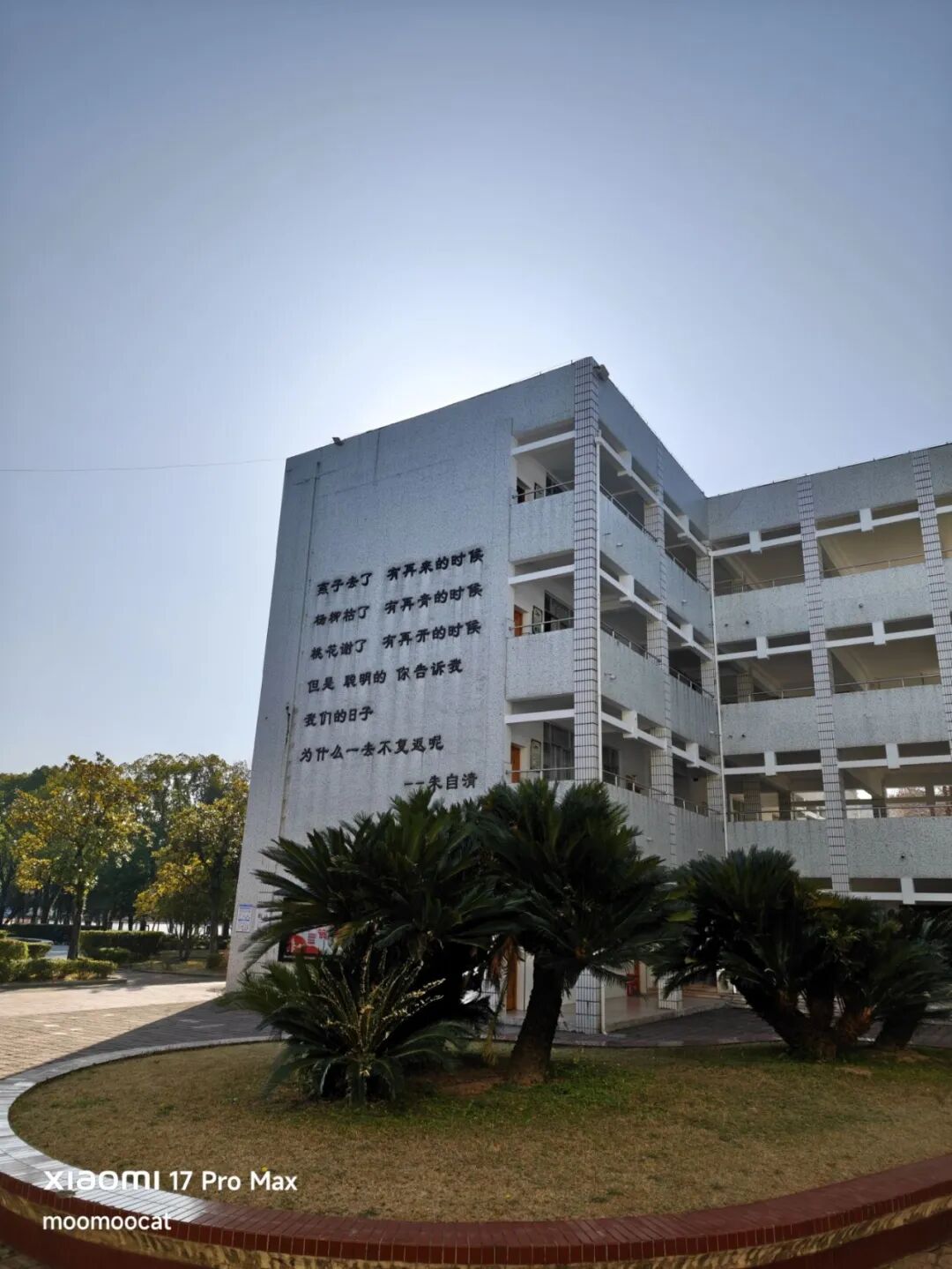
The picture below is of my high school classroom. On the wall is Zhu Ziqing's "Hurry," which he wrote while teaching at Taizhou Middle School from 1922 to 1923. However, he went to teach in Wenzhou the following year because Zhu Ziqing was in financial straits at the time, and the salary offered in Wenzhou was 30% higher than in Taizhou.
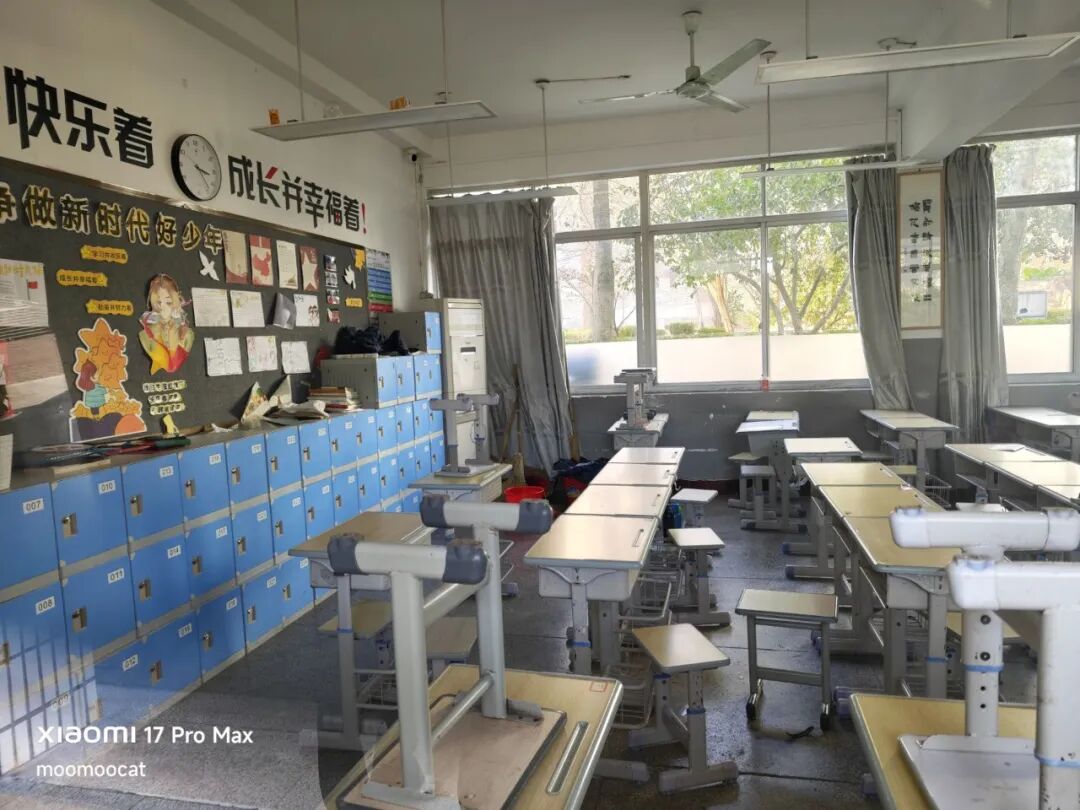
The picture below is of my first-year high school classroom. Through the window, you can see that the classroom has a standing air conditioner. Children's conditions are much better now. When I was in school, we only had two pitiful ceiling fans, and we couldn't turn them on too high because the teachers thought it was too noisy. Summers were really hot.
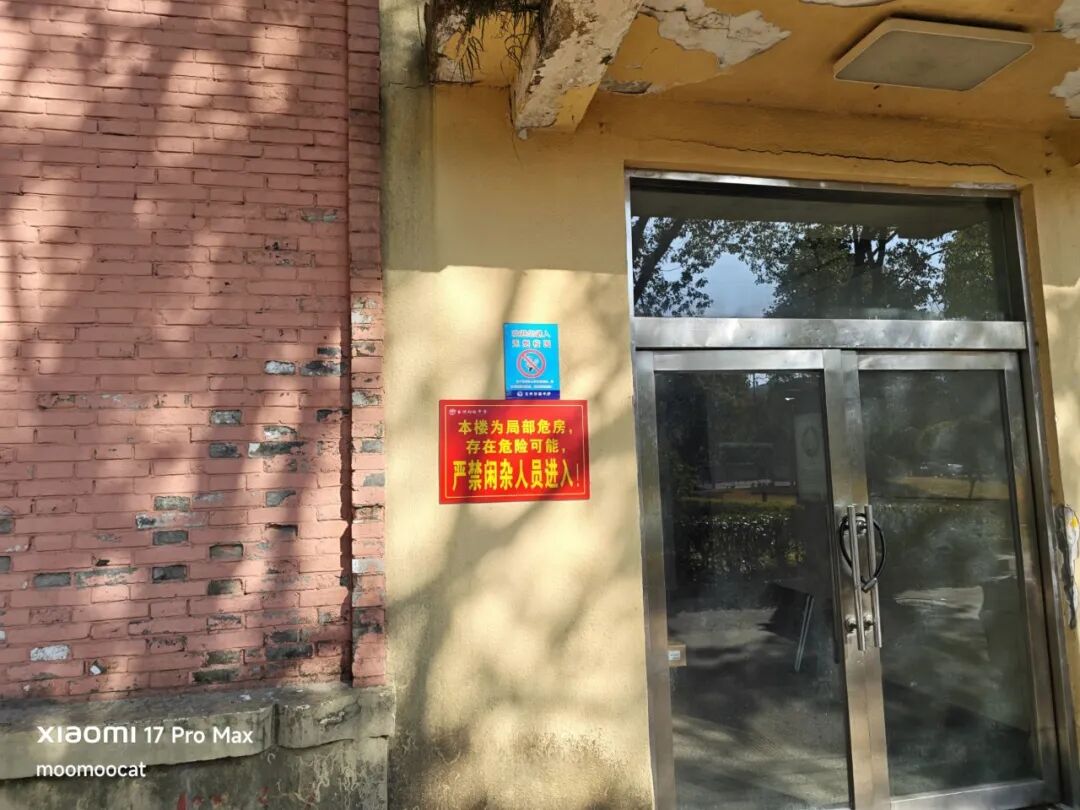
The once iconic main administration building is now abandoned. Just as I was wondering why, I found out that it had been identified as a dangerous building and therefore could not be entered. It may be demolished or rebuilt in the future.
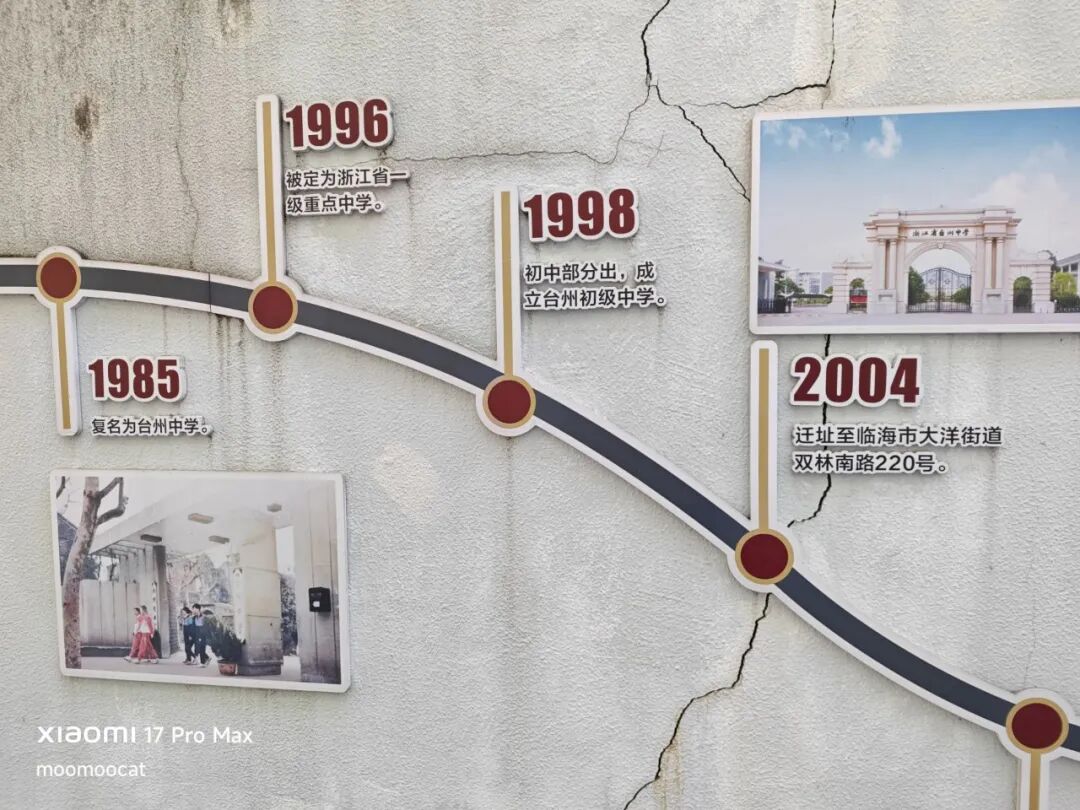
The photo in the lower left corner shows the school gate I used to attend during my six years of schooling. It was later demolished and replaced with the one in the photo on the right. Some people say it was modeled after the gate of Tsinghua University. Well, it was indeed inspired by it.
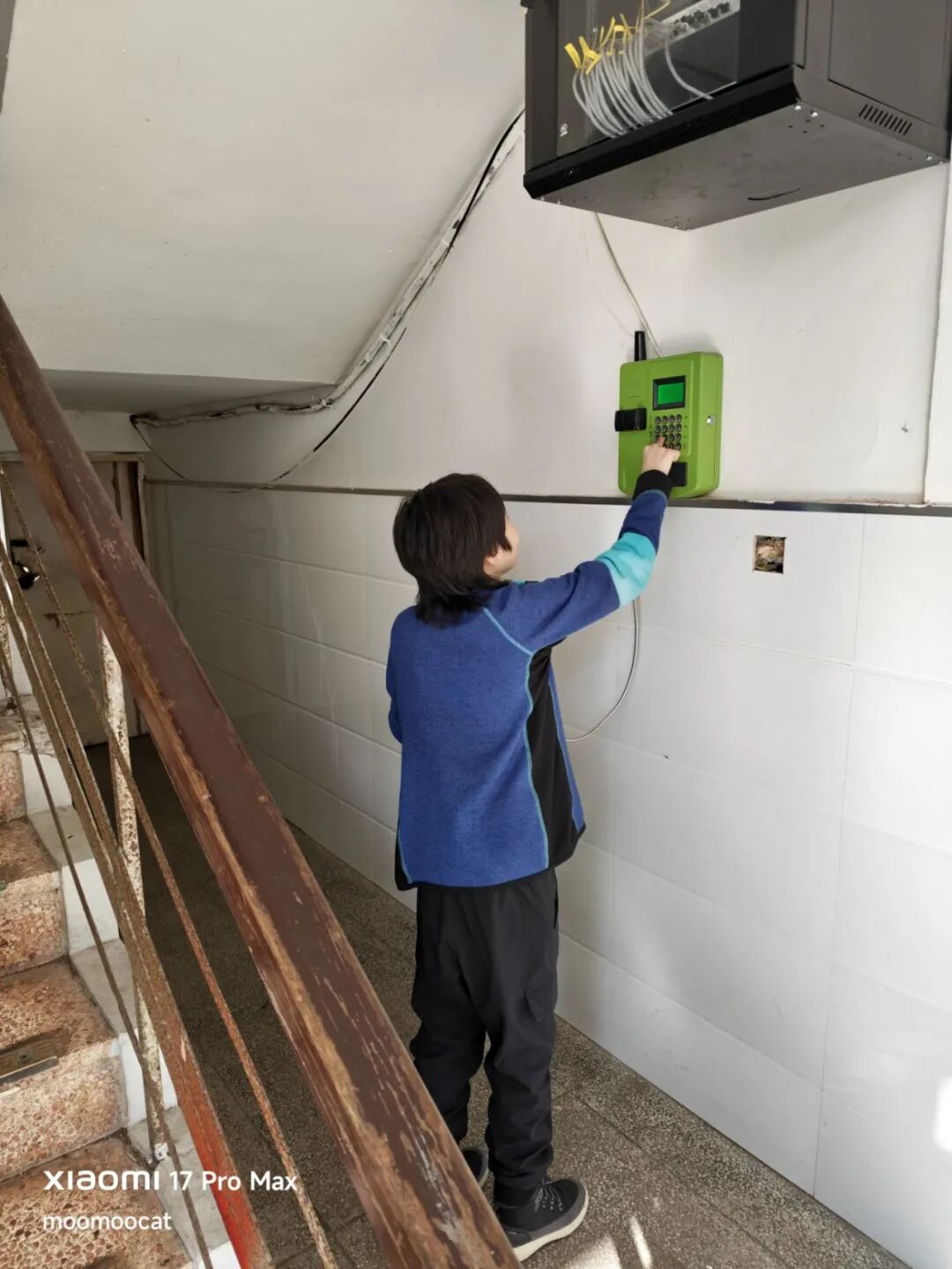
My son found a public phone next to the toilet. It seems like you need to insert a card to make calls. When I was in school, we didn't have these. It seems that schools now prohibit students from bringing cell phones.
Okay, that's all. Finally, we saw the iron bar we used to play on as kids at the playground. I'm so bad at it now; I could only climb two steps before my hands gave way. My son, on the other hand, cleared it off in no time. New ones are definitely the best!  It's the fifth day of the Lunar New Year, more than half of the year is over. Remember to recharge your holiday!
Original Article: View Chinese Version