Let's start by discussing a hot topic from last night: the Silver LOF fund announced that it would use international silver prices as a reference for estimating its net asset value. As a result, the Silver LOF fund's net asset value dropped by 31% overnight, which caused strong dissatisfaction among investors.
From the perspective of fair trading, I think there's nothing wrong with doing this. International silver prices fell by 31%, and theoretically, domestic prices should also fall by 31%. However, because domestic futures have a daily price limit, the maximum drop can only be 20%, and the missing 11% will have to be made up for the next day.
If someone redeemed their shares yesterday and exited at a 20% discount, wouldn't that be giving them a free lunch? Of course not, because the 11% they saved would be passed on to the other investors who stayed and held on, which is even more unfair, isn't it?
When investing in global assets like silver and gold, you need to consider the risks of trading time differences and price delays. Internationally, gold is traded 23 hours a day with no price limits. If there are sharp fluctuations, our market may close or prices may be delayed, and you'll just have to accept the loss.
A reader commented the other day, asking why gold and silver don't experience circuit breakers. Artificial circuit breakers are useless for global assets. At least gold and silver have weekends off, but the blockchain operates 24/7, 365 days a year, non-stop for a second. I've been liquidated several times while I was sleeping due to violent fluctuations.  Finally, let me do the math for you. An international silver price of $80 per ounce is approximately equal to 17,851 yuan per kilogram of Shanghai silver, and an international gold price of $5,000 per ounce is approximately equal to 1,116 yuan per gram of Shanghai gold. You can divide them to get the approximate ratio.
Today, Tencent, a company with a strong and reliable reputation, suffered a major crash. At its worst, around 10:45 AM, its stock price dropped by 6.3%. Considering Tencent's total market capitalization of 5.3 trillion yuan, this is equivalent to losing the equivalent of the value of Shanghai Pudong Development Bank or Hikvision.
The reason for the decline is a rumor that the value-added service tax rate for the financial and gaming industries will be raised, and the value-added tax rate for internet companies will be significantly increased from 6% to 13% . There are even more outrageous rumors that a special tax of 32% will be levied on games .
The timing of this rumor was very clever, as China Mobile had just been subject to a VAT increase a few days prior. It quickly spread in the market, ultimately triggering the sharp drop in the Hang Seng Internet sector that morning. Besides Tencent, NetEase also retreated by 6%, Alibaba by 5%, and Meituan by 4%.
The authorities quickly issued a targeted clarification. Xinhua News Agency interviewed relevant authorities, and the response was simple: there was no such thing. As a result, the stock prices of internet companies rebounded in the afternoon, but Tencent still fell by 3% today.
Hang Seng Internet is truly unlucky. These past few years have been plagued by all sorts of strange negative news: one minute it's Chinese concept stocks being delisted, the next it's suffering huge losses in the food delivery war, then it's talk of anti-involution, then anti-monopoly, and now these rumor-mongers are even using tax increases to scare the market. It's infuriating! I curse those who create and spread rumors to shorten their lives by 1 centimeter each, effective immediately!
Finally, let me do the math for you. An international silver price of $80 per ounce is approximately equal to 17,851 yuan per kilogram of Shanghai silver, and an international gold price of $5,000 per ounce is approximately equal to 1,116 yuan per gram of Shanghai gold. You can divide them to get the approximate ratio.
Today, Tencent, a company with a strong and reliable reputation, suffered a major crash. At its worst, around 10:45 AM, its stock price dropped by 6.3%. Considering Tencent's total market capitalization of 5.3 trillion yuan, this is equivalent to losing the equivalent of the value of Shanghai Pudong Development Bank or Hikvision.
The reason for the decline is a rumor that the value-added service tax rate for the financial and gaming industries will be raised, and the value-added tax rate for internet companies will be significantly increased from 6% to 13% . There are even more outrageous rumors that a special tax of 32% will be levied on games .
The timing of this rumor was very clever, as China Mobile had just been subject to a VAT increase a few days prior. It quickly spread in the market, ultimately triggering the sharp drop in the Hang Seng Internet sector that morning. Besides Tencent, NetEase also retreated by 6%, Alibaba by 5%, and Meituan by 4%.
The authorities quickly issued a targeted clarification. Xinhua News Agency interviewed relevant authorities, and the response was simple: there was no such thing. As a result, the stock prices of internet companies rebounded in the afternoon, but Tencent still fell by 3% today.
Hang Seng Internet is truly unlucky. These past few years have been plagued by all sorts of strange negative news: one minute it's Chinese concept stocks being delisted, the next it's suffering huge losses in the food delivery war, then it's talk of anti-involution, then anti-monopoly, and now these rumor-mongers are even using tax increases to scare the market. It's infuriating! I curse those who create and spread rumors to shorten their lives by 1 centimeter each, effective immediately! 
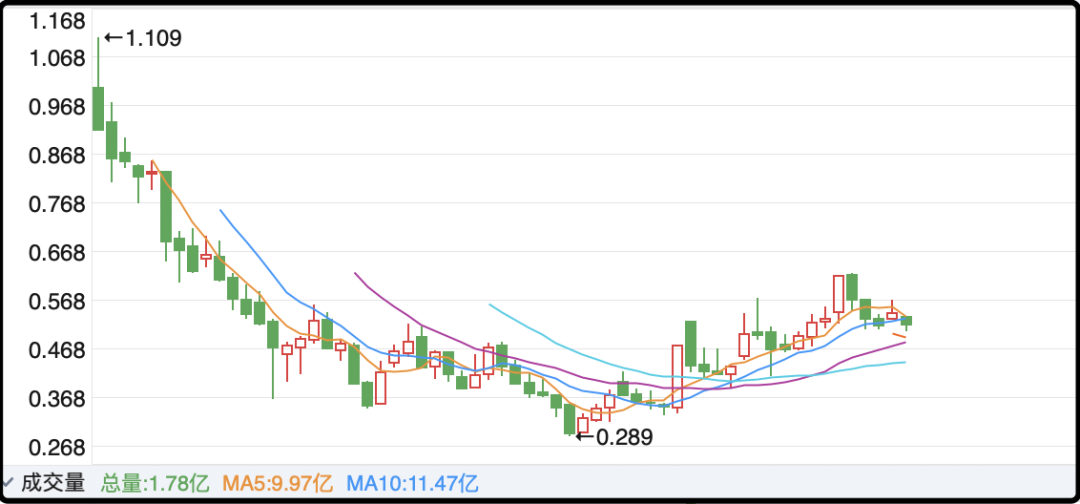 I've been holding Hang Seng Internet for several years, fluctuating between breaking even and being trapped in a losing position. I've always felt reluctant to sell because the valuation hasn't been fully realized, but the current price is only equivalent to that of February 2022. At the same time, the Shanghai Composite Index was at 3400 points and the CSI 500 Index was at 6700 points. It's completely over; even A-shares have underperformed by more than 20%. What a pathetic clown!
Today's A-shares market was alright, with all eight broad-based indices in the green. The CSI 500 index, which fell 3.98% yesterday, rose 3.11% today, recovering most of its losses. However, the trading volume was a bit weak. Despite the lively gains in both markets, the combined trading volume was only 254 million yuan. This low volume meant that while I was recovering my losses, I didn't dare to be too reckless, for fear of angering the bears and getting me slapped across the face tomorrow.
The market style has returned to what it was like when Deng Xiaoping led the way. Today, the biggest gainers were space photovoltaics and commercial aerospace, both around 4%. After much deliberation, everyone decided to continue following Director Ma's lead. After all, Director Ma has a large global influence and won't go back on his word just to fleece us. Besides, his storyline is very long, with programs running all year and into the end of the year.
The other side of the seesaw, the old Deng sector, collapsed immediately. The worst performers were undoubtedly banks, insurance, liquor, securities, aquaculture, and highways. The precious metals sector opened down 6%, but closed in positive territory, a nearly 7% gain for the day – quite impressive.
In the A-share market, it's rare for both the old and new "Dow" stocks to rise together. The mentality of a zero-sum game is deeply ingrained; it's a zero-sum game where one side absorbs the other's capital. Funds will only flood into the old "Dow" sector after the bull market ends and a crash occurs, enduring the long bear market. This is a unique phenomenon in the Chinese stock market; the Nasdaq and Dow Jones in the US don't operate on a seesaw.
1. Cambricon's stock price plummeted by as much as 14% today, closing down 9%. Rumors circulated that the company's financial results had been leaked and insider trading had caused the stock to crash, prompting the company to issue an urgent denial. To this day, there has been no clear explanation for today's plunge. I've also heard that a major client may have absconded, but the source is too weak to be reliable.
2. The launch of Artemis 2, originally scheduled for February 8th, has been postponed to March due to technical problems, marking another delay. Artemis, the twin sister of Apollo in Greek mythology and the goddess of the moon, is the name the US uses for its lunar return program. This initial launch of Artemis 2 will not land on the moon, but will instead orbit it; a lunar landing is not expected for Artemis 3, scheduled for 2027-2028.
Whenever this topic comes up, people question whether the US moon landing 50 years ago was real. I've noticed that the mainstream opinion on TikTok is that the US faked it, while the mainstream opinion on Zhihu is that the US moon landing was real. It's like how a couple of years ago, TikTok was full of support for Jiang Ping, while Zhihu almost universally didn't believe her. The two platforms clearly have different user groups, which is why TikTok is making a fortune while Zhihu is struggling financially.
3. Silver LOF hit its second consecutive limit down, but still trades at a premium of over 80%. A conservative estimate suggests 2-3 more limit downs are possible. Today's trading volume reached 100 million, mostly from stock market philanthropists providing escape routes. Therefore, there's still a need to place orders tomorrow. I've calculated the price for tomorrow: 3.825.
4. The merger of SpaceX and xAI brings their combined valuation to $1.25 trillion. A major milestone for commercial spaceflight this year is SpaceX's IPO, which will likely be preceded by a period of market anticipation.
That's all. Yesterday, a reader left a comment saying that I sometimes mention in my articles that my assets are higher than those of an average wage earner, so they won't give me tips unless I plead poverty. I understand. From now on, I'll remind you regularly that I'm a wealthy person.
I've been holding Hang Seng Internet for several years, fluctuating between breaking even and being trapped in a losing position. I've always felt reluctant to sell because the valuation hasn't been fully realized, but the current price is only equivalent to that of February 2022. At the same time, the Shanghai Composite Index was at 3400 points and the CSI 500 Index was at 6700 points. It's completely over; even A-shares have underperformed by more than 20%. What a pathetic clown!
Today's A-shares market was alright, with all eight broad-based indices in the green. The CSI 500 index, which fell 3.98% yesterday, rose 3.11% today, recovering most of its losses. However, the trading volume was a bit weak. Despite the lively gains in both markets, the combined trading volume was only 254 million yuan. This low volume meant that while I was recovering my losses, I didn't dare to be too reckless, for fear of angering the bears and getting me slapped across the face tomorrow.
The market style has returned to what it was like when Deng Xiaoping led the way. Today, the biggest gainers were space photovoltaics and commercial aerospace, both around 4%. After much deliberation, everyone decided to continue following Director Ma's lead. After all, Director Ma has a large global influence and won't go back on his word just to fleece us. Besides, his storyline is very long, with programs running all year and into the end of the year.
The other side of the seesaw, the old Deng sector, collapsed immediately. The worst performers were undoubtedly banks, insurance, liquor, securities, aquaculture, and highways. The precious metals sector opened down 6%, but closed in positive territory, a nearly 7% gain for the day – quite impressive.
In the A-share market, it's rare for both the old and new "Dow" stocks to rise together. The mentality of a zero-sum game is deeply ingrained; it's a zero-sum game where one side absorbs the other's capital. Funds will only flood into the old "Dow" sector after the bull market ends and a crash occurs, enduring the long bear market. This is a unique phenomenon in the Chinese stock market; the Nasdaq and Dow Jones in the US don't operate on a seesaw.
1. Cambricon's stock price plummeted by as much as 14% today, closing down 9%. Rumors circulated that the company's financial results had been leaked and insider trading had caused the stock to crash, prompting the company to issue an urgent denial. To this day, there has been no clear explanation for today's plunge. I've also heard that a major client may have absconded, but the source is too weak to be reliable.
2. The launch of Artemis 2, originally scheduled for February 8th, has been postponed to March due to technical problems, marking another delay. Artemis, the twin sister of Apollo in Greek mythology and the goddess of the moon, is the name the US uses for its lunar return program. This initial launch of Artemis 2 will not land on the moon, but will instead orbit it; a lunar landing is not expected for Artemis 3, scheduled for 2027-2028.
Whenever this topic comes up, people question whether the US moon landing 50 years ago was real. I've noticed that the mainstream opinion on TikTok is that the US faked it, while the mainstream opinion on Zhihu is that the US moon landing was real. It's like how a couple of years ago, TikTok was full of support for Jiang Ping, while Zhihu almost universally didn't believe her. The two platforms clearly have different user groups, which is why TikTok is making a fortune while Zhihu is struggling financially.
3. Silver LOF hit its second consecutive limit down, but still trades at a premium of over 80%. A conservative estimate suggests 2-3 more limit downs are possible. Today's trading volume reached 100 million, mostly from stock market philanthropists providing escape routes. Therefore, there's still a need to place orders tomorrow. I've calculated the price for tomorrow: 3.825.
4. The merger of SpaceX and xAI brings their combined valuation to $1.25 trillion. A major milestone for commercial spaceflight this year is SpaceX's IPO, which will likely be preceded by a period of market anticipation.
That's all. Yesterday, a reader left a comment saying that I sometimes mention in my articles that my assets are higher than those of an average wage earner, so they won't give me tips unless I plead poverty. I understand. From now on, I'll remind you regularly that I'm a wealthy person.
Original Article: View Chinese Version