The market opens again tomorrow, so let's review the important things that happened over the weekend.
1. The biggest event was undoubtedly the historic plunge in precious metals on Friday night. Silver plummeted as low as -38% before closing down 26%, and gold fared no better, falling 12% to close at 4860. This pullback was the largest single-day drop in history, a devastating blow to futures bulls, with many accounts effectively liquidated.
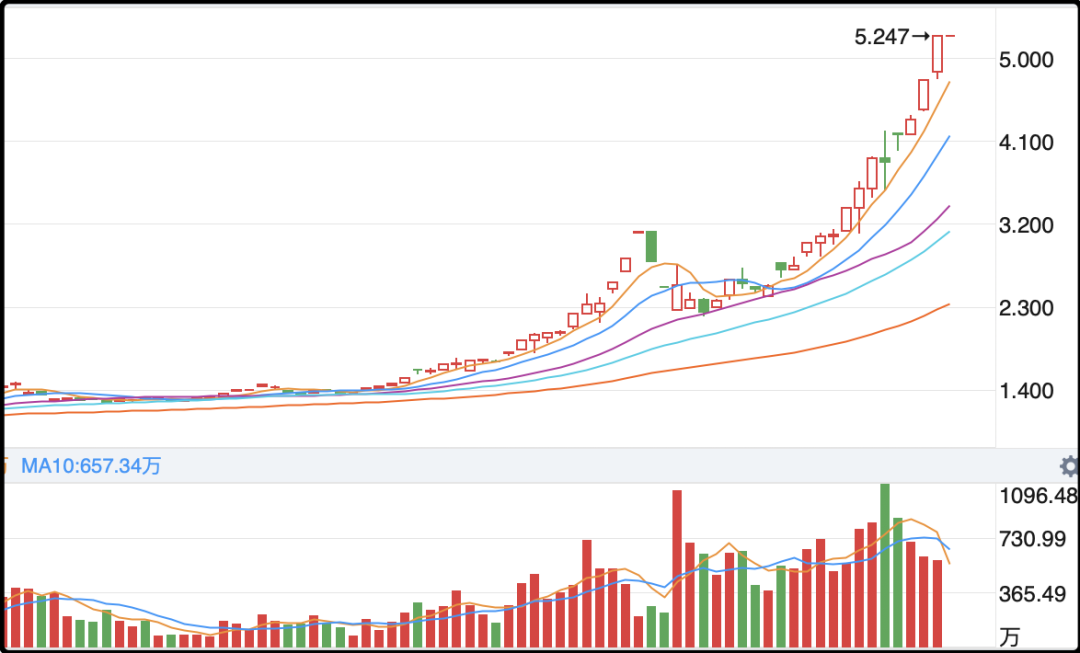
As for the previously popular Silver LOF fund, the latest net asset value (NAV) displayed (3.284) is the price at the close of trading on Friday afternoon. If the sharp drop on Friday night is included, the true NAV is probably around 2.6-2.7, with a premium of nearly 100%. This will definitely see a huge correction next week, and one or two limit-down days may not be enough to hold it. So you might consider placing a limit-down order tonight, and if you're lucky, you can sell it.
There has been a rumor circulating online in recent days that the silver LOF, which will resume trading tomorrow, will not have price limits. This is false information. Guotou Fund has issued a new clarification announcement: the silver LOF will be suspended for one hour tomorrow and will resume trading at 10:30 am. The price limits are 10% for both price increases and decreases. I have calculated the price limit for the decrease for you, and it is 4.722.
Another sector that will be severely affected is the precious metals and non-ferrous metals sector in the A-share market. There's no point in trying to comfort them now. They'll definitely get a severe beating when the market opens tomorrow. The precious metals sector rose 85% in January, and the non-ferrous metals sector rose 24%, so they have huge unrealized profits and should be able to afford to lose. If you rushed in on Thursday or Friday, you're really unlucky.
Getting caught as soon as you enter the market is a matter of luck; every expert has had a similar experience. The key is the strategy for dealing with the situation after being caught, which is what distinguishes the novice from the expert.
What I mentioned yesterday about the monthly MA20 was a pessimistic, safety-line scenario. In fact, I think the probability of this drop to 3500 is less than 10%. Today I checked and found that some overseas institutions still maintain a bullish view on gold. UBS insists on seeing $6200 by the end of the year, and JPMorgan believes that gold could reach $8000 in the next few years.
However, if foreign institutions are wrong, you can't really criticize them. But if I'm wrong, you'll start criticizing me the next day. So they can be a little more optimistic. I'd rather be a little more conservative—that's just how it is.  1. In late January, the Panamanian government declared the contracts for the two ports of Changhua and Naga to be unconstitutional, citing irregularities in the bidding process and overly favorable tax exemption terms—in short, the contracts were invalid. To feign neutrality, the Panamanian government announced that Danish shipping giant Maersk would temporarily take over the ports' daily operations.
CK Hutchison is naturally very dissatisfied. They emphasized that they have invested $1.8 billion over the years, and this matter cannot be left unresolved; they want international arbitration. At the time, Li sensed the situation was dire and attempted to sell the port as a package deal, but the deal was halted. Now, seeing that they can't buy it, the other party is resorting to outright robbery, resulting in heavy losses. The Chinese Foreign Ministry responded that it will take measures to protect the rights and interests of Chinese enterprises; we will wait and see what actions follow.
2. Another piece of news that has been generating a lot of buzz tonight is the major adjustment to the value-added tax (VAT) on telecommunications. Simply put, previously there were two tax rates for telecommunications services: 9% for basic services and 6% for value-added services. This adjustment has moved many of the previously value-added services into the basic services category, effectively increasing the VAT by 3%.
I've reviewed the analysis, and it seems that 60-70% of China Mobile's revenue will be affected by the 3% tax, resulting in a profit reduction of approximately 5-8 billion yuan. China Mobile's projected profit for 2025 is 136-140 billion yuan, representing a year-on-year increase of 4-5%. The tax increase will essentially offset part of that growth.
It's worth noting that this VAT adjustment will take effect from January 1, 2026, but the listed company only announced it on February 1. Isn't this disclosure too slow? Considering that China Mobile's stock price has been declining recently, one can't help but suspect that funds that knew the news in advance rushed to sell.
Finally, let's talk about something positive. For domestic state-owned enterprises with monopolistic businesses like this, whatever profits they make is actually provided by the government. Now that the government is facing financial difficulties, all sectors are providing support. Telecommunications services are also taking on some social responsibility, so shareholders should be more open-minded.
3. Wang Shi updated his video, showing him cycling in Shenzhen on January 30th. Public figures often use this method to refute rumors of investigations or control. Frankly, I don't think the losses of Shenzhen's state-owned assets have anything to do with Wang Shi. The outcome of the Vanke-Baoneng battle was that Wang Shi left the company, and Shenzhen Metro took over. In other words, Wang Shi was already ousted before Shenzhen Metro invested in Vanke.
4. The three leading optical module manufacturers have released their latest financial results. Zhongji Xuchuang's revenue is 9.8-11.8 billion yuan, an increase of 89-128%; Xin Yisheng's revenue is 9.4-9.9 billion yuan, an increase of 231-248%; and Tianfu Communication's revenue is 1.8-2.1 billion yuan, an increase of 40-60%. This is the "Yi-Zhong-Tian" combination that investors often refer to, benefiting from the explosive growth in demand for AI hardware, resulting in strong performance this time.
Zhongji Xuchuang suffered a currency exchange loss of 270 million yuan and gave 230 million yuan in incentives to the company's key personnel, but these were insignificant in the face of the astonishing performance growth.
5. Cambricon's profit last year was between 1.85 billion and 2.15 billion yuan. Initially, a small loss or break-even was expected, but it ended up making 2 billion yuan, which is a very good performance. However, now that it's starting to make money, its valuation should be considered.
1. In late January, the Panamanian government declared the contracts for the two ports of Changhua and Naga to be unconstitutional, citing irregularities in the bidding process and overly favorable tax exemption terms—in short, the contracts were invalid. To feign neutrality, the Panamanian government announced that Danish shipping giant Maersk would temporarily take over the ports' daily operations.
CK Hutchison is naturally very dissatisfied. They emphasized that they have invested $1.8 billion over the years, and this matter cannot be left unresolved; they want international arbitration. At the time, Li sensed the situation was dire and attempted to sell the port as a package deal, but the deal was halted. Now, seeing that they can't buy it, the other party is resorting to outright robbery, resulting in heavy losses. The Chinese Foreign Ministry responded that it will take measures to protect the rights and interests of Chinese enterprises; we will wait and see what actions follow.
2. Another piece of news that has been generating a lot of buzz tonight is the major adjustment to the value-added tax (VAT) on telecommunications. Simply put, previously there were two tax rates for telecommunications services: 9% for basic services and 6% for value-added services. This adjustment has moved many of the previously value-added services into the basic services category, effectively increasing the VAT by 3%.
I've reviewed the analysis, and it seems that 60-70% of China Mobile's revenue will be affected by the 3% tax, resulting in a profit reduction of approximately 5-8 billion yuan. China Mobile's projected profit for 2025 is 136-140 billion yuan, representing a year-on-year increase of 4-5%. The tax increase will essentially offset part of that growth.
It's worth noting that this VAT adjustment will take effect from January 1, 2026, but the listed company only announced it on February 1. Isn't this disclosure too slow? Considering that China Mobile's stock price has been declining recently, one can't help but suspect that funds that knew the news in advance rushed to sell.
Finally, let's talk about something positive. For domestic state-owned enterprises with monopolistic businesses like this, whatever profits they make is actually provided by the government. Now that the government is facing financial difficulties, all sectors are providing support. Telecommunications services are also taking on some social responsibility, so shareholders should be more open-minded.
3. Wang Shi updated his video, showing him cycling in Shenzhen on January 30th. Public figures often use this method to refute rumors of investigations or control. Frankly, I don't think the losses of Shenzhen's state-owned assets have anything to do with Wang Shi. The outcome of the Vanke-Baoneng battle was that Wang Shi left the company, and Shenzhen Metro took over. In other words, Wang Shi was already ousted before Shenzhen Metro invested in Vanke.
4. The three leading optical module manufacturers have released their latest financial results. Zhongji Xuchuang's revenue is 9.8-11.8 billion yuan, an increase of 89-128%; Xin Yisheng's revenue is 9.4-9.9 billion yuan, an increase of 231-248%; and Tianfu Communication's revenue is 1.8-2.1 billion yuan, an increase of 40-60%. This is the "Yi-Zhong-Tian" combination that investors often refer to, benefiting from the explosive growth in demand for AI hardware, resulting in strong performance this time.
Zhongji Xuchuang suffered a currency exchange loss of 270 million yuan and gave 230 million yuan in incentives to the company's key personnel, but these were insignificant in the face of the astonishing performance growth.
5. Cambricon's profit last year was between 1.85 billion and 2.15 billion yuan. Initially, a small loss or break-even was expected, but it ended up making 2 billion yuan, which is a very good performance. However, now that it's starting to make money, its valuation should be considered.  6. Trump nominated Kevin Warsh as the next Federal Reserve Chairman. I wrote about this in detail last night; you can check it out if you're interested. He's fundamentally a hawk, and his recent statements about supporting moderate interest rate cuts may just be a way to please Trump. Institutions believe the Fed will cut rates twice this year after confirming the nominee.
7. Wingtech Technology is expected to lose 9-13.5 billion yuan last year. The company's daily operations actually only lose about 200 million yuan. The key issue is that its company in the Netherlands has been controlled by the Dutch government. This was originally Wingtech Technology's core business, which it was betting its future on. If it is kicked out, it will result in an asset impairment of tens of billions of yuan. Shareholders are heartbroken.
That's about it for tonight. Let's collect the royalties one last time; it's been two months of writing again. As usual, it's voluntary. Whether you give a tip is up to you, and how much is up to you, but I suggest 1 yuan is enough. After all, giving a tip doesn't grant any special privileges; it's just a way of showing your support for my content by keeping me company every night. Thank you everyone.
6. Trump nominated Kevin Warsh as the next Federal Reserve Chairman. I wrote about this in detail last night; you can check it out if you're interested. He's fundamentally a hawk, and his recent statements about supporting moderate interest rate cuts may just be a way to please Trump. Institutions believe the Fed will cut rates twice this year after confirming the nominee.
7. Wingtech Technology is expected to lose 9-13.5 billion yuan last year. The company's daily operations actually only lose about 200 million yuan. The key issue is that its company in the Netherlands has been controlled by the Dutch government. This was originally Wingtech Technology's core business, which it was betting its future on. If it is kicked out, it will result in an asset impairment of tens of billions of yuan. Shareholders are heartbroken.
That's about it for tonight. Let's collect the royalties one last time; it's been two months of writing again. As usual, it's voluntary. Whether you give a tip is up to you, and how much is up to you, but I suggest 1 yuan is enough. After all, giving a tip doesn't grant any special privileges; it's just a way of showing your support for my content by keeping me company every night. Thank you everyone.
Original Article: View Chinese Version