This afternoon I met up with a former colleague. The last time we saw each other was at my farewell dinner after I left the company, 15 years ago. In my memory, he was a handsome young man weighing 120 pounds. Now he has aged and gained weight. We were both quite emotional when we met, lamenting how fast time flies.
He currently runs a small company with partners, developing software programs and advertising them on the ByteDance platform. My first instinct upon hearing this was that it wouldn't be very profitable. He said that his internal advertising data is completely transparent, and competitors can see it all. If someone does well in advertising this week, their competitors will immediately know, and within half a month, someone will copy the product and try to profit from it, ultimately causing everyone to lose money.
He gave me an example. They created a product, initially costing 10 yuan per user, with a decent profit margin. However, after half a month, competitors launched similar products and tried to steal their thunder, causing their bidding prices to skyrocket: 30…50…80…100…finally reaching 120. Their average order value was only 99 yuan, making it unsustainable, so they gave up. Those competitors bidding 120 yuan certainly lost money too. As for why they did that, it's probably because they had just raised funds and needed to show investors user growth in the short term, so they were willing to invest even at a loss.
I thought to myself that this kind of data disclosure is probably tacitly approved, in order to get things going so that the platform can maximize the value of its traffic and ultimately make all the money, while those who do content placement are just laborers.
ByteDance has expanded too rapidly in recent years. Almost every profitable business on the internet is now under its traffic empire. The problem is, the company isn't even listed yet, so the stock market can't share in their profits. You often complain that the Hang Seng China ADRs are underperforming expectations, right? One reason is that Alibaba, Meituan, and JD.com, these three heavyweight stocks, are burning through cash in the food delivery war. Another very important reason is that ByteDance is rapidly eroding the market share of these listed companies. ByteDance is essentially half a competitor to the Hang Seng Internet Index; the better it performs, the more pie it takes away.
I had dinner with a friend and we chatted for a few hours. He married a beautiful wife, has a daughter, and is now living a happy life. He knew I was writing this public account and said he never expected me to go in this direction after leaving my job. The project I started was somewhat similar to Xueqiu now, but as I worked on it, I realized something wasn't right and switched. Starting a business is like exploring a completely dark cave; you have to try and fail, adjust and experiment, and who knows, one day you'll find a path and eventually see the light.
Today, A-share turnover reached 2.9 trillion yuan, with the market median down 0.62%. However, most indices rose, with 6 out of 8 broad-based indices closing higher. The best performing index, the STAR Market 50, rose 1.5%. This is because the market style has reverted to its previous pattern, starting to favor Musk/Dennis.
Commercial aerospace, photovoltaics, communications, and components all saw price increases, while the other side of the seesaw—aquaculture, coal, liquor, traditional Chinese medicine, oil and gas, and steel—suffered heavy losses. That's why I said yesterday that a single day's price change doesn't prove anything; it needs to last for at least three days to be worth discussing.
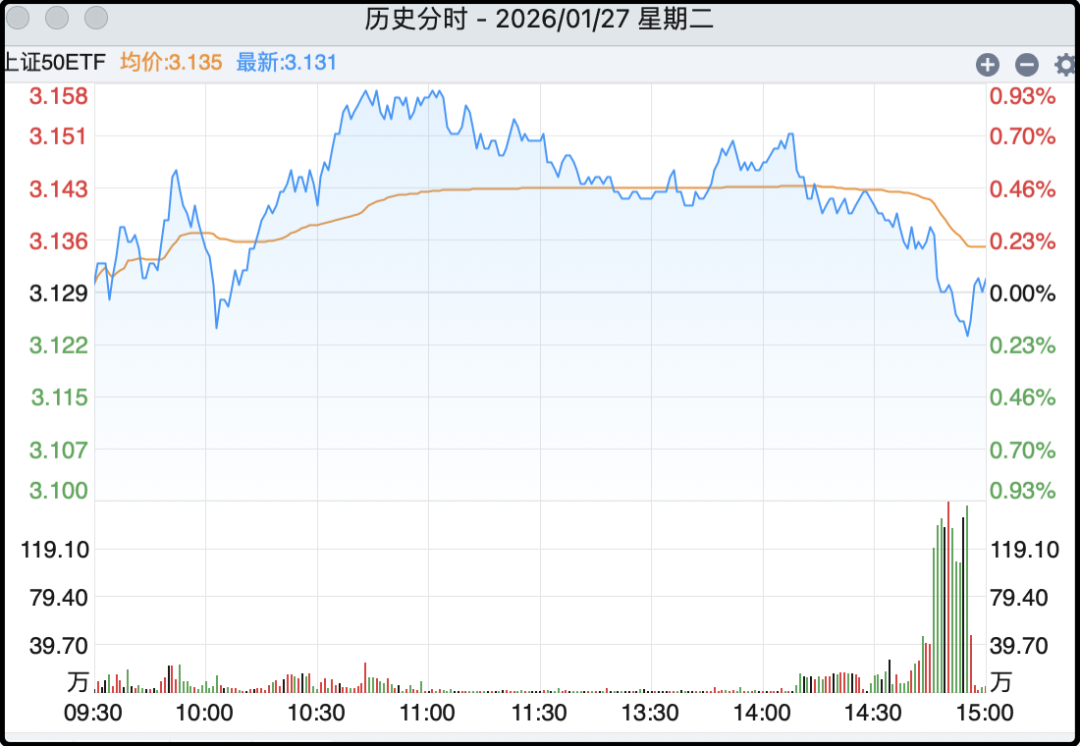
Today, the big brother was still at work, but his operations were significantly different from those of the past few days. The usual sell-off at 10 a.m. was canceled, and there was no movement all morning. Just when everyone was discussing whether the big brother's selling spree was over, he went back to work before the market closed in the afternoon and sold off many broad-based indices, putting downward pressure on the index once again.
Today I looked at some data analysis on the holdings of the top index and the current round of selling. It seems that the SSE 50 and CSI 300 are selling a lot every day, but this is mainly because they bought a lot during the previous market rescue. The actual reduction ratio is less than 40%. The CSI 1000 and the ChiNext index have a high reduction ratio, with a selling ratio of more than 50%. The CSI 500 has the lowest reduction ratio, with only about 20% sold.
This aligns with the general feeling among stock market investors. The CSI 500 Index rose 14.5% after the Lunar New Year, performing best among the broader indices, precisely because the major indices (referring to the CSI 500) sold less. As for why they sold less, I don't know; perhaps they were more bullish? Or maybe the major indices are also trading IC futures, haha?
My brother still holds around 1 trillion in ETFs. I don't think he'll sell them all; at most, he'll sell the portion he bought during the market rescue two years ago, since some of that money was borrowed on temporary credit lines. It seems he's already sold at least half; whether he'll sell the remaining half remains to be seen.
1. Gold and silver continue their frenzy. Silver reached a high of 117 last night, followed by a small crash to 103, and is now hovering around 111. I looked at the intraday chart, and that small crash lasted 2-3 hours. That was the short-selling window they had to escape. After this adjustment, the overbought momentum has been released, and there is room for a technical short squeeze afterward.
Short squeezes in commodities are always brutal and ruthless. As prices rise, short sellers are forced to liquidate their positions and buy back in, so the higher the price goes, the more short-term buying pressure there may be. Gold and silver are currently not suitable for dollar-cost averaging or medium-term investment. The current bubble is historically significant, but I wouldn't dare try to profit by shorting.
2. Vanke announced it has borrowed another 2.36 billion yuan from Shenzhen Metro for 36 months at the same preferential interest rate. Additionally, a debt extension proposal was approved today, extending 40% of the outstanding debt and the remaining 60% for another year. This is better than the previous plan, likely a concession made to appease creditors after their protests. This news is positive for Vanke shareholders; the government is still willing to provide financial support and hasn't completely given up, and short-term debt has been resolved. However, this is only a temporary reprieve for Vanke; for the company's stock price to truly recover, the real estate market needs to rebound.
3. The National Center for Disease Control and Prevention: No cases of Nipah virus have been found in my country, and the impact of the outbreak on my country is relatively small. Therefore, vaccine stocks that rose yesterday have fallen back significantly today. The next phase is a gamble; if even one case is reported in China, there could be a 10-20% surge, but if no cases are reported, the stock price will gradually cool down.
4. Ganfeng Lithium expects to achieve a profit of 1.1-1.65 billion yuan in 2025, turning a profit compared to the previous year. At the end of the year before last, it was predicted that lithium mining and photovoltaics would be the first to reverse the trend. Now it seems that lithium mining has truly recovered, while photovoltaics is still lagging behind and needs further support from Director Ma.
That's all for tonight, launch!
Original Article: View Chinese Version