According to my IP address, I've arrived in Hong Kong. I got to the hotel at 9 PM. I haven't decided what to write yet, so I'm just here to chat with you all for a bit. I'll just say whatever comes to mind.
I slept on the plane and woke up a little hungry. I asked my wife when the meal would be served, and she said she hadn't woken me because I was sleeping so soundly, so I missed it. I had no choice but to wave to the flight attendant and ask if she could get me a meal. As soon as the flight attendant heard me speak Mandarin, she immediately shook her head and said she was Korean and didn't understand Mandarin. Then she waved to another flight attendant, who was Thai and also didn't understand Chinese.
There was nothing I could do but try to explain in broken English that I had just fallen asleep and wanted to eat something. I guess my English was too bad, because I had to repeat myself several times before the Thai girl finally understood and ran off to get me some food.
I bought a Cathay Pacific ticket for the Beijing-Hong Kong route, and all the flight attendants were foreigners who didn't speak Chinese. Don't you think that's a bit inappropriate? Of course, it's also my fault for being incompetent. Although I browse English websites like the back of my hand when I'm investing, I rely heavily on translation and AI software. In real life, I can't even speak a few words like "begging" properly—I'm completely useless.  After the plane landed, my local friend from Hong Kong picked me up in his car. He works for a telecommunications company here, and his job is to assist the government in combating telecommunications fraud. He told me something that really stuck with me: criminals bought 2,000 meters of internet cable, rented a house in the countryside, set up internet access, and used that cable to conduct their scams. The actual location was 2,000 meters away. The criminals installed a video camera where they plugged in the internet cable, so when the police went to arrest them, they found nothing. The criminals saw the surveillance footage and immediately ran away, abandoning even their computer.
He told me that the country has invested a lot of work in combating fraud in recent years, and I said that's for sure. In essence, the wealth of ordinary people is also an asset in the pool, and when ordinary people are defrauded by overseas entities, it is a loss of state-owned assets. For example, if a 70-year-old is defrauded of 1 million yuan of their retirement savings, they can't just die immediately, so the burden of their subsequent retirement needs to be covered by the whole society. Of course, the country will do its best to crack down on telecom fraud.
Hong Kong is probably the most unique city in China. Although I only visit for a few days each time, I can still clearly feel the difference between it and the mainland. Let me tell you a few things to give you a sense of it.
1. There are very few surveillance cameras on the streets of Hong Kong, very few, visibly few. I checked the data, and the entire Hong Kong government uses only about 55,000 surveillance cameras in total, which works out to an average of 8 cameras per 1,000 people. Guess how many cameras there are on the mainland? 440 cameras per 1,000 people. That's a huge difference in scale.
Why is this? People here value privacy highly. When the Hong Kong government tried to promote smart cameras that used AI to recognize faces, it faced widespread resistance. Hong Kong people would rather sacrifice efficiency than live under a dense network of cameras.
We know that the density of surveillance cameras helps improve public security. Hong Kong has so few surveillance cameras, but its level of public security is still very good, and it is considered one of the safest cities in Asia.
2. Everyone knows that Hong Kong has the most expensive property prices in China, averaging about 2.5 to 3 times higher than Beijing. However, while property prices in all mainland cities plummeted over the past year, Hong Kong bucked the trend and rebounded by 2-4% by 2025, a unique phenomenon in China.
The primary reason is Hong Kong's low interest rates. Hong Kong dollar mortgages don't follow the mainland's LPR (currently 3%+), but are linked to HIBOR (Hong Kong Interbank Offered Rate), which is currently around 2%, and even fell below 1% at its lowest point last year. In addition to low interest rates, Hong Kong also boasts high rent-to-price ratios, generally between 3-3.5%, compared to rent-to-price ratios in first-tier Chinese cities typically below 2%.
If you do the math, Hong Kong properties generate a surplus after deducting mortgage payments, making them positive cash flow assets. In contrast, properties in major cities like Beijing, Shanghai, Guangzhou, and Shenzhen don't generate enough rental income to cover mortgage payments; you have to subsidize at least 1% more, making them negative cash flow assets.
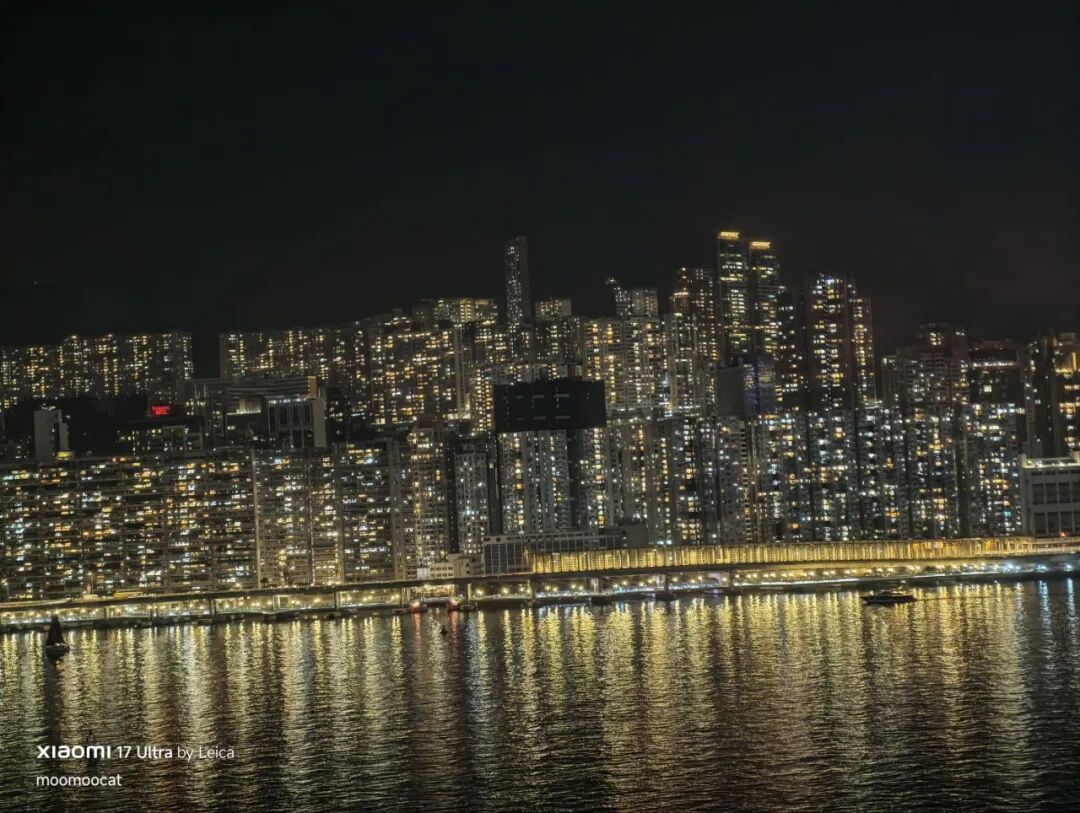
So although Hong Kong property prices are higher in absolute terms than those in Beijing and Shanghai, they are actually not expensive in terms of relative valuation, and the bubble is much smaller. Another thing I noticed is that the lighting rate in Hong Kong apartments is almost like cheating. Usually in Beijing, if 50-60% of the rooms in an apartment building are lit up at night, that's considered pretty good, right? But in Hong Kong, it's generally 80-90%.
The hotel I'm staying at is by the sea, and there's a residential area right across the water. I'll take a picture with my phone to show you, and the number of lights on is ridiculous. It looks like the developer just finished building the houses and is doing a lighting test.
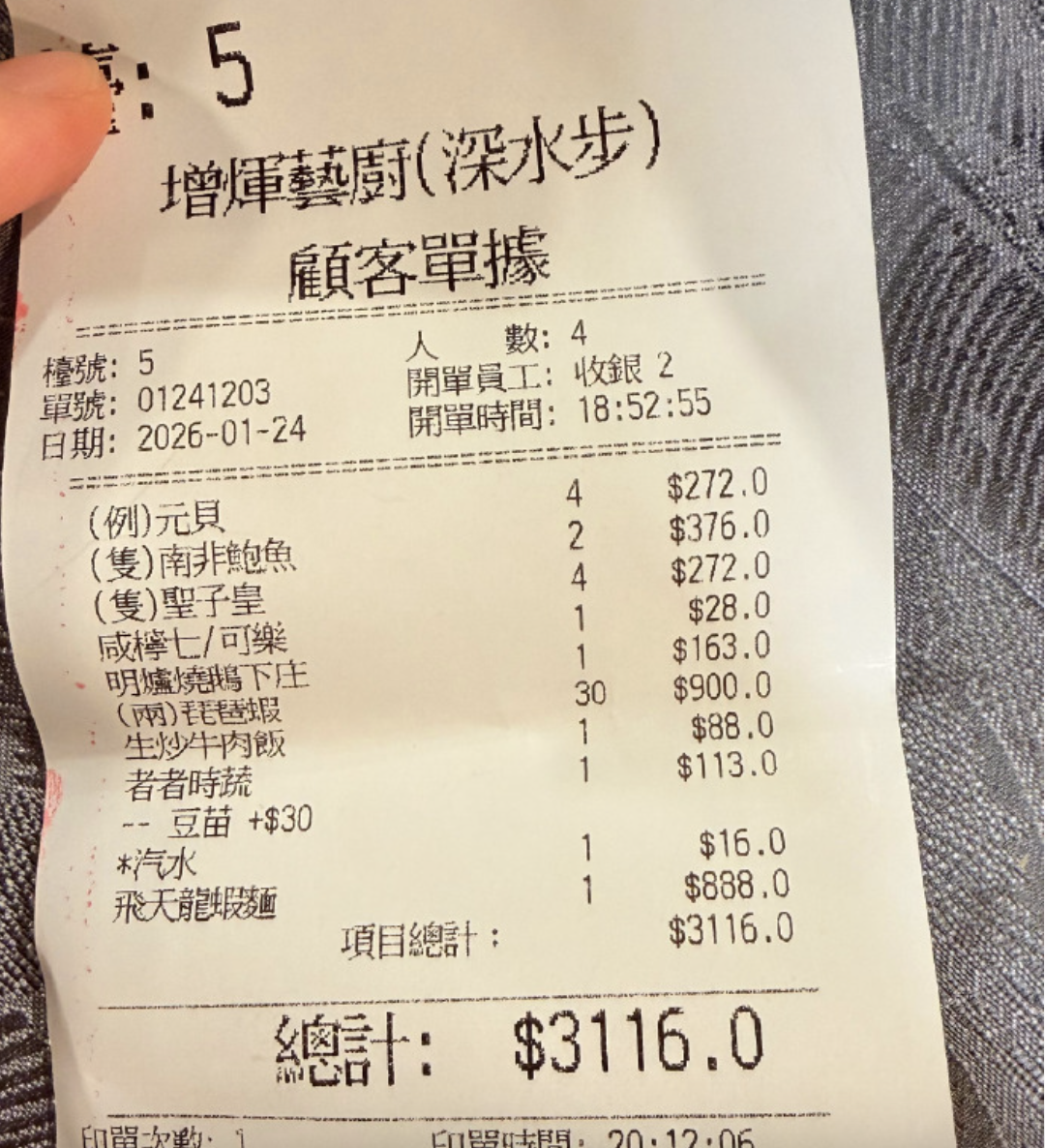
That's all for now. Tonight, a friend took me to a seafood stall in Sham Shui Po. The restaurant looked rather unassuming, but it's been recommended by Michelin for eight consecutive years from 2018 to 2025. The four of us enjoyed a delicious meal of fresh seafood for HK$3,116. My wife took a picture of the bill so everyone can get a feel for Hong Kong's cost of living.
I think the main reason for the high price is the mantis shrimp and lobster; if you don't have those two main dishes, the rest seems okay.
After the plane landed, my local friend from Hong Kong picked me up in his car. He works for a telecommunications company here, and his job is to assist the government in combating telecommunications fraud. He told me something that really stuck with me: criminals bought 2,000 meters of internet cable, rented a house in the countryside, set up internet access, and used that cable to conduct their scams. The actual location was 2,000 meters away. The criminals installed a video camera where they plugged in the internet cable, so when the police went to arrest them, they found nothing. The criminals saw the surveillance footage and immediately ran away, abandoning even their computer.
He told me that the country has invested a lot of work in combating fraud in recent years, and I said that's for sure. In essence, the wealth of ordinary people is also an asset in the pool, and when ordinary people are defrauded by overseas entities, it is a loss of state-owned assets. For example, if a 70-year-old is defrauded of 1 million yuan of their retirement savings, they can't just die immediately, so the burden of their subsequent retirement needs to be covered by the whole society. Of course, the country will do its best to crack down on telecom fraud.
Hong Kong is probably the most unique city in China. Although I only visit for a few days each time, I can still clearly feel the difference between it and the mainland. Let me tell you a few things to give you a sense of it.
1. There are very few surveillance cameras on the streets of Hong Kong, very few, visibly few. I checked the data, and the entire Hong Kong government uses only about 55,000 surveillance cameras in total, which works out to an average of 8 cameras per 1,000 people. Guess how many cameras there are on the mainland? 440 cameras per 1,000 people. That's a huge difference in scale.
Why is this? People here value privacy highly. When the Hong Kong government tried to promote smart cameras that used AI to recognize faces, it faced widespread resistance. Hong Kong people would rather sacrifice efficiency than live under a dense network of cameras.
We know that the density of surveillance cameras helps improve public security. Hong Kong has so few surveillance cameras, but its level of public security is still very good, and it is considered one of the safest cities in Asia.
2. Everyone knows that Hong Kong has the most expensive property prices in China, averaging about 2.5 to 3 times higher than Beijing. However, while property prices in all mainland cities plummeted over the past year, Hong Kong bucked the trend and rebounded by 2-4% by 2025, a unique phenomenon in China.
The primary reason is Hong Kong's low interest rates. Hong Kong dollar mortgages don't follow the mainland's LPR (currently 3%+), but are linked to HIBOR (Hong Kong Interbank Offered Rate), which is currently around 2%, and even fell below 1% at its lowest point last year. In addition to low interest rates, Hong Kong also boasts high rent-to-price ratios, generally between 3-3.5%, compared to rent-to-price ratios in first-tier Chinese cities typically below 2%.
If you do the math, Hong Kong properties generate a surplus after deducting mortgage payments, making them positive cash flow assets. In contrast, properties in major cities like Beijing, Shanghai, Guangzhou, and Shenzhen don't generate enough rental income to cover mortgage payments; you have to subsidize at least 1% more, making them negative cash flow assets.
So although Hong Kong property prices are higher in absolute terms than those in Beijing and Shanghai, they are actually not expensive in terms of relative valuation, and the bubble is much smaller. Another thing I noticed is that the lighting rate in Hong Kong apartments is almost like cheating. Usually in Beijing, if 50-60% of the rooms in an apartment building are lit up at night, that's considered pretty good, right? But in Hong Kong, it's generally 80-90%.
The hotel I'm staying at is by the sea, and there's a residential area right across the water. I'll take a picture with my phone to show you, and the number of lights on is ridiculous. It looks like the developer just finished building the houses and is doing a lighting test.
That's all for now. Tonight, a friend took me to a seafood stall in Sham Shui Po. The restaurant looked rather unassuming, but it's been recommended by Michelin for eight consecutive years from 2018 to 2025. The four of us enjoyed a delicious meal of fresh seafood for HK$3,116. My wife took a picture of the bill so everyone can get a feel for Hong Kong's cost of living.
I think the main reason for the high price is the mantis shrimp and lobster; if you don't have those two main dishes, the rest seems okay. 
Original Article: View Chinese Version