Last night, some readers commented that I share information before I go on long trips. Many readers asked about this, which I've mentioned many times before. It's about sharing information and clues about my assets to ensure that my family can recover the money if something unexpected happens.
It could be recorded in a notebook, a text file on your computer, or a scheduled email (which can be canceled)—whatever is convenient. For most people, asset information is quite simple, usually just bank cards and stock/fund information. Just back up the card numbers and passwords to your parents. My situation is more special; I have many non-standard investments, both domestic and international, on and off the blockchain. If I don't leave any clues, I probably won't be able to find half of my family members.
I'm not an adventurous person in life. I know my whole family depends on me, but life is unpredictable, so it's always better to be prepared.
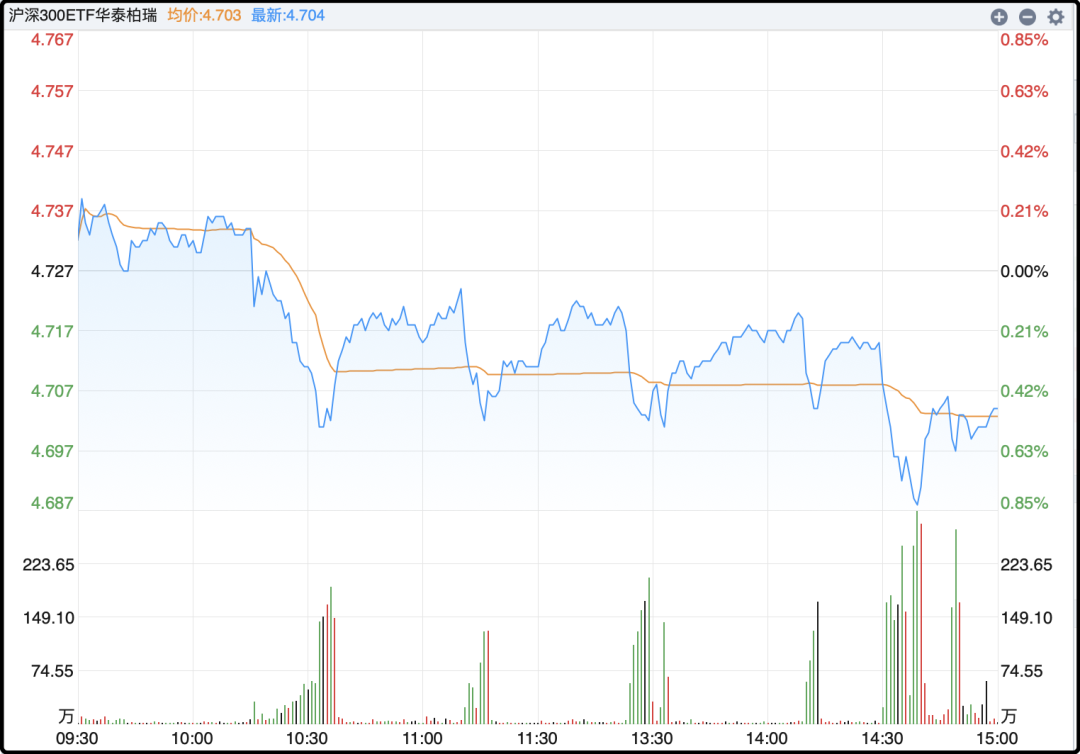
Furthermore, many people in the comments are asking how to profit from the "big brother's" (a term used to describe someone who exploits financial difficulties) situation. I'm genuinely surprised. Are you even stock market investors? The intraday chart shows such obvious patterns; of course, you should trade in waves. If there are stock index futures, trade them; if not, you should at least trade ETFs. If you still don't know what an ETF is, then forget it and go sit at the kids' table.
Including today, the trader has been selling off large amounts of stock for six consecutive trading days. It seems the trader has realized their trading patterns are too obvious, and more and more people are taking advantage of their moves, so they've broken down their operations. Previously, they would sell off twice a day, each time for 10-15 minutes; now they sell off five to six times a day, each time for only a few minutes.
Unless you're glued to your computer all day watching the intraday charts, it's really hard to get this deal. I laughed when I saw the chart today; if you don't want people to profit, why rush to sell? So this thing has to be sold.
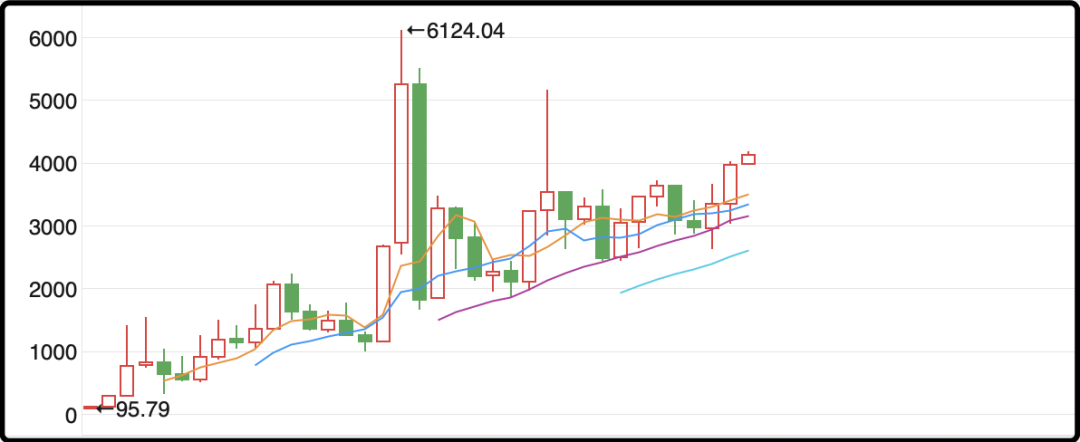
Everyone has learned a lesson from this experience: the shares used to prop up the market during a bear market should be sold when the market recovers. Those who aren't long-term value investors should stay away when the bull market arrives. The current market is acting like a stabilization fund; the A-share market needs intervention below 3000, and risk prevention is needed above 4000. 3000 to 4000 is roughly a reasonable range where retail investors can safely participate.
Recently, many people have left messages asking me what the target of this bull market is. I don't know, but I'm fairly confident that this bull market will end and the index will fall back below 4000 points. As for below 3000 points, it may not be able to go back.
The Shanghai Composite Index's 20-day moving average (MA20) is the true lower support level, currently at 3150 and still rising at a rate of 70 points per year. Even if there's a deep correction in the future, it will likely be in the 3300-3500 range. My judgment above can stand the test of time. I have a feeling I'll dig up this again years from now. I give a thumbs up to my future self and readers! ✌️
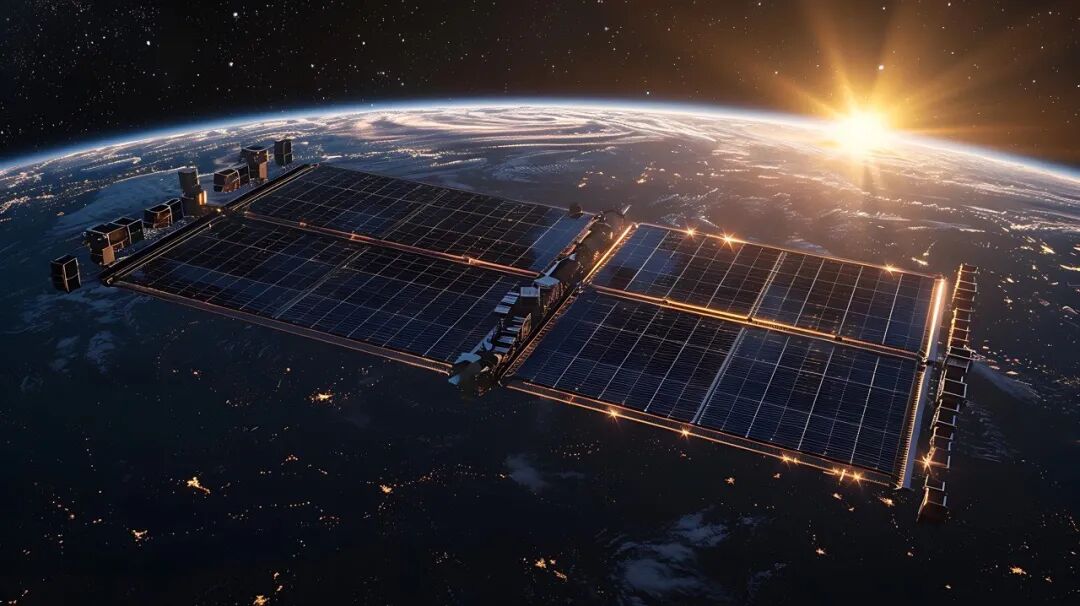
Today, Director Ma, the technical advisor for this round of bull market in A-shares, gave the latest guidance—space photovoltaics + space computing power. This not only stimulated the continued recovery of commercial aerospace, but also ignited the photovoltaic sector, which was half-submerged in a quagmire. Today, as many as 33 stocks rose by more than 10%.
Why deploy photovoltaics in space, and what are their advantages?
Firstly, it can solve the problem of continuous power generation. The photovoltaic panels are placed in geosynchronous orbit (GEO), about 36,000 kilometers above the ground. There is no darkness or cloud cover here, and the area is exposed to sunlight for 99% of the year, so it can generate electricity stably and continuously without peaks or troughs.
Secondly, the intensity of solar radiation in space is 13 times that on Earth's surface, resulting in higher power generation efficiency. A gigawatt-level photovoltaic power station generates the equivalent of a nuclear power plant on Earth.
The above two are the core advantages. In addition, space photovoltaics also has the advantages of saving land, zero emissions, and being clean and environmentally friendly. Next, you might ask, what's the purpose of the electricity generated in space? Can it be sent back to Earth?
That's actually feasible. With microwave and laser transmission technologies, a ground-based receiving station could transmit electricity from space back to Earth. However, the 80-90% loss rate is too high, meaning that if you generate 100 kilowatt-hours of electricity in space, only a dozen or so kilowatt-hours would reach the ground. But considering that photovoltaic power generation efficiency in space is 10-15 times higher than on Earth, it's still a promising prospect if the transmission technology is further improved and upgraded.
Of course, the most suitable way to power space is to set up a space computing base directly in space, using photovoltaic power to support AI chip calculations. Space is at absolute zero temperature, so heat can be handled through radiation cooling (without water or fans), achieving multiple benefits in one fell swoop.
Setting up computing bases in space requires no land, is not subject to power grid constraints, and is not governed by any regulations—all advantages acknowledged by Director Ma.
Therefore, launching photovoltaic panels and computing base stations into space has a logical basis and is not a pipe dream. However, the prerequisite is to bring down the price of space transportation capacity. Only when space transportation capacity is cheap will all of this be commercially feasible.
After going around in circles, we've finally arrived at Director Ma's SpaceX, and at commercial spaceflight. Director Ma has outlined a blueprint for the future development of human technology, which is precisely the focus of his company. So, are there still people who say that launching rockets is useless? Going to Mars might be a short-term, unprofitable gimmick to attract public attention, but once space transportation becomes cheap enough, other commercial avenues will emerge.
Following Director Ma's lead in the Year of the Horse, fa…fafa…fa…launch!  Tonight we're watching the U23 Chinese national team play Japan. This Japanese team isn't fielding their strongest squad; their key players haven't returned from Europe, and their average age is only 20. However, as the defending champions and Asia's top football team, they're still favored by betting platforms. Currently, the odds for China to win are 5.5-6, a draw is 3.5-3.7, and Japan's odds are around 1.5.
Watch the game with a calm mind. Reaching the final is already beyond expectations, and any surprises would be even better.
I was planning to watch the Green Dragon fight PV tonight, but it's too late at 2 a.m., and I have to catch a flight tomorrow morning.
Tonight we're watching the U23 Chinese national team play Japan. This Japanese team isn't fielding their strongest squad; their key players haven't returned from Europe, and their average age is only 20. However, as the defending champions and Asia's top football team, they're still favored by betting platforms. Currently, the odds for China to win are 5.5-6, a draw is 3.5-3.7, and Japan's odds are around 1.5.
Watch the game with a calm mind. Reaching the final is already beyond expectations, and any surprises would be even better.
I was planning to watch the Green Dragon fight PV tonight, but it's too late at 2 a.m., and I have to catch a flight tomorrow morning.
Original Article: View Chinese Version