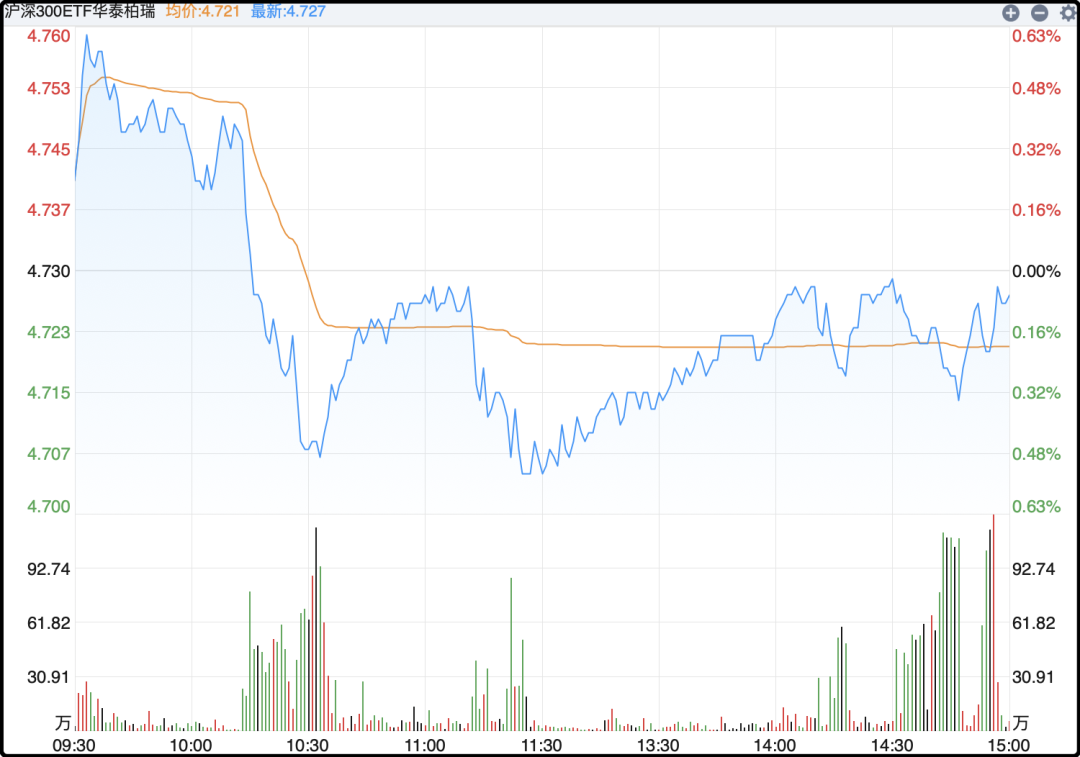
Today, my brother went to work as usual. As soon as 10 o'clock passed, the sell orders for 510300 came pouring out. The CSI 300 index dropped from +0.5% to -0.5% in 10 minutes. A 1% drop is not small. In the previous lukewarm market, the daily fluctuation was only about 0.5-0.6%.
I managed to earn enough money to go to the concert in Hong Kong in a few days by hitching a ride. Thanks to the big brother for letting me see the BP.  Last night, a reader asked me how to ride the wave of stock price fluctuations. The answer is simple: look at the volume bars. A sudden surge of 10-20 times in intraday trading volume is obvious to anyone with eyes. This process usually lasts 10-15 minutes; today it lasted 20 minutes, which is considered long. So I didn't get the absolute lowest price, but I'm satisfied with making a small profit in the middle. This isn't insider trading; it's just about finding patterns in publicly available information during special periods to squeeze out some profits.
The big brother is a man of great deeds. He intervened at 2800, turning the tide, and then gracefully withdrew at 4100, cooling down the somewhat frenzied market. This operation was flawless. Those who have invested should understand the big brother's good intentions. When he bought at the bottom, many were afraid to buy; now that he's taking profits, many are reluctant to sell. Fear of loss coupled with greed—if you don't lose money, who will?
I looked at the net outflow data of the major broad indices in the past few days, which is mainly due to ETF fund redemptions. The largest amount was of course the CSI 300, averaging 30-50 billion yuan per day. This was followed by the SSE 50, STAR Market 50, ChiNext, CSI 1000, and CSI 500, averaging 5-10 billion yuan per day. As for the CSI A500 and CSI 2000, there was almost no net outflow, which is similar to my observation on the K-line chart.
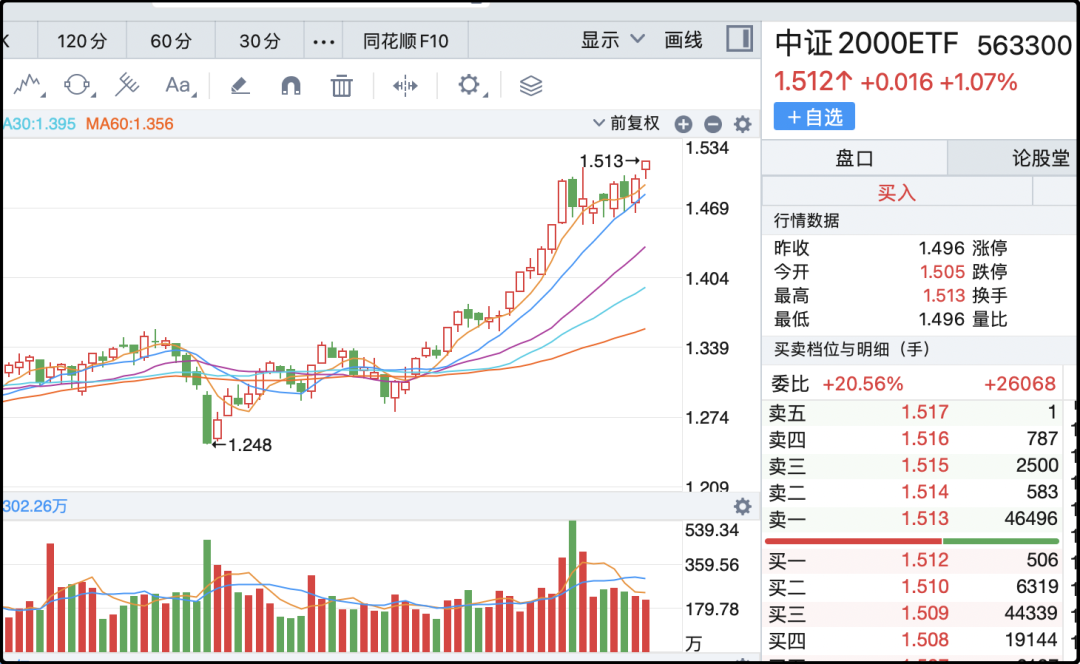
Those who didn't buy much of the CSI 2000 ETF (563300) initially naturally can't sell it now. Look at the volume bars below the candlestick chart; the trading volume hasn't changed recently. So, those holding stocks in the lower half of the index are doing alright, still hitting new highs every day. The real victims are those holding top-tier heavyweight stocks; their faces have turned green from the hammer.
Many people are concerned about how long the big brother will continue to sell. I don't have any information on this, and even if I did, I wouldn't dare tell you, hahaha. I really don't have any. This can only be guessed. During the market rescue two years ago, the estimated increase in ETF holdings was 600-800 billion. Based on that figure, about half of it has probably been sold by now.
Today, A-share trading volume reached 2.69 trillion yuan, with a market median increase of 0.62%. The market has been performing well overall recently, showing a steady upward trend. Apart from the heavily weighted stocks, many individual stocks are hitting new highs. The CSI 500 Index closed at 8387 points today, setting a new high for this round of gains. The market rally is not over, so don't rush to make money.
The commercial aerospace sector, which had been undergoing a correction for the past few days, rebounded today, rising 2.66% and recovering the 5-day moving average. There was no special news; it was just normal technical trading. As I mentioned before, several hot topics in the commercial aerospace sector will run throughout 2026. As long as the overall bull market continues, speculation surrounding this sector will have strong sustainability. What I mean is that buying now and holding it until the end of the year will definitely make you money. The range of fluctuations is large, and it's not suitable for a certain type of speculative investor.
What kind of stock investors are we talking about? They are typically loss-averse investors, meaning they won't sell unless they're making a profit, and if they're experiencing a paper loss, they'll buy more to lower their average cost, or they're determined to make it back on this stock later if they're currently losing money. If any of these points resonate with you, I suggest you stick to safer options, like broad-based ETFs.
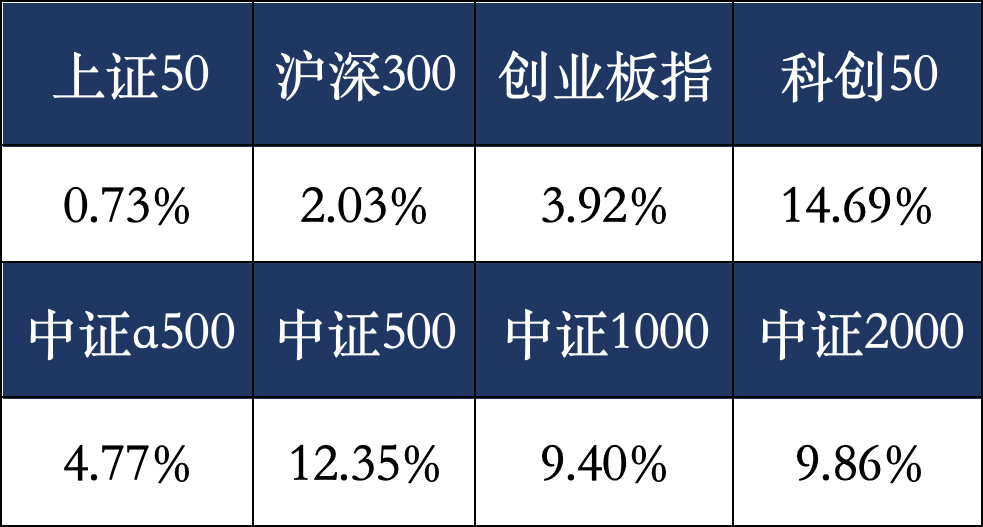
The following is the performance of the eight major broad-based indices since the beginning of the year. Apart from the top index, the rest have performed reasonably well.
1. After meeting with the NATO Secretary General, Trump announced that a preliminary framework agreement had been reached on the Greenland issue, so he abandoned his threat to impose additional tariffs on European countries on February 1st. Haha, see, wasn't I right a few days ago? Old Europe is fundamentally weak now; their protests are just gestures, and they will ultimately seek compromise.
The rumored preliminary agreement involves increasing the number of US military bases in Greenland, ceding sovereignty of the bases to the US, and increasing cooperation in the development of rare earth mines in Greenland. Although it doesn't involve selling the entire island, it does meet Trump's demands to some extent.
In short, this old bastard has once again managed to extort money from us. Since taking office, he has completely ruined the respectable image that the United States had previously cultivated. Now he is a bully on Earth who acts recklessly with his fists, but he has indeed brought a lot of benefits to the United States.
2. The United States has officially withdrawn from the World Health Organization (WHO). In fact, Trump signed this decision a year ago, but the process took a year. As for the reasons for withdrawal, the Trump administration believed that the US, having paid 22% of the WHO's dues, was a major contributor but had not received preferential treatment. For example, they wanted to shift the blame for the origins of COVID-19 to China, but the WHO did not comply. In reality, the dues are not much, only two to three hundred million US dollars a year. This means the WHO's annual dues are only slightly over one billion US dollars, which is not enough to accomplish much globally; its main functions are setting health standards and sharing infectious disease data and intelligence.
3. Goldman Sachs raised its target price for gold to 5400 by the end of 2026, from 4900. The previous target price is obviously outdated, as it was almost reached last night, and the updated target price of 5400 may not even be reached by the end of the year.
4. A domestic company called Transcendence Manned Spaceflight has officially announced that it has booked its first batch of 20 commercial space tourists, with the maiden flight expected in 2028. I checked online, and the ticket price is 3 million yuan per person. Now, you can book by paying 300,000 yuan in advance. The rocket will send them to the "Kármán line" 100 kilometers above the Earth, where they will experience 3-6 minutes of weightlessness before returning to Earth.
This price is quite reasonable, because I compared it with similar services in the US. Justin Sun previously rode a Blue Origin rocket, spending $28 million, which meant he spent 10 minutes in space before returning. The price difference is 65 times. It seems that any service that can be provided in China is definitely much cheaper than in the US.
However, compared to price, the most crucial aspect of commercial spaceflight is safety. With current rocket technology, no one can guarantee absolute safety; even a 99% relative safety is difficult to ascertain. I watched the video of Justin Sun before he boarded the rocket, and he spoke with a serious expression. I suspect that at that moment, he also considered that those words might be his last.
Last night, a reader asked me how to ride the wave of stock price fluctuations. The answer is simple: look at the volume bars. A sudden surge of 10-20 times in intraday trading volume is obvious to anyone with eyes. This process usually lasts 10-15 minutes; today it lasted 20 minutes, which is considered long. So I didn't get the absolute lowest price, but I'm satisfied with making a small profit in the middle. This isn't insider trading; it's just about finding patterns in publicly available information during special periods to squeeze out some profits.
The big brother is a man of great deeds. He intervened at 2800, turning the tide, and then gracefully withdrew at 4100, cooling down the somewhat frenzied market. This operation was flawless. Those who have invested should understand the big brother's good intentions. When he bought at the bottom, many were afraid to buy; now that he's taking profits, many are reluctant to sell. Fear of loss coupled with greed—if you don't lose money, who will?
I looked at the net outflow data of the major broad indices in the past few days, which is mainly due to ETF fund redemptions. The largest amount was of course the CSI 300, averaging 30-50 billion yuan per day. This was followed by the SSE 50, STAR Market 50, ChiNext, CSI 1000, and CSI 500, averaging 5-10 billion yuan per day. As for the CSI A500 and CSI 2000, there was almost no net outflow, which is similar to my observation on the K-line chart.
Those who didn't buy much of the CSI 2000 ETF (563300) initially naturally can't sell it now. Look at the volume bars below the candlestick chart; the trading volume hasn't changed recently. So, those holding stocks in the lower half of the index are doing alright, still hitting new highs every day. The real victims are those holding top-tier heavyweight stocks; their faces have turned green from the hammer.
Many people are concerned about how long the big brother will continue to sell. I don't have any information on this, and even if I did, I wouldn't dare tell you, hahaha. I really don't have any. This can only be guessed. During the market rescue two years ago, the estimated increase in ETF holdings was 600-800 billion. Based on that figure, about half of it has probably been sold by now.
Today, A-share trading volume reached 2.69 trillion yuan, with a market median increase of 0.62%. The market has been performing well overall recently, showing a steady upward trend. Apart from the heavily weighted stocks, many individual stocks are hitting new highs. The CSI 500 Index closed at 8387 points today, setting a new high for this round of gains. The market rally is not over, so don't rush to make money.
The commercial aerospace sector, which had been undergoing a correction for the past few days, rebounded today, rising 2.66% and recovering the 5-day moving average. There was no special news; it was just normal technical trading. As I mentioned before, several hot topics in the commercial aerospace sector will run throughout 2026. As long as the overall bull market continues, speculation surrounding this sector will have strong sustainability. What I mean is that buying now and holding it until the end of the year will definitely make you money. The range of fluctuations is large, and it's not suitable for a certain type of speculative investor.
What kind of stock investors are we talking about? They are typically loss-averse investors, meaning they won't sell unless they're making a profit, and if they're experiencing a paper loss, they'll buy more to lower their average cost, or they're determined to make it back on this stock later if they're currently losing money. If any of these points resonate with you, I suggest you stick to safer options, like broad-based ETFs.
The following is the performance of the eight major broad-based indices since the beginning of the year. Apart from the top index, the rest have performed reasonably well.
1. After meeting with the NATO Secretary General, Trump announced that a preliminary framework agreement had been reached on the Greenland issue, so he abandoned his threat to impose additional tariffs on European countries on February 1st. Haha, see, wasn't I right a few days ago? Old Europe is fundamentally weak now; their protests are just gestures, and they will ultimately seek compromise.
The rumored preliminary agreement involves increasing the number of US military bases in Greenland, ceding sovereignty of the bases to the US, and increasing cooperation in the development of rare earth mines in Greenland. Although it doesn't involve selling the entire island, it does meet Trump's demands to some extent.
In short, this old bastard has once again managed to extort money from us. Since taking office, he has completely ruined the respectable image that the United States had previously cultivated. Now he is a bully on Earth who acts recklessly with his fists, but he has indeed brought a lot of benefits to the United States.
2. The United States has officially withdrawn from the World Health Organization (WHO). In fact, Trump signed this decision a year ago, but the process took a year. As for the reasons for withdrawal, the Trump administration believed that the US, having paid 22% of the WHO's dues, was a major contributor but had not received preferential treatment. For example, they wanted to shift the blame for the origins of COVID-19 to China, but the WHO did not comply. In reality, the dues are not much, only two to three hundred million US dollars a year. This means the WHO's annual dues are only slightly over one billion US dollars, which is not enough to accomplish much globally; its main functions are setting health standards and sharing infectious disease data and intelligence.
3. Goldman Sachs raised its target price for gold to 5400 by the end of 2026, from 4900. The previous target price is obviously outdated, as it was almost reached last night, and the updated target price of 5400 may not even be reached by the end of the year.
4. A domestic company called Transcendence Manned Spaceflight has officially announced that it has booked its first batch of 20 commercial space tourists, with the maiden flight expected in 2028. I checked online, and the ticket price is 3 million yuan per person. Now, you can book by paying 300,000 yuan in advance. The rocket will send them to the "Kármán line" 100 kilometers above the Earth, where they will experience 3-6 minutes of weightlessness before returning to Earth.
This price is quite reasonable, because I compared it with similar services in the US. Justin Sun previously rode a Blue Origin rocket, spending $28 million, which meant he spent 10 minutes in space before returning. The price difference is 65 times. It seems that any service that can be provided in China is definitely much cheaper than in the US.
However, compared to price, the most crucial aspect of commercial spaceflight is safety. With current rocket technology, no one can guarantee absolute safety; even a 99% relative safety is difficult to ascertain. I watched the video of Justin Sun before he boarded the rocket, and he spoke with a serious expression. I suspect that at that moment, he also considered that those words might be his last.  That's all for tonight, launch!
Original Article: View Chinese Version