The U.S. military continued its blockade of the Strait of Hormuz today. The U.S. military does not dare to confront Iran's shore-based firepower in the strait, but instead chose to block the strait's exit sponge. Currently, the USS Abraham Lincoln carrier strike group is there, and any Iranian ships or ships trading with Iran are prohibited from passing through.
This was initially bad news, but details of the negotiations in Islamabad a few days earlier were subsequently revealed. It was discovered that although the talks seemed to have broken down and both sides were very tough, they had actually made concessions and reached many consensuses, making a successful agreement not far off.
For example, on the nuclear issue, Iran has made concessions, agreeing to destroy all 60% enriched uranium and accept inspections by the International Atomic Energy Agency, which is indeed a sign of sincerity.
The disagreement between the two sides lies in the fact that the US demands Iran freeze uranium enrichment for 20 years, while Iran has only offered 5 years. The exact number isn't a matter of principle; it's negotiable. Perhaps both sides could agree to 10 years. Actually, this period doesn't need to be too long, because I predict that neither the US nor Iran can hold out for 10 years. The timeframe can be reset during the next round of negotiations.
For example, regarding the lifting of sanctions, the US agreed to release $6 billion in assets, while Iran demanded $27 billion. The US requested a phased and reversible approach, with immediate refreezing should Iran disobey. Iran, on the other hand, wanted a complete lifting of sanctions.
So it's also a matter of numbers. If you ask for an exorbitant price, I'll negotiate the price down to the minimum. It's negotiable.
As for the Strait of Hormuz, this is indeed a difficult issue. Iran insists on its sovereignty and demands payment, while the United States disagrees. Currently, there is no compromise that both sides can accept.
Yesterday there were rumors that the two sides would restart a second round of negotiations, and in the afternoon there were further sources, with Reuters saying that Iran had reserved a period from the 17th to the 19th, possibly in Islamabad or Geneva.
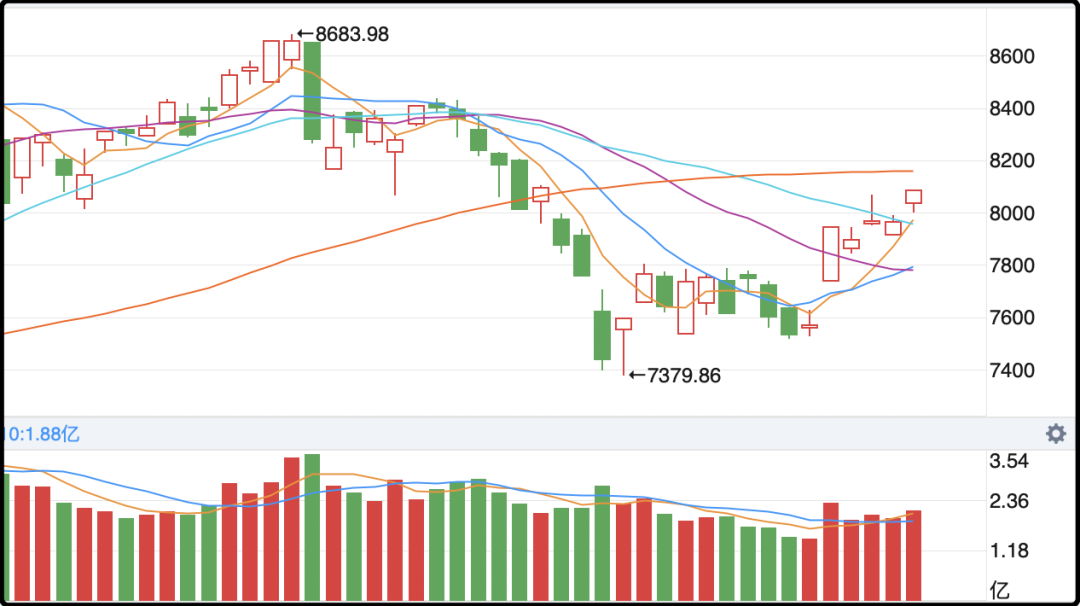
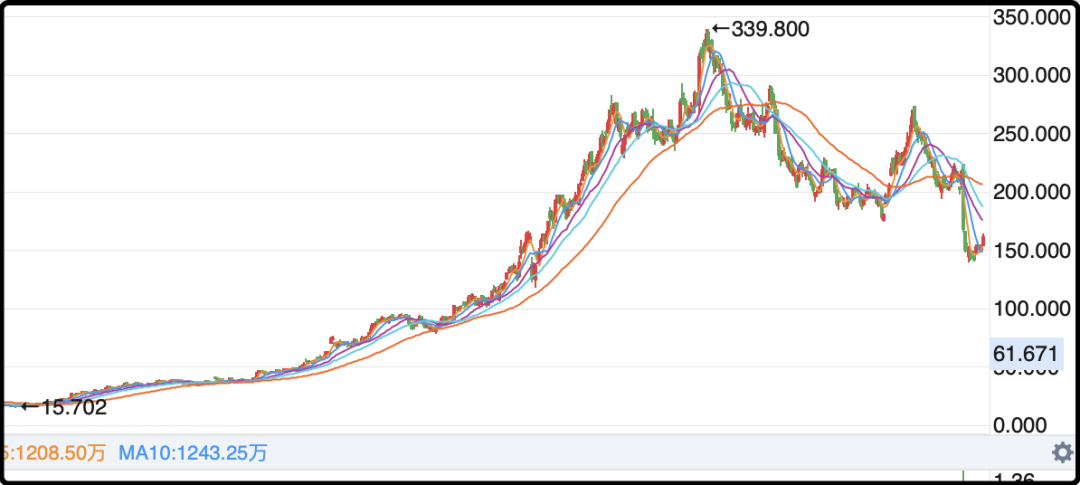
Do you think the chances of a deal being reached are high? Anyway, the capital market has already started pricing in optimism. When I woke up this morning and saw ETH surge 8%, I knew the situation had eased. Sure enough, Japanese and Korean markets opened higher, and the A-shares market gapped up, remaining above the gap throughout the day. Just before the close, due to bets on a second round of negotiations, funds rushed in to buy the dip, ultimately closing at the day's high.
However, the situation is not set in stone. If the talks don't reach an agreement over the weekend and the two sides resume fighting, the market could be driven back to its late March levels. But judging from the current situation, both the US and Iran seem reluctant to fight. The key is whether someone can come up with a solution similar to the one described in the Hormuz Agreement that both sides can accept.
1. Domestic express delivery companies have begun to raise prices across the board, a move driven by rising oil prices. This may not be the only price increase this year. Some readers previously mentioned that they drive electric cars and aren't worried about rising oil prices, but your daily necessities are also affected. This round of express delivery price increases isn't due to supply and demand imbalances, so it doesn't benefit express delivery companies; at most, it's a cost transfer.
2. According to the National Bureau of Statistics, pork prices fell 4.2% month-on-month in early April. Today, the national wholesale price of pork is 14.6 yuan/kg, a further decrease of 0.1% from yesterday. After reviewing pork futures trends, I felt the current price was at a historical low and considered taking a small speculative position. However, I discovered that the premium for pork contracts has risen significantly. The July contract is 14% more expensive than the May contract, and the September contract is 14% more expensive than the July contract, a 7% premium each month. This makes speculation prohibitively expensive.
3. Duan Yongping has been saying for the past week that he is optimistic about Pop Mart and Wang Ning. I am not interested in why he likes them. I found that after he said so many praises, he did not directly buy Pop Mart. Instead, he sold some put options.
The effect of selling put options is to agree on a date and a price; let's say May 1st, HKD 140. If Pop Mart's price is above HKD 140 on May 1st, the funds from selling the put option can earn a relatively high interest rate, around 20-25%. If it falls below HKD 140, then I am obligated to buy a specified number of shares at HKD 140. However, in the event of a sharp drop, say to HKD 120, the interest income from the put option will be far from enough to cover the losses from the held position.
Selling put options is a bottom-fishing strategy frequently used by Duan Yongping. It provides a safety cushion of price discount and allows you to enjoy high interest rates daily while waiting to buy at the bottom. However, this requires a very accurate judgment of the bottom of a price phase. If you sold put options when Pop Mart was over 300, you'd be selling your underwear.
4. Today, the first trial of Evergrande Real Estate and Xu Jiayin took place. Xu Jiayin, who has not appeared in public for a long time, appeared in court. He was accused of illegally absorbing public deposits, fundraising fraud, illegally issuing loans, illegally using funds, fraudulently issuing securities, illegally disclosing important information, embezzlement, and corporate bribery. Xu Jiayin pleaded guilty in court.
A photo of him in the dock circulated online today, but after checking, I found it was a composite image. No photos of Xu Jiayin appearing in court today have been released to the public. There were many rumors circulating before that he might have passed away, but this has now been debunked; Mr. Xu is still alive.
5. Iran is demanding compensation from five Middle Eastern countries for war losses: Bahrain, Saudi Arabia, Qatar, the UAE, and Jordan. My first reaction upon seeing this list was curiosity as to why Kuwait was not included. After checking, I found out that Kuwait was the hardest hit when Iran retaliated with bombings, and the two sides probably offset each other after calculation.
Speaking of the recent media reports on the disagreements in the US-Iran negotiations, another important issue was not mentioned: Iran's cessation of support for the Crescent of Resistance. I'm curious, could it be that the two sides have reached a consensus on this? Will Iran abandon its allies…?
That's about it for tonight, time to go to work.
Original Article: View Chinese Version