Here's an update on the latest developments in the negotiations in Islamabad.
Delegations from both Iran and the United States have arrived. The Iranian delegation is led by Speaker of Parliament Ghalibaf, who is the de facto second-in-command of Iran. The American delegation is led by Vance, who has consistently held an "America First" stance and does not support military action against Iran.
I originally thought the two sides would sit down face-to-face to talk today, but that's not the case; there are currently obstacles preventing them from even meeting. The host country, Pakistan, arranged for the US and Iran to be on different floors of the same building, with Pakistani personnel relaying messages between them, ensuring the two sides did not meet directly. Reports indicate that officials from Egypt, Qatar, Saudi Arabia, and China were also present to mediate.
This communication method is very inefficient, taking 1-2 hours to relay a message. But there's no other way; everyone is afraid that if the two sides meet and start arguing, they'll break up completely. Also, the Iranian negotiating team is unwilling to shake hands or take photos with the Americans, fearing back home they'll be accused of treason. Iran is currently under political pressure; fighting is politically correct, and any show of friendliness will be seen as weakness and compromise.
Both sides emphasized their positions, essentially just stating their own views; at least for now, there seems to be no common ground. However, some good news emerged: according to Reuters, citing sources, the US agreed to unfreeze some of Iran's assets in overseas banks, amounting to approximately $6 billion. The US, of course, won't concede without a price; any goodwill comes at a cost. Rumors suggest that the condition for this $6 billion is ensuring safe passage through the Strait of Hormuz.
Other media outlets reported that several U.S. warships passed through the Strait of Hormuz into the Persian Gulf today (Saturday) without notifying Iran, before returning via the same route, prompting strong protests from Iran.
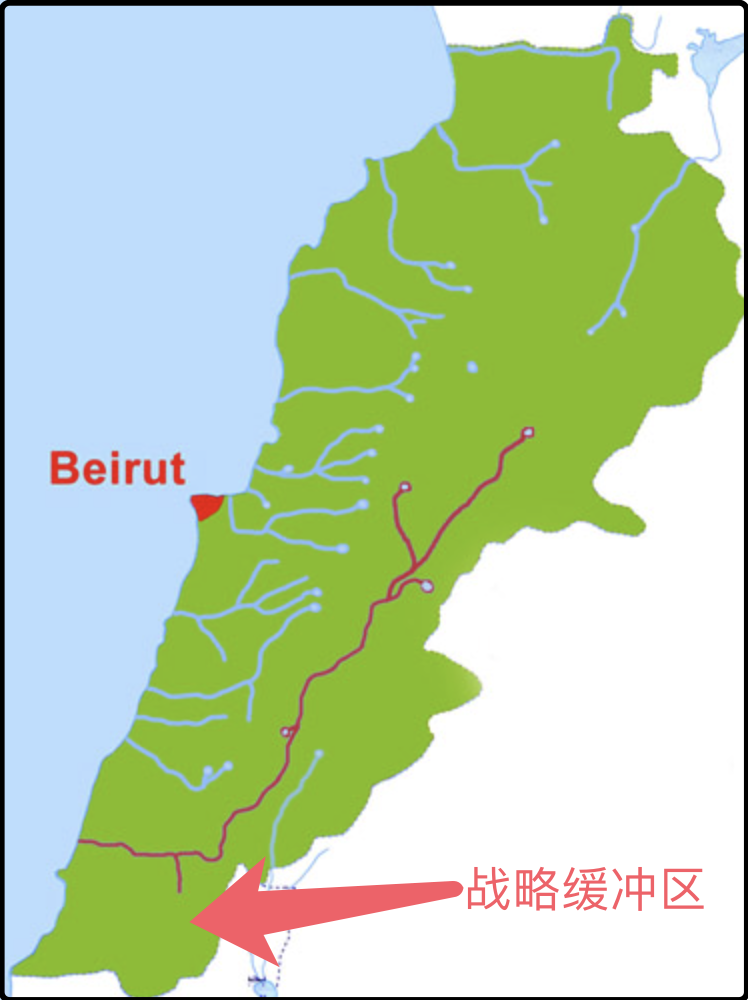
On the other hand, Israel is intensifying its offensive against Hezbollah in southern Lebanon, which refuses to acknowledge itself as part of the ceasefire agreement and is not bound by the United States.
Yesterday I told you that Israel's goal is to eliminate Hezbollah militants on the south bank of the Litani River and establish a strategic buffer zone. They have already destroyed all the bridges over the Litani River and deployed drones for 24-hour patrols; all river crossings will be destroyed. This will isolate Hezbollah Radwan's forces on the south bank, leaving them without logistical support.
Radwan's forces were Hezbollah's elite, originally numbering 6,000-7,000, but now only about 4,000 remain. They are being attacked by five Israeli divisions, totaling 50,000-70,000 men. With a 10:1 troop disparity and overwhelming superior equipment, Iran is eager to demand a ceasefire from Israel, fearing that further fighting would wipe out its allies.
Radwan's tribe is currently mainly waging guerrilla warfare in tunnels and caves, trying to buy time. It will take the Israeli army about 2-3 weeks to eliminate Radwan's tribe's organizational structure through a carpet sweep. Then, to completely demilitarize them, the tunnels and bunkers will be cleared, and the people in the villages will be driven out, which will take 3-5 months.
Many civilians will suffer again, becoming refugees stranded in foreign lands—it's all a tragedy. But this time, Hezbollah struck first. On March 2nd, in support of Iran, they launched an attack on Israel, but were outmatched and pushed back to their own territory. Netanyahu is not someone to be trifled with; if you give him an opportunity, he will definitely annihilate his enemies.
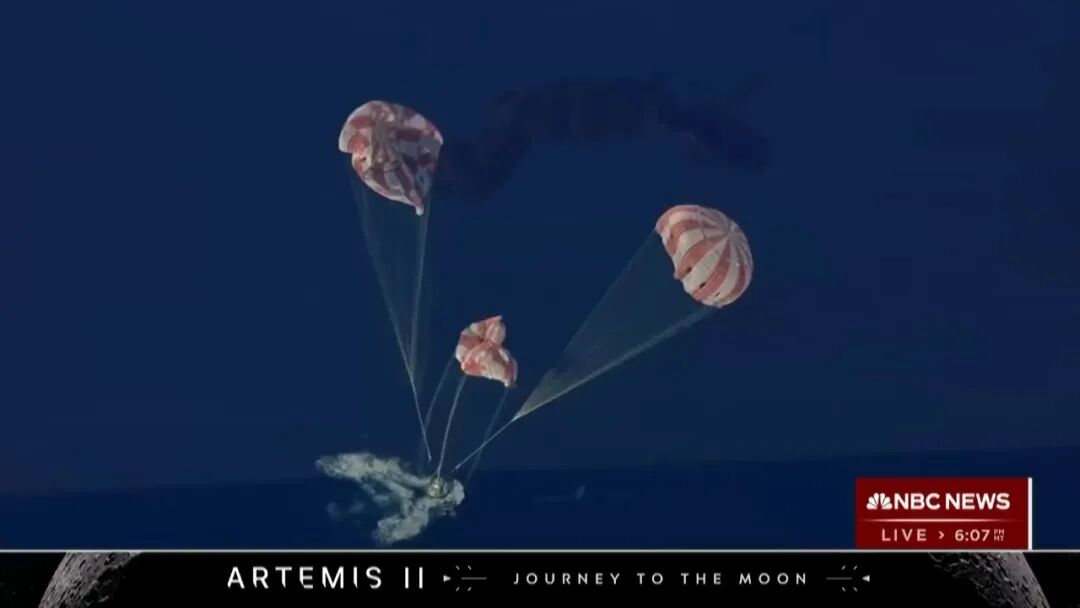
Meanwhile, Artemis 2 has successfully returned to Earth, landing on the sea with three parachutes.
It is said that the reentry into the atmosphere was quite dangerous, with the combustion temperature reaching over 2,700 degrees Celsius, and it was only thanks to the heat shield at the bottom of the cabin that it withstood the heat.
I actually had a question before: why do spacecraft have to enter the atmosphere so quickly, causing air friction to reach temperatures of thousands of degrees? Why can't they return to Earth more slowly?
I searched online and found the answer was that it couldn't slow down. The spacecraft returning from the moon was traveling at 11 kilometers per second, 32 times the speed of sound. The spacecraft itself had no fuel for deceleration; the only solution was to crash into the atmosphere and risk its life to brake.
Next, Artemis plans to launch its third orbital exercise in 2027 and its fourth manned lunar landing in 2028, during which astronauts will stay on the lunar surface for 6-7 days. Unlike previous "check-in and leave" missions, the future plan is to establish a permanent base on the lunar surface.
I think the Artemis program chose the south pole of the moon as its target because there is a mountain there that receives sunlight all day, which can generate electricity 24 hours a day through photovoltaics. In addition, there is a huge impact crater there, which is speculated to contain a huge amount of ice, which can be electrolyzed to produce oxygen.
From 2028 to 2032, it will take four years to establish a lunar base using supplies transported from Earth and lunar soil 3D printing, allowing four astronauts to live there for 30-60 days at a time. This is an optimistic timeline; if the mission fails or results in casualties, the project will be significantly delayed.
My life's dream is to see humans set foot on Mars one day, hopefully before 2050, so I don't have to wait too long.
That's all for tonight, time to get to work.
Original Article: View Chinese Version