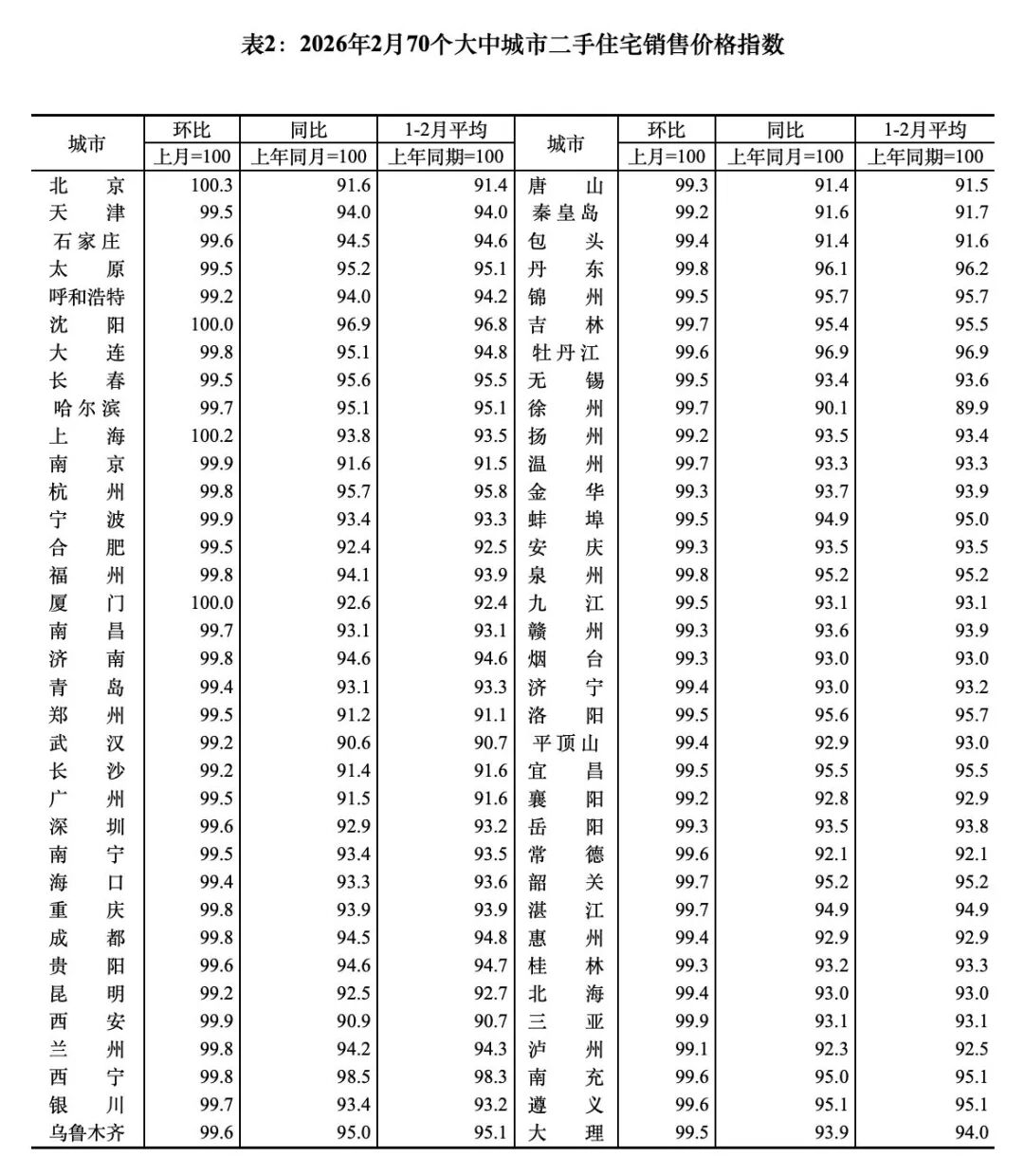
The National Bureau of Statistics has released new housing price data for 70 large and medium-sized cities, which I track and update every month. As usual, let me explain how to read this chart to new readers: a month-on-month change of 101 means it rose by 1% last month, and a year-on-year change of 95 means it fell by 2% compared to the same month last year.
The National Bureau of Statistics updates the data with two charts each time. One chart shows the price of newly sold commercial housing, but I don't think it has any reference value because the supply of new housing is small and there are few transactions. Moreover, the so-called Housing 4.0 allows for a lot of "stealing" of floor area in the design of apartment layouts in order to make them easier to sell, resulting in a 10-20% higher usable floor area ratio than the previous houses, which is a disguised price reduction.
The other chart is the statistics for second-hand homes, which is the one I posted above. It truly represents the state of China's housing market.
In February, only four cities saw a month-on-month increase of over 100 (Beijing, Shanghai, Shenyang, and Xiamen), which was frankly worse than my expectations from last month; I thought there would be around ten. The good news is that all 70 cities had an increase of over 99, indicating a visibly slower rate of decline. However, even a slowdown is still a decline, and it doesn't even qualify as stabilization. I think this main downward wave will only come to an end when this table shows over 30 cities with a month-on-month increase of over 100 for two consecutive months.
There was a localized rebound at the beginning of last year, which lasted until March, but then a retaliatory drop began in April, with a sharp decline that buried everyone who rushed to buy at the bottom. Even if housing prices bottom out, there won't be a V-shaped recovery. This generation of Chinese people has been terrified by this wave of deleveraging, and the courage they had 10 years ago will never return.
As for the next generation of Chinese, their problem is that their numbers are halved.
My assessment of housing prices is based primarily on the Japanese experience and the latest analyses from international institutions. Optimistically, prices will stabilize in the second half of the year; otherwise, they will stabilize next year, followed by a rebound of around 5%. As for the long-term housing market beyond 2030, I remain pessimistic due to reduced demand and large inventories. However, some cities like Beijing, Shanghai, Shenzhen, Hangzhou, Guangzhou, and Chengdu may still see record highs in the future, primarily driven by continued population inflows and sustained economic development.
You can check the changes in the permanent resident population of your city over the past 3-5 years to see if there is potential. In 20 years, there will be a large number of low-quality buildings vacant in county towns and townships. Old houses without elevators or property management will be stuck with you if you don't sell them now. In fact… they already are.
Here's an update on the situation in Iran over the past 24 hours.
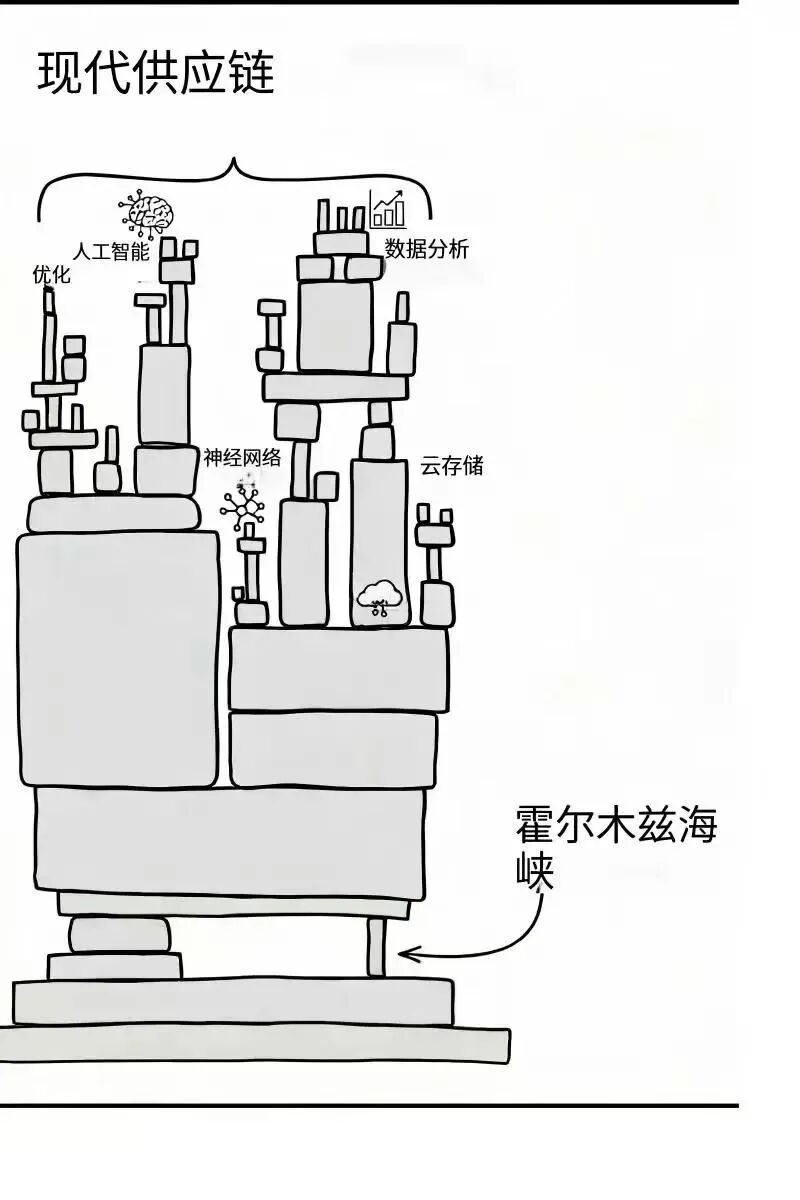
Iran's foreign minister confirmed a differentiated blockade, prohibiting ships from the US, Israel, Europe, Japan, and South Korea from passing through, while allowing ships from China, Russia, and India to pass. However, this so-called permission to pass is not free navigation. India allowed two ships to pass through the strait yesterday after negotiations, but this requires prior application, strict review, and command-based release. This approach will definitely severely restrict shipping capacity.
The US said it would establish a joint escort fleet composed of seven countries. Well, actually, it was Trump who said it. As for the other six allies, none of them have publicly agreed so far. Two of them (Germany and Australia) have explicitly refused, while the rest (Britain, France, Japan, and South Korea) are just stalling and giving vague answers.
Brent crude oil prices continue to remain high above 100, reaching 107 during the day before falling back to 102.
The situation is turning against Trump because, according to a poll, 53% of Americans oppose further military action against Iran, citing concerns about rising oil prices and inflation. People are self-interested; few Americans truly care about the fighting in the Middle East, but they'll start cursing if they pay an extra $30 for gas in the afternoon. Trump's domestic approval rating has plummeted to its lowest point since taking office.
I asked AI how long it would take for the global oil system to be replaced if the Strait of Hormuz were permanently blocked. The answer is: 30-40% replacement within 3 months, 60-70% within 18 months, 85-90% within 3 years, and complete replacement within 5 years.
This is taking too long; the American people can't endure it for that long. Does Trump have any other ideas for breaking the deadlock? If not, he could find a way to back down now. Actually, the US military shouldn't have intervened in the first place. Letting Israel and Iran fight would have kept the intensity of the war and the global impact under control, and wouldn't have caused everyone to suffer.
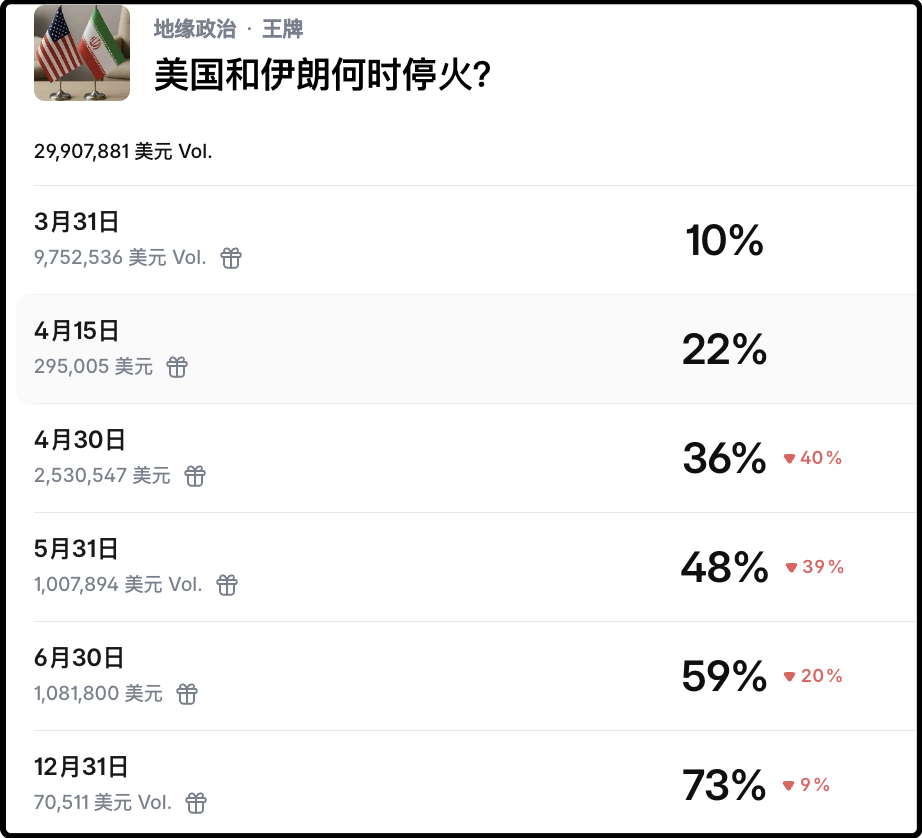
A new pool for betting on Netanyahu's removal from office this year has opened in the last couple of days, with a current probability of 43%. Haha, gamblers will bet on anything! As for the latest probability of a US-Iran ceasefire, it's as follows:
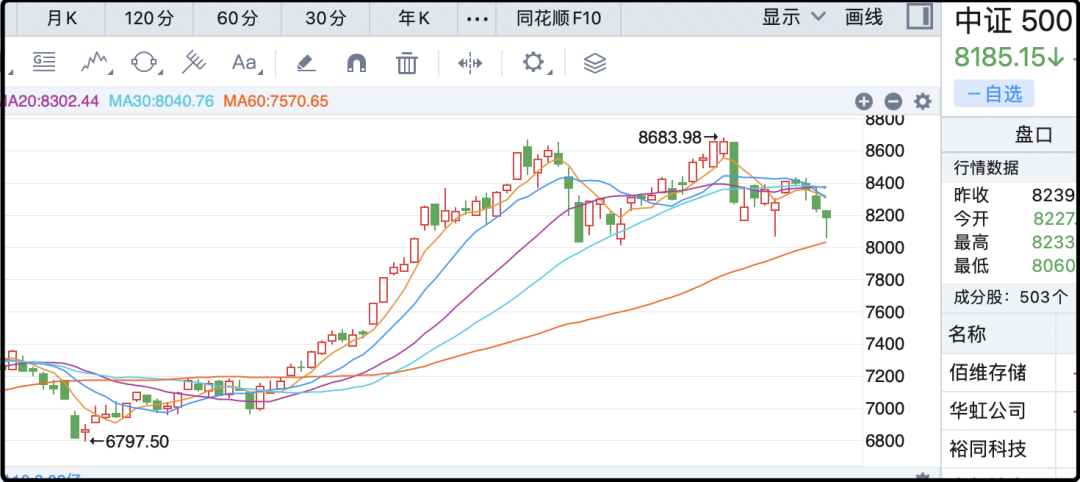
The A-share market experienced a sharp drop at the start of trading today, but a rally before the midday break reversed the losses. Looking at the CSI 500 index's candlestick chart, this is the fourth time it has found support and rebounded at the 8000 level. Whether it can hold this level next time remains to be seen. As the moving averages gradually catch up and converge, the trading volume within the range is consolidating, suggesting that the market won't remain range-bound indefinitely and will likely break out in a new direction.
I think the probability of an upward breakout is more than 2/3, at least that's my opinion at this point. After all, the overall trend that started last June is still intact, so I haven't seriously considered getting off the train at this point despite the fluctuating situation in Iran.
The impact of the war is diminishing, so even though Brent crude oil prices are still above $100, the oil and gas sector is experiencing a period of fatigue, and funds are shifting back to buying technology stocks, such as components, semiconductors, and memory chips. However, the buying volume is not large, and people are being cautious. Today, the total trading volume of A-shares was also average, at only 2.33 trillion yuan.
Today, the CSI Liquor Index surprisingly rose 1.6%, as the National Bureau of Statistics announced that total retail sales of consumer goods in January and February reached 8.6079 trillion yuan, a year-on-year increase of 2.8%. What's unexpected is that the tobacco and alcohol category saw a year-on-year increase of 19%, ranking first among all categories. This is truly surprising; could the liquor sector be on the verge of recovery? Those holding liquor stocks shouldn't rush to sell at this point; they can hold off and observe.
1. Meta invested $27 billion in Nebius, a European computing power company. Meta currently plans to invest approximately $110 billion in AI infrastructure by 2026. However, Meta is also about to implement a 20% layoff, expected to cut 16,000 employees, which could save $5-7 billion in human resources costs annually. It should be noted that 20% is a conservative estimate, and the final figure could reach 30-40% depending on the situation.
Because low-level programmers are easily replaceable with AI, the company's strategy is to replace carbon-based productivity with silicon-based productivity. Meta employees have a median salary of over $300,000; those laid off won't be able to earn that much by coding anymore and will have to find ways to transition into AI orchestrators. This serves as a wake-up call for all programmers, and the wave of AI replacement in China is also underway.
2. Goldman Sachs said that if oil prices remain high, the S&P 500 could plummet by 15%. This makes me a little uneasy. Apparently, 15% is considered a crash by Wall Street. Buffett has been holding cash for so long; he couldn't possibly be waiting for just 15%. I hope this year will see a drop of more than 20%.
3. Hong Kong's technology sector rebounded by 2% today for two reasons. One is that a KOL on Wall Street said that Hong Kong stocks are undervalued, and the other is that Middle Eastern princes are seeking safe havens and buying Hong Kong stocks at bargain prices. I'm too lazy to investigate whether it's true or not, but as long as it goes up, good news is coming.
That's all for now, launch!
Original Article: View Chinese Version