Last night I briefly mentioned the past of Bank of China's crude oil futures product, which many new readers are unaware of, so I'll give a brief recap.
"Crude Oil Treasure" was an investment product issued by the Bank of China that was linked to crude oil, with the underlying asset being US WTI crude oil futures. This occurred in April 2020, coinciding with the first peak of the global COVID-19 pandemic, when global oil prices plummeted, falling below $20 at one point. The Bank of China did not choose to prematurely switch its positions, but instead intended to hold them until settlement and delivery.
The settlement price for WTI crude oil is based on the average price during the two minutes from 2:28 AM to 2:30 AM. However, short sellers launched a surprise attack, dumping orders in the last two minutes and driving the price down to an absurd -$40. Note that it was negative $40. The Bank of China stopped trading at 10 PM and went to bed; they hadn't expected this to happen.
As a result, Bank of China customers lost all 4.2 billion yuan and even owed short sellers 5 billion yuan (to replenish margin). Then public opinion exploded, with customers crying and complaining frantically, generating far more buzz than the silver LOF incident a few days earlier.
Finally, regulators intervened, requiring the Bank of China to bear the 5 billion yuan loss from the margin call and compensate customers for 20% of their 4.2 billion yuan principal. After that, all oil investment products offered by banks were removed from the platform and no longer available to individuals.
Another point worth reflecting on regarding the Crude Oil Treasure incident is its risk level of R3, which means that in the worst-case scenario, one could lose approximately 20% of their principal. This is clearly incorrect; in reality, not only was the principal wiped out, but huge debts were also incurred. The risk ratings of many investment products in China are somewhat arbitrary and perfunctory; some even deliberately downplay the risks to make them easier to sell, resulting in chaotic and disastrous consequences after each incident.
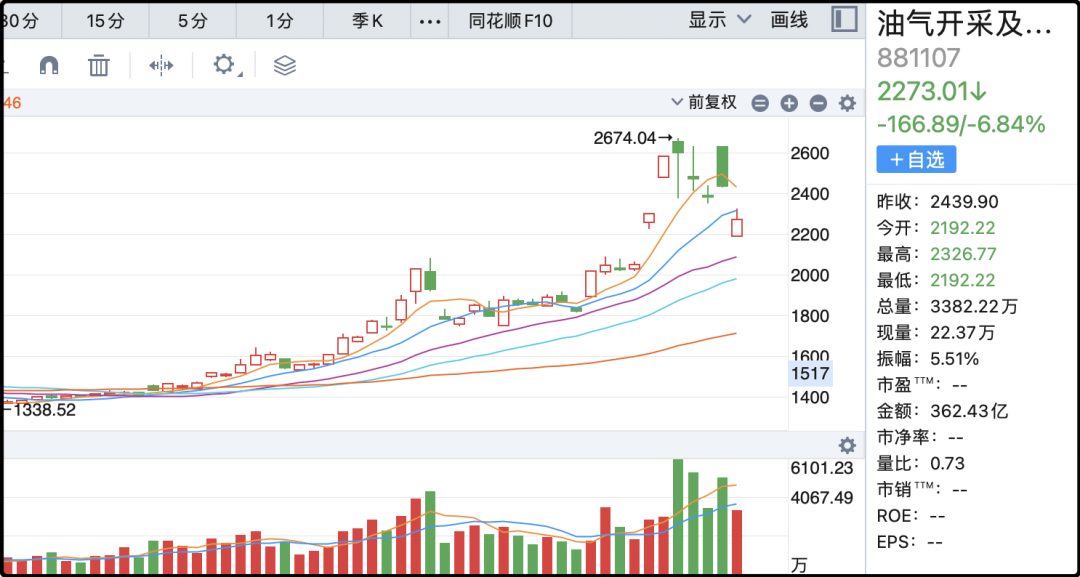
Today, A-shares traded 2.4 trillion yuan, with a median increase of 1.6%, representing a broad-based rally. A key factor in this is the sharp drop in oil prices last night, which have now returned to around $90. Oil prices and A-shares have shown an inverse correlation in recent days: oil price surges lead to A-share declines, while oil price plunges lead to A-share recovery.
Trump clearly doesn't want to fight anymore, unilaterally declaring the war is almost over because Iran's navy and air force are gone, and it has no air defense capabilities. This is likely true, as the US has already begun sending F-15E bombers carrying short-range missiles to bomb Iran. These aircraft lack stealth capabilities, and the short-range missiles have a range of only 10-20 kilometers. If Iran still had air defense capabilities, it wouldn't dare to launch such attacks.
Even if the United States gains air superiority, it will not be enough to force Iran to admit defeat. Iran still has the ability to launch missiles to bomb Israel and US military bases, and can still block the Strait of Hormuz to drive up international oil prices. In this respect, Iran's resilience is greater than that of the United States.
So now Iran has become more assertive, refusing an unconditional ceasefire, claiming that they decide when the war ends, and threatening to let oil prices rise to $200 if the US and Israel don't stop.
This is a classic example of asymmetric game theory. Iran was bombed for 11 days, suffering thousands of deaths, yet they grew increasingly aggressive. On the other hand, the US had evacuated its troops from various Middle Eastern bases before the war, relocating them to hotels; only seven soldiers died. However, rising oil prices fueled public discontent in the US, leading to the Republican Party's loss in the midterm elections. Ironically, the US was the first to back out of the war. Ultimately, the two sides were willing to pay different prices for it.
A ceasefire might come sooner than expected. The real fear is that Israel might pull some tricks, as they are the only ones who genuinely want to continue fighting.
Oil and gas extraction -6.9%, oil processing -3%, coal mining -2.6%, shale gas -2.2%, chemical raw materials -1.9%, natural gas -1.3%. Today's list of biggest losers is almost entirely comprised of sectors that benefit from the war. Holding these stocks means you can only hope the war worsens; every easing of tensions will lead to a decline.
The top-performing sectors today are almost all related to the "lobster AI craze".
Components, communication equipment, electronics, semiconductors, motors, optical fibers, and optical modules are basically all upstream and downstream of computing power. They were hyped up during last year's AI wave, cooled down for a while at the beginning of this year, and are now making a comeback with the help of lobsters.
As I mentioned yesterday, raising lobsters requires purchasing computing power (tokens). Light use costs 30-80 yuan per month, office use costs 200-500 yuan, and institutional use costs several thousand or even tens of thousands of yuan per month.
The reason it costs so much is that AI agents consume too much computing power. When we ask an AI a question, it costs about 1,000-3,000 tokens. To get the lobster to start a task, it costs 10,000-20,000 tokens. To complete a single step of thinking, it costs 100,000-200,000 tokens. To complete a more complex task, it costs nearly 1 million tokens.
It's conceivable that once lobsters are widely introduced to the general public, the demand for and consumption of computing power will explode. What kind of assistance lobsters will provide to ordinary people is still uncertain, but what is certain is that the companies providing the computing power will make a lot of money. The logic of "selling shovels" is universal, regardless of the era.
As human civilization gradually evolves and upgrades, its core resources are also constantly changing. The earliest was land, followed by minerals, coal, electricity, oil, and electronic information. Next will probably be computing power. The underlying foundation of the new civilization driven by AI in the future will be computing power.
The computing power sector has a good long-term outlook, but it has risen for two consecutive days in the short term and there is a significant premium. Even if you want to buy, you can wait and see what happens in the Middle East and when the technology sector collectively corrects before getting on board.
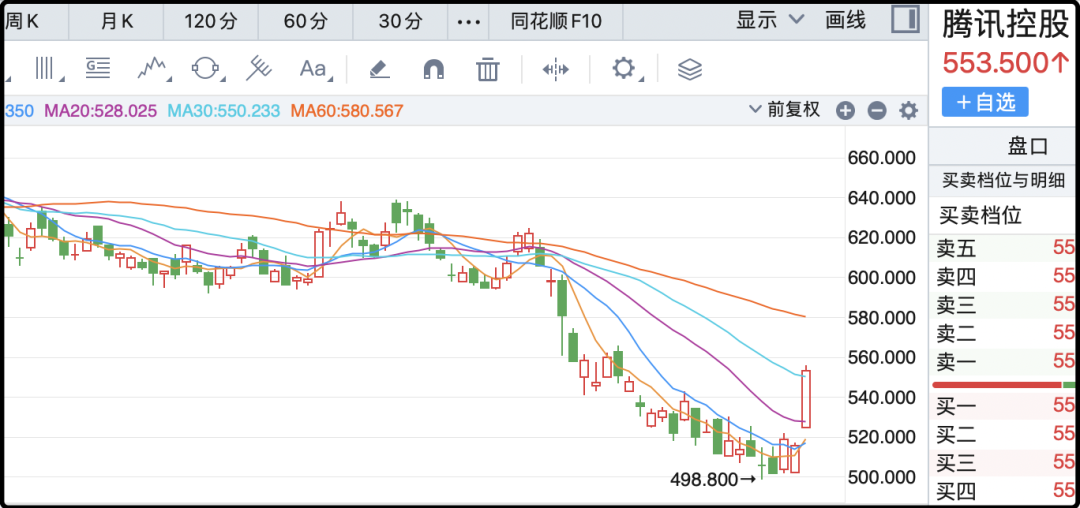
1. Tencent surged 7% today, leading the Hang Seng Internet Index to halt its decline. The new capital narrative is that Tencent plans to integrate a lobster AI into WeChat, allowing WeChat users to assign tasks to the lobster through chat, and then the lobster can use WeChat's mini-program ecosystem to meet the user's needs. This vision is surprisingly competitive, lowering the barrier to entry for users to use AI, revitalizing the mini-program ecosystem, and further strengthening WeChat's competitive advantage.
2. The Ministry of Transport summoned Maersk and Mediterranean Shipping Company (MSC) for talks. Because the Panamanian government seized Cheung Kong's port but lacked the operational expertise, it wanted Maersk or MSC to manage it on its behalf. The Chinese government's purpose in summoning these two companies is easy to guess: it's likely to warn them to stay out of the matter, or face serious consequences.
3. Minimax, a Hong Kong-listed company, has recently seen a surge in its stock price. Its IPO price in January was HK$119, and it's now at HK$1200. The company's main business is producing AI models and providing computing power, and it's currently a popular external brain for lobster AI. The timing was incredibly precise. The company's owner, Yan Junjie, holds 25% of the shares and is already close to being worth hundreds of billions. Minimax was only founded in 2021.
This is a good thing; China's wealth class is still moving.
That's all for tonight, launch.
Original Article: View Chinese Version