When I woke up this morning and picked up my phone, I saw that Khamenei was dead.
It is said that he convened a meeting of high-ranking Iranian military officials at the last minute, and only allowed an hour or so for the assembly in order to avoid being tracked. However, the United States and Israel still managed to "obtain" the intelligence in time. Faced with this golden opportunity, they did not hesitate to send planes to bomb the area and dropped 30 heavy bombs.
When I wrote the article last night, the official statement was that the decapitation attempt had failed, but in fact, Khamenei was already dead at that time . His guards needed time to dig him out of the bombed ruins. Once the body was recovered, the United States and Israel confirmed his death.
Along with Khamenei, seven other key officials were also killed in the bombing. These were the most powerful and resilient figures in Iran at the time, and they were all taken away by Israel in one fell swoop.
-
Abdulrahim Mousavi (Chief of the General Staff of the Armed Forces)
-
Aziz Nasserzad (Minister of Defense)
-
Muhammad Pakpur (Commander of the Ground Forces of the Islamic Revolutionary Guard Corps)
-
Ali Shamkhani (Secretary of the Supreme National Security Council)
-
Mohammed al-Hilazi (Chief of the Supreme Leader's Military Office)
- Salah al-Asadi (Chief of Intelligence, Army Emergency Command)
- Hossein Jabar-Amerian (Chairman of Iran's Nuclear/Chemical Weapons Research and Development Agency)
When I first saw reports that Israel's decapitation strike had failed, I thought Iran's purge of internal spies was effective. It turns out they just needed a little time to find the bodies; the attack was still swift and precise, wiping out Iran's top leadership in the first wave. Such intelligence efficiency and attack accuracy make taking a general's head from a vast army seem like taking candy from a baby.
Some suspect this was another case of betrayal by an insider. Otherwise, how could the enemy have known about it so soon after the top-secret internal notification was sent out, and the bomb would have been dropped before the meeting was even over? Authoritarian regimes are most prone to internal problems. Look at Maduro before him; he even had to send his personal guards from Cuba because he didn't trust his own men.
Okay, next let's talk about the impact of the situation in Iran on the capital markets.
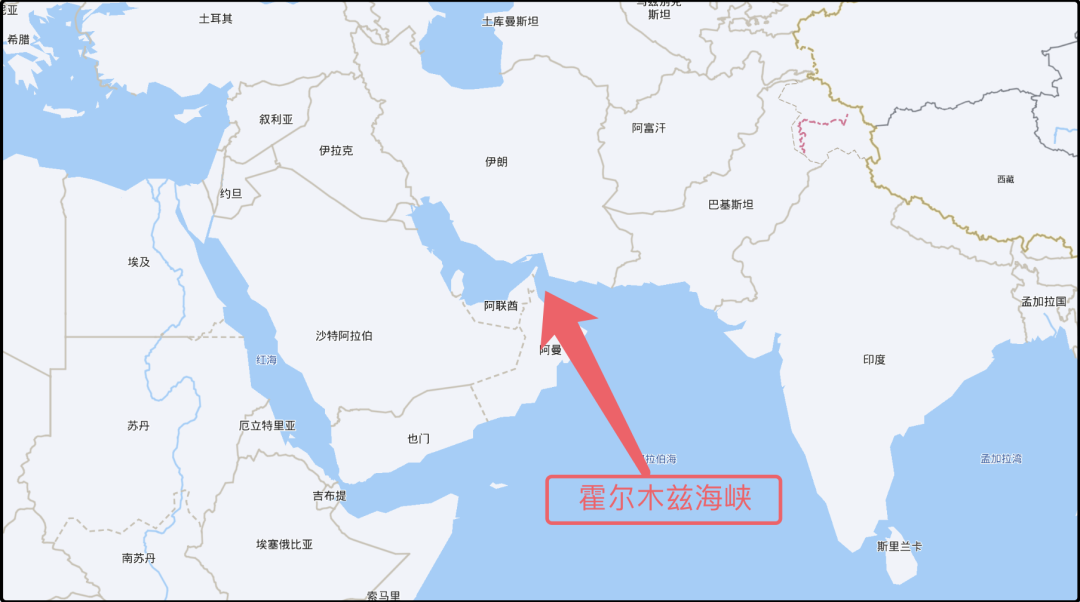
1. Oil prices are strongly bullish, with Brent crude reportedly trading at $78-80 in over-the-counter markets, up about 8% from Friday's closing price of $73. According to the latest news, the Iranian Revolutionary Guard has announced the closure of the Strait of Hormuz, and a Palauan ship attempting to pass through was sunk.
About 20% of global oil trade passes through the Strait of Hormuz. Iran's purpose in doing this is to stimulate oil price increases and make the whole world bear the pressure of rising prices. But this has no effect on the United States, because anyone with a little common sense knows that the United States is now an oil exporter.
2. The Houthi rebels in Yemen may also resume their interception and attacks on the Red Sea shipping lanes. As a result, shipping risks and oil prices soared this weekend. Chinese merchant ships will not be attacked by the Houthis due to special circumstances, so they will enjoy the benefits of the war in the short term.
3. Gold prices also rose in the weekend grey market, with the latest RWA gold price on the blockchain around 5350, up nearly 1.5% from Friday's closing price.
4. Besides oil, China also imports a large amount of chemical raw materials from Iran, such as methanol, which is China's largest source of imports, accounting for 70%; ethylene glycol, which accounts for about 30% of China's imports; and celestite, which accounts for more than 60% of China's imports. Short-term price increases in these raw materials will lead to price increases in downstream products.
5. The sentiment in the military industry sector is quite strong, and it will definitely perform well on Monday; no further explanation needed.
As for the overall market trend, I don't think that the Iranian issue will have a serious impact on the A-share market. Whether it's economic ties or geopolitics, Iran is not decisive for China. Even if the Iranian regime collapses tomorrow, it will just mean one less friendly country. When Syria and Venezuela had problems before, the sky didn't fall. It was just a matter of course.
Yesterday's article mentioned that Shanghai police arrested Ren, the author of "Sleep Before News." Later, a friend told me that it happened at the end of January because the police body camera footage showed the specific time in the upper right corner: 8 PM on January 23, 2026.
So this matter should have been resolved, and the program will be updated as scheduled this weekend.
Out of curiosity, I checked the caffeine content of BaWang Tea, and it is indeed quite high, belonging to the upper-middle level in the industry. Each cup contains 110-250mg, which is lower than the daily safety limit of 400mg, so it is definitely not in violation of regulations. If you have a sensitive constitution, don't drink it after dinner, otherwise it will be easy to have trouble sleeping.
1. OpenAI raised $110 billion in funding with an overall valuation of $730 billion. Amazon was valued at $500, Nvidia at $300, and SoftBank at $300.
2. The US claims that it used AI tools for intelligence analysis during the airstrikes against Iran, obtaining massive amounts of information in real time for analysis and judgment, including studying specific attack targets and tactical value. However, the actual attack was not taken over by AI; judgment and execution were still carried out by humans.
3. Pakistan and Afghanistan have officially gone to war, which has been going on for several days. The main reasons are: the Pakistani Taliban has carried out a series of terrorist attacks within Pakistan, and Pakistan accuses the Afghan Taliban of harboring them. This, coupled with historical border disputes between the two countries, has led to the conflict. Additionally, Pakistan's current economic situation is dire, and the government is on the verge of bankruptcy, which may also be a way for them to divert attention from their internal conflicts.
4. In the past few days, many readers have seen an official report on cryptocurrencies, which claims that the US is using cryptocurrencies to exploit the world, highlighting Chen Zhi and Zhao Changpeng as two key examples. Many readers have asked me for details. I have no opinion on the official viewpoint, but I will discuss the situations of these two individuals.
Chen Zhi used the money he obtained through fraud to open his own Bitcoin mining farm and then stored it in a cold wallet. However, his cold wallet had a serious flaw in generating the private key. A cold wallet should ideally contain 256 completely random numbers, with a cracking difficulty of 2 to the power of 256, making it impossible for humans to brute-force it with current technology. But the cold wallet Chen Zhi used used pseudo-random numbers, with a private key randomness probability of 2 to the power of 32, approximately 4.3 billion possible permutations.
I suspect you have no concept of these two numbers; it's roughly the difference between a handful of sand and the entire Milky Way. The people in the US probably saw this loophole and cracked it using brute force. Therefore, Chen Zhi's assets were confiscated because of the wallet he used.
As for Changpeng Zhao, it was because the exchange he opened in the early days had very lax requirements for real-name registration of users, which gave some criminals the opportunity to launder money through the exchange. The United States has been pursuing this matter relentlessly, after all, it is the big brother of the world. After weighing the pros and cons, Changpeng Zhao chose to plead guilty and settle for $4 billion.
That's all for tonight, launch.
Original Article: View Chinese Version