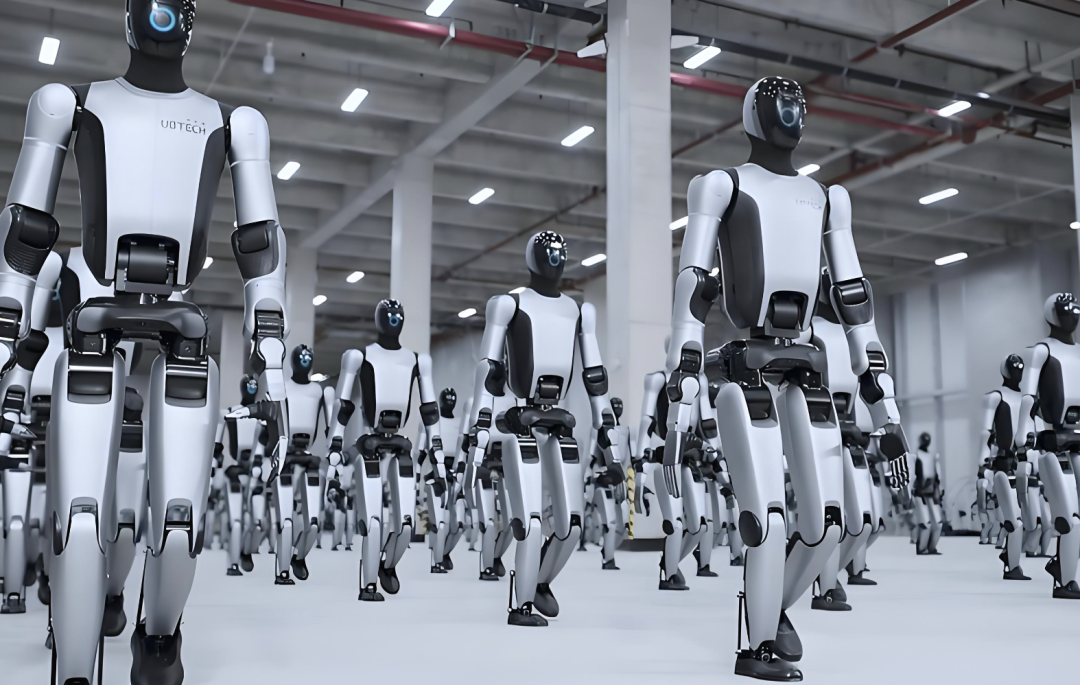
Last night's Spring Festival Gala was bursting with technological content, featuring robots and drones as the main performers, frequent promotion of intelligent manufacturing in the lyrics, and numerous advertisements for technology experts and projects. A joke circulating on a stock market forum suggested the Gala director must be deeply involved in the tech sector, which is obviously a joke. A Gala director doesn't have that much say in setting the overall tone of the program; the propaganda direction presented by the Gala can only reflect the government's will.
It is clear that the current government attaches great importance to the upgrading of emerging industries and the development of high-end technologies, and has conveyed this message clearly and strongly to the people of the whole country through the Spring Festival Gala.
If last year's appearances of robots on television were just a tentative foray, this year's programming featuring robots is significantly more extensive, which has sparked two discussions:
1. Why is it necessary to make robots humanoid at such a high cost? Is this reasonable?
The answer is relatively easy. The core purpose of making robots humanoid is to adapt them to the physical world. Simply put, the world we have created is designed for humans. Stairs, doorknobs, chairs, bicycles, and weapons are all designed according to human usage habits. Therefore, making machines humanoid allows for seamless integration, enabling the use of all tools without any modifications.
Specialized robots such as robot vacuum cleaners, delivery robots, and dishwasher robots are very useful and inexpensive, but they lack versatility. We hope that in the future, when AI matures, a humanoid robot will be able to perform most human jobs.
Another reason for making machines humanoid is that they can interact with humans better. Last night, when I wrote this, many people were making sarcastic remarks in the comments. Okay, that's one benefit… In short, humans will only befriend robots, not robot dogs; there's a natural emotional barrier.
2. Even though robots can do somersaults, why haven't they replaced human labor on a large scale?
This is a more complex issue. First, you need to understand that the robots performing martial arts on the Spring Festival Gala are all pre-trained and remotely controlled; they don't act autonomously. The same Yushu robot, if I were to control it, would struggle even to sit down, stand up, or take a few steps.
Secondly, robots generally excel at large movements but struggle with fine motor skills. They can do front flips and back flips, but it's very difficult for a robot to pick up a quail egg with chopsticks. Humans' dexterity is still difficult to perfectly replicate on a machine.
Then there's the issue of robots consuming a lot of power. Currently, their battery life is at most 2 hours, while humans can work continuously for five or six hours after eating a meal in 10 minutes, demonstrating excellent battery life.
Another issue is the high price of robots. The model that Yushu performed on the Spring Festival Gala cost 200,000 yuan per robot, and repairs are expensive if they get damaged. More importantly, to operate this robot effectively, you need algorithm engineers and hardware engineers, whose annual salaries will easily exceed 500,000 yuan. In contrast, Niuma robots are plentiful and cheap, with monthly salaries of four to five thousand yuan and a large, guaranteed supply.
Finally, while AI may seem all-knowing when chatting with you, it lacks a real-world perception. In reality, AI may not be able to determine which is harder, an egg or a tennis ball, and requires a large amount of real-world training data.
In short, robots currently have too many inherent flaws and cannot replace human labor. Over the next 10-20 years, through gradual iteration and updates, they will gradually penetrate human jobs. A more optimistic estimate is that by 2040, there may be over 1 billion robots globally, replacing more than half of human jobs. Everyone engaged in low-creativity work will then have to consider their social value.
Let me say a few words about last night's Spring Festival Gala. The reviews were quite positive; it was innovative and the overall quality of the programs was quite high.
What surprised me most was the singing competition. Several songs were really good. I recommend Li Jian's "Human Resonance," Zhou Shen's "Auspicious Quantity," and Mao Buyi and Ren Suxi's "Hope You're Well." You can search for them; they're guaranteed to be great. Wang Fei's song wasn't very good. The song itself was just average, and her singing was also just average. Now I'm always on edge when I listen to her sing, worrying about her breath control and pitch.
"Celebrating the Flower Goddess" incorporates a lot of AI special effects, and it looks beautiful on television, but the audience on set is probably completely bewildered.
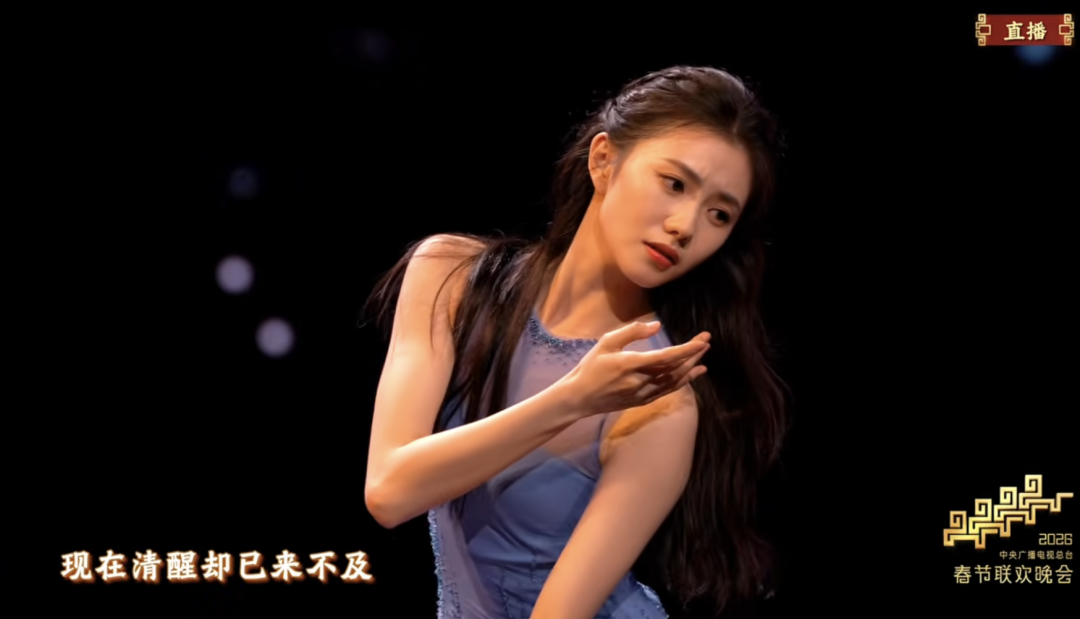
Liu Haocun's dance performance was so beautiful that I later forgot there was a male singer singing next to me.
The second half also featured international artists, including Legend singing "Beauty and the Beast," Westlife singing "My Love," and Jackie Chan and Richie collaborating on "We Are the World." However, this song received poor reviews; the Chinese lyrics lacked aesthetic appeal and rhymed, making it extremely unpleasant to listen to.
Language-based programs are out of the question; they lack any highlights.
At the request of my readers, I went to see "Every Year There's a Bear" today, with my older and younger brothers.
Halfway through the movie, something came up: my younger brother said he was "full" and wanted to leave and go home. I had to take him to my grandparents and rush back to watch with my older brother, thus missing 30 minutes of the film. But I can't say this movie is unsuitable for children under 6, because there was a father next to me holding his daughter, who was even younger than my brother, and they watched it all the way to the end.
But the plot is indeed relatively complex, and it's true that children under 6 years old won't easily understand it. That little girl was probably just watching for the fun.
This is my first time watching a "Boonie Bears" movie. I thought it would just be the same old silly antics in the forest, but the movie version is quite different. Aside from the characters being Bald Qiang and the two bears, the entire story has nothing to do with the forest anymore. Thinking about it, it's a bit like a mix of "Ne Zha" and "The Avengers." You can use your imagination.
It's generally geared towards teenagers, targeting ages 8-28. Of course, if you're 38 or 48, you can still enjoy it while watching with your kids. I thought it was alright. Chinese animation is technically on par with Disney; what it lacks is probably some detail in the script and the core values.
In conclusion, I give it a score of 7.8-8. It's watchable with kids, but I wouldn't watch it alone.
I bought tickets for "The Swordsman" tomorrow and "Pegasus 3" the day after. Anyway, I'll do whatever you guys ask for.
Happy Chinese New Year! May your business prosper! 
Original Article: View Chinese Version