It's kind of funny; the last trading day before the holiday didn't spare investors either, with another drop on low volume. After this drop, the February candlestick chart is basically all in the red. I went hiking this afternoon, and only checked my phone around 3 pm. The IC index had dropped 185 points, meaning I lost 37,000 yuan on just one lot. But so far in 2026, it's up 11%, so I'm quite satisfied and have nothing to complain about.
I'm writing this to show you my attitude towards volatility and drawdowns. I have a framework for judging the overall direction, and the ups and downs during the process are just noise. As long as my margin doesn't drop to the alarm, I can go a whole day without checking it. I know many of you only have 50,000 or 100,000 in your accounts to trade, and you check them 20 or 30 times a day, which is not only unhelpful to your trading results but also seriously affects your work efficiency. The reason I'm saying this is because I went through that phase myself and later changed my approach.
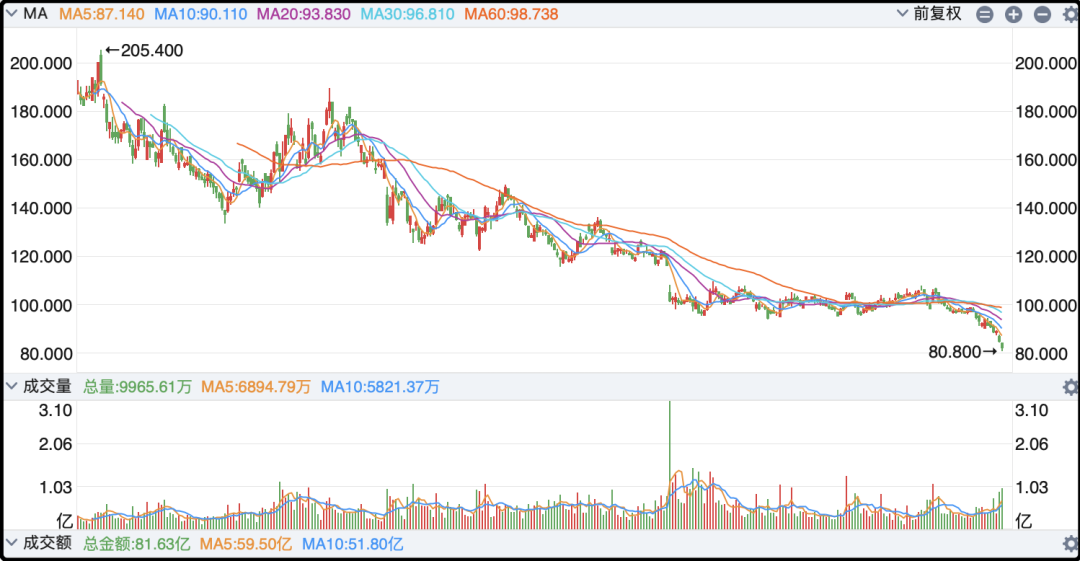
Meituan continued its decline today, falling as much as 5% intraday before closing down 3.18%. Many people complained that Meituan was trying to turn its shareholders into employees, but when Meituan released its latest performance results in the evening, shareholders were outraged, and the stock price surged to the top of trending topics.
The company is projected to lose 23.3-24.3 billion yuan in 2025, compared to a profit of 35.8 billion yuan in 2024, a difference of 60 billion yuan. This 60 billion yuan difference is mainly due to the "core local commerce," which is the familiar food delivery and in-store business. Last year, it earned 52.4 billion yuan, but this year it lost 7 billion yuan.
Previously, institutions predicted a loss of 16-20 billion yuan this year, but Meituan has exceeded even the most pessimistic expectations. Everyone knew Meituan was in trouble, but no one expected it to be this bad. Damn it, is no one going to do anything about it? Adding the losses of Alibaba and JD.com, the three companies in this food delivery war have lost a combined 150 billion yuan. Even the national subsidies aren't as strong as Meituan's. No wonder the Hang Seng Internet Index has been performing like garbage for the past six months.
I'm seriously furious! Did you guys taste even a hint of saltiness or fishiness in the milk tea you bought with subsidies? Because it was mixed with the blood and tears of Hang Seng Internet shareholders.  What's worse is that Alibaba will not stop fighting after learning about Meituan's dire situation; instead, they will intensify their efforts. Meituan's first quarter will not be any better, with institutions predicting losses of 5-10 billion yuan. This food delivery war will likely continue until the second half of the year before its intensity decreases.
I previously mentioned that I would consider Meituan's value proposition if it fell below 80, and I estimate it will reach that level after the holiday opening. Given the current trend, I'm definitely not willing to take the plunge; I'll at least wait for a bottoming out and trend reversal before considering it. The previous low was 61, and this wave looks set to head towards 61 as well.
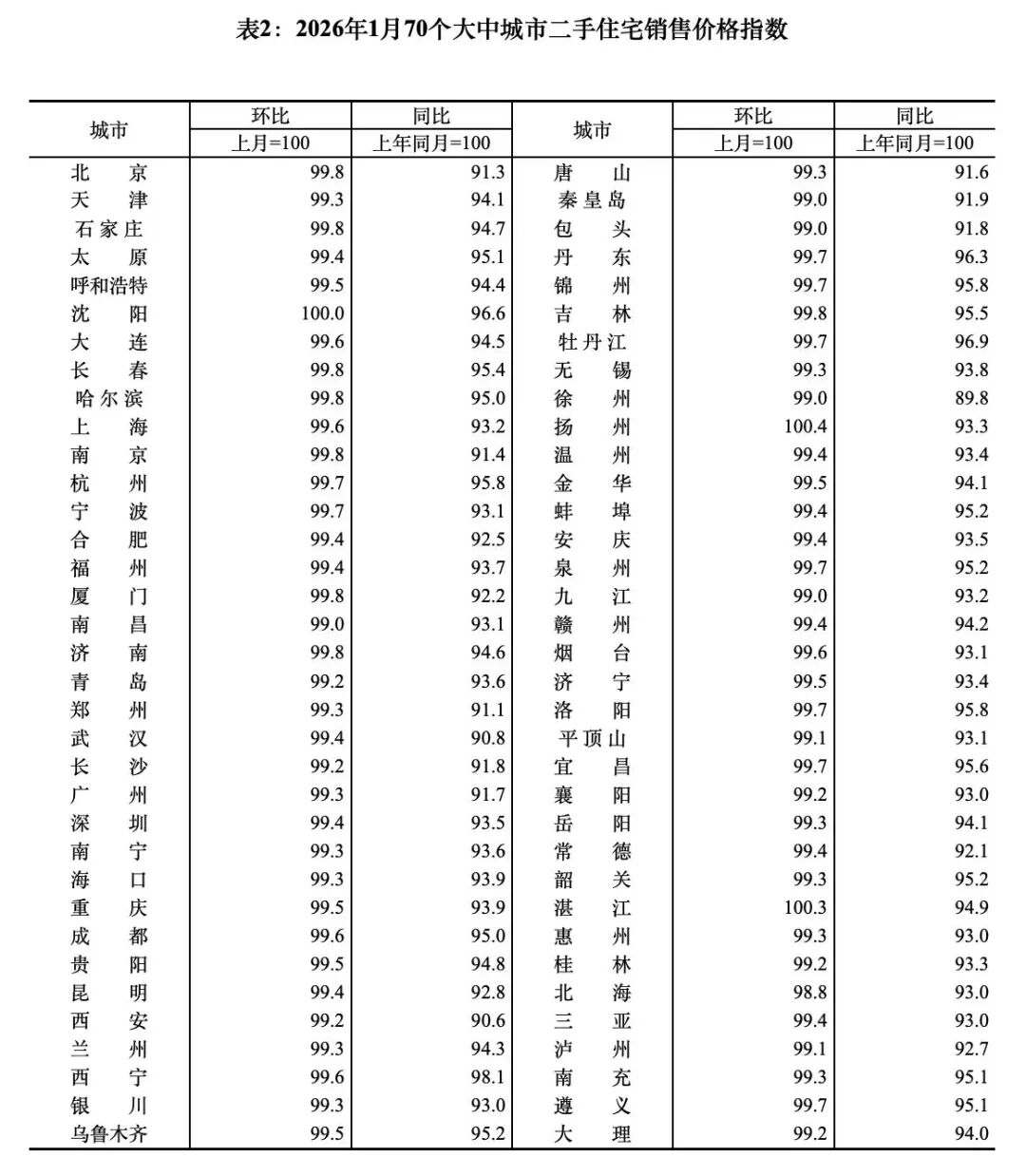
Last month's housing price data for 70 major and medium-sized cities was released. Here's a table:
As is customary, I will explain to new readers how to read the table. A month-on-month change of 101 means that it has increased by 1% compared to the previous month, and a year-on-year change of 98 means that it has decreased by 2% compared to the same month last year.
At first glance, the month-on-month decline rate of all cities has slowed down, with very few cities falling below 99. The decline rate of first-tier cities is within 1%, and there are even three cities in the table with a month-on-month change of over 100 (Shenyang, Yangzhou, and Zhanjiang), indicating that the decline has stopped and there has been a slight increase.
This aligns with what I said before: the decline slowed in January, and based on the data I've seen so far in February, the decline continues to slow. The number of cities with declines exceeding 100 may even increase. However, don't assume the housing market has bottomed out just because of this. A slow decline at the end of the year has occurred in the past two years as well. The key is to observe the performance in March and April after the start of spring.
Currently, only one city in China is experiencing rising housing prices: Hong Kong. There are two reasons for this: firstly, Hong Kong has been actively attracting mainland talent in recent years, increasing the young workforce and demand from first-time homebuyers; secondly, Hong Kong's mortgage rates are only 1.5-2%, and the rent-to-price ratio is relatively high at 3-3.5%, meaning that after rent covers the monthly mortgage payment, there is still a surplus, making real estate a positive cash flow asset.
You can compare whether China meets these two conditions. Previously, some experts proposed a 1% interest subsidy for mortgages, reducing mortgage rates from 3% to 2%, thus turning mainland real estate into a positive cash flow asset. If we only subsidize new mortgages, regardless of existing ones, the annual cost would be approximately 50-70 billion yuan, which the government can afford.
A few days ago I said that if Beijing housing prices continue to fall, I intend to buy an investment property in the second half of the year, a two-bedroom apartment for my basic needs, around 5 million yuan. This wasn't just a casual remark; I have a serious plan.
The finale of "A Peaceful Year" cleverly interpreted the screenwriter's imagined "Shadow of the Candle and Sound of the Axe." A reader asked me about this before, and I believed the "Shadow of the Candle and Sound of the Axe" was fictional; today I can elaborate on my reasons.
Firstly, this event wasn't originally recorded in official history; it was recorded in an unofficial history written by a monk 100 years later, and later generations embellished and elaborated upon this story. Ordinary people, who love conspiracy theories, believed that Zhao Guangyi killed his brother and succeeded to the throne, but this account lacks authentic source material.
Secondly, Zhao Guangyi's status as the Crown Prince is relatively clear. His elder brother participated in the Chenqiao Mutiny in 960, and his younger brother was appointed as the Prefect of Kaifeng (the mayor of the capital) in 961. This is very important. During the Five Dynasties and Ten Kingdoms period and the early and middle Song Dynasty, it was standard for the Crown Prince to concurrently serve as the Prefect of Kaifeng.
In addition, in 973, Zhao Guangyi was granted the title of Prince of Jin, making him the only member of the Song Dynasty imperial family to be granted such a title, placing him above the prime minister. This was only three years after Zhao Kuangyin's death in 976.
So do you understand now? The younger brother served as the second-in-command and successor for over ten years, a long and stable process, not something that could be accomplished through a single night of conspiracy. The Five Dynasties and Ten Kingdoms period was chaotic and turbulent; Zhao Kuangyin himself usurped the throne. To ensure the family's power, the succession of the elder brother to the younger brother is entirely understandable.
Some say that Zhao Kuangyin's son was over 20 years old at the time, which is true, but he was only 10 years old when the Chenqiao Mutiny occurred, and could not be relied upon at all. He could only support his 22-year-old brother to help consolidate his power. That's how it is.
That's all for tonight, launch!
What's worse is that Alibaba will not stop fighting after learning about Meituan's dire situation; instead, they will intensify their efforts. Meituan's first quarter will not be any better, with institutions predicting losses of 5-10 billion yuan. This food delivery war will likely continue until the second half of the year before its intensity decreases.
I previously mentioned that I would consider Meituan's value proposition if it fell below 80, and I estimate it will reach that level after the holiday opening. Given the current trend, I'm definitely not willing to take the plunge; I'll at least wait for a bottoming out and trend reversal before considering it. The previous low was 61, and this wave looks set to head towards 61 as well.
Last month's housing price data for 70 major and medium-sized cities was released. Here's a table:
As is customary, I will explain to new readers how to read the table. A month-on-month change of 101 means that it has increased by 1% compared to the previous month, and a year-on-year change of 98 means that it has decreased by 2% compared to the same month last year.
At first glance, the month-on-month decline rate of all cities has slowed down, with very few cities falling below 99. The decline rate of first-tier cities is within 1%, and there are even three cities in the table with a month-on-month change of over 100 (Shenyang, Yangzhou, and Zhanjiang), indicating that the decline has stopped and there has been a slight increase.
This aligns with what I said before: the decline slowed in January, and based on the data I've seen so far in February, the decline continues to slow. The number of cities with declines exceeding 100 may even increase. However, don't assume the housing market has bottomed out just because of this. A slow decline at the end of the year has occurred in the past two years as well. The key is to observe the performance in March and April after the start of spring.
Currently, only one city in China is experiencing rising housing prices: Hong Kong. There are two reasons for this: firstly, Hong Kong has been actively attracting mainland talent in recent years, increasing the young workforce and demand from first-time homebuyers; secondly, Hong Kong's mortgage rates are only 1.5-2%, and the rent-to-price ratio is relatively high at 3-3.5%, meaning that after rent covers the monthly mortgage payment, there is still a surplus, making real estate a positive cash flow asset.
You can compare whether China meets these two conditions. Previously, some experts proposed a 1% interest subsidy for mortgages, reducing mortgage rates from 3% to 2%, thus turning mainland real estate into a positive cash flow asset. If we only subsidize new mortgages, regardless of existing ones, the annual cost would be approximately 50-70 billion yuan, which the government can afford.
A few days ago I said that if Beijing housing prices continue to fall, I intend to buy an investment property in the second half of the year, a two-bedroom apartment for my basic needs, around 5 million yuan. This wasn't just a casual remark; I have a serious plan.
The finale of "A Peaceful Year" cleverly interpreted the screenwriter's imagined "Shadow of the Candle and Sound of the Axe." A reader asked me about this before, and I believed the "Shadow of the Candle and Sound of the Axe" was fictional; today I can elaborate on my reasons.
Firstly, this event wasn't originally recorded in official history; it was recorded in an unofficial history written by a monk 100 years later, and later generations embellished and elaborated upon this story. Ordinary people, who love conspiracy theories, believed that Zhao Guangyi killed his brother and succeeded to the throne, but this account lacks authentic source material.
Secondly, Zhao Guangyi's status as the Crown Prince is relatively clear. His elder brother participated in the Chenqiao Mutiny in 960, and his younger brother was appointed as the Prefect of Kaifeng (the mayor of the capital) in 961. This is very important. During the Five Dynasties and Ten Kingdoms period and the early and middle Song Dynasty, it was standard for the Crown Prince to concurrently serve as the Prefect of Kaifeng.
In addition, in 973, Zhao Guangyi was granted the title of Prince of Jin, making him the only member of the Song Dynasty imperial family to be granted such a title, placing him above the prime minister. This was only three years after Zhao Kuangyin's death in 976.
So do you understand now? The younger brother served as the second-in-command and successor for over ten years, a long and stable process, not something that could be accomplished through a single night of conspiracy. The Five Dynasties and Ten Kingdoms period was chaotic and turbulent; Zhao Kuangyin himself usurped the throne. To ensure the family's power, the succession of the elder brother to the younger brother is entirely understandable.
Some say that Zhao Kuangyin's son was over 20 years old at the time, which is true, but he was only 10 years old when the Chenqiao Mutiny occurred, and could not be relied upon at all. He could only support his 22-year-old brother to help consolidate his power. That's how it is.
That's all for tonight, launch!
Original Article: View Chinese Version